Great and Unfortunate Things Quotes
by Jason Arday
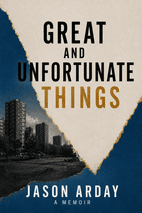
Here are some of the most powerful lines from Jason Arday's memoir. They capture what it feels like to grow up without language, to be misunderstood by experts, and to find safety in small moments of connection. If you have read the book, these quotes will bring you right back to its emotional core. If you haven't, consider this a taste of a voice that is honest, tender, and quietly fierce.
The quotes below are arranged in the order they appear in the book. They include observations about childhood, love, disability, and freedom. What makes Great and Unfortunate Things so quotable is the way Arday turns hard experience into simple truth. His sentences stay with you because they are precise without being cold, and personal without being sentimental.
Top Quotes from Great and Unfortunate Things
“It's a strange thing to spend almost twelve years of your life without language, and then to have to describe that time using only words, as I’m doing here.”
The narrator opens the chapter by reflecting on a childhood lived without language.
It captures the paradox of trying to translate a wordless experience into words, making the reader feel both the distance and the longing to be understood.
“All children are born nonverbal, but most children start using words around their first birthday. That wasn’t the case with me.”
The narrator describes his early inability to speak.
It distills a lifetime of feeling different into a simple, unflinching contrast that invites empathy without self-pity.
“I was rich, but money was not my currency. I had something invaluable: my parents’ love.”
The narrator reflects on growing up in a crowded council house.
It reframes poverty through emotional abundance, making love a greater form of wealth than money.
“She believed from the bottom of her soul that both her sons had intrinsic worth, and that whatever happened, we were precious and should be treated with the utmost love, care, and kindness.”
The narrator describes Giff's determination after she stopped listening to the experts.
It names the book's central idea—intrinsic worth—and shows a mother refusing to let anyone define her children as worthless.
“With every ounce of strength I have and every breath I have in me and as long as I’m alive, whatever Jason can be, he will be.”
This is Giff’s private vow about her son Jason.
It shows a mother’s unconditional faith and determination in the face of low expectations.
“The therapists at the hospital had tried to turn me into a robot, but music was my WD-40, lubricating my hinges and joints so that I would have access to feelings, to what it means to be human, to move, slide, and bend in time to the rhythm, letting the meaning of melody resonate in my heart.”
Jason reflects on how music reached him when therapy and language did not.
The mechanical image is unforgettable, and it reframes access to feeling as something that needs the right tool—not fixing.
“Being silent allowed me to spend my earliest years quietly observing and learning to understand human beings and their interactions with one another.”
Jason reflects on his years of being nonverbal.
It reframes silence as a gift rather than a lack, showing observation as a path to understanding people. This challenges assumptions about autism and language.
Themes Behind the Quotes
One central theme is the power of patient love. Arday's mother and grandmother refuse to accept the idea that he has no inner life. Their belief in his worth becomes a lifeline, and they show that care often means creating calm spaces, finding alternative ways to communicate, and fighting for someone who cannot yet fight for himself.
Another theme is the search for freedom and belonging. The book explores how a child who cannot speak still observes, feels, and understands more than adults assume. Over time, music, movement, and small acts of independence offer release from the pressure of being assessed and judged. These quotes also show that being different is not a deficit, and that silence can be a source of insight rather than emptiness.
Quotes by Chapter
Chapter One: A Different Timescale
“Most of my memories of my early childhood are of generalized images, sounds, sensations, feelings, rather than specific events, perhaps because language helps us to form memories, and I didn’t have access to that until I was older.”
The narrator explains why early recollections are mostly sensory rather than event-based.
It offers a startling insight into how language shapes memory and identity, and how a life without words might feel.
“When she took the bread out of the oven, Giff always tapped the bottom of the loaves with her finger so she could feel the density and hear the hollowness.”
The narrator remembers Giff baking in the kitchen.
This small ritual is vivid and tender, showing how care and expertise pass through touch and sound.
“The smell of her cooking saturated the house, giving the air a thickness that clung to my clothes, so that every time I went out, it was like carrying a bit of home with me.”
The narrator describes the all-enveloping presence of Giff's cooking.
It turns scent into a tangible thread of belonging, making home feel like something you carry into the world.
Prologue
“Inside, the air was thick like a blanket, full of the scent of Giff's cooking and her love, but outside, the air felt much thinner, which made me want to immediately turn back.”
The narrator remembers the sensory contrast between home and the outside world.
It gives readers a visceral sense of autistic sensory experience and the safety Giff's home represented.
“While I didn’t have words at the time to describe what had taken place in room 3, I somehow understood that what Katrina had done was wrong.”
The narrator recalls the moment after his speech therapist shook him.
It captures the painful gap between not being able to speak and still knowing something was deeply wrong.
“In truth, whenever I was alone with an adult who wasn’t a family member, I was fair game for that person to take advantage of me because I had no way to verbally report their wrongdoings. It was just that Katrina was the first person to actually do this.”
The narrator reflects on the vulnerability that came with his speech delays.
It is brutally honest about how his silence exposed him to abuse and makes the reader feel the weight of that injustice.
Chapter Two: Intrinsic Worth
“They didn’t just diagnose me—they wrote me off altogether.”
The narrator describes how doctors dismissed him after his diagnosis.
It captures the dehumanizing certainty of medical judgment and the anger of being erased before given a chance.
“Just because God wasn’t always visible, that didn’t mean he wasn't there. She decided the same could be true for me.”
The narrator explains how Giff's faith helped her believe in him despite what doctors said.
It turns spiritual conviction into a powerful metaphor for seeing value beyond visible evidence.
Chapter Three: Sequence and Sameness
“Sequence and sameness were vitally important to me. There could be no surprises, not even a scintilla of a change, or this would trip me up and I'd go into a meltdown, with little to no hope of recovery.”
The narrator explains the morning routine he needed before starting school.
It frames the need for routine as a coping mechanism, not a quirk. The phrase 'not even a scintilla of a change' makes the reader feel how fragile his sense of safety was.
“I didn’t have words, but I had eyes. I knew I was different.”
The narrator remembers being put in a classroom on his own after the school couldn’t manage his meltdowns.
It captures the ache of noticing difference without being able to name it. The directness of 'I had eyes' gives the line its force.
“I wish they could have understood that the behaviors they saw as “deficits” were simply the reactions of a small child trying to cope with being overstimulated.”
The author describes the hospital clinicians who played overwhelming sounds to him while taking notes.
It reframes behaviors seen as deficits as the reactions of a child in distress. The word 'simply' cuts through clinical judgment.
“Slowly, I'd stop the rocking, the humming, and the banging, consoled by Giff—my port, my lighthouse, my dry land, all rolled into one.”
After a meltdown at school, Giff arrives and calms the narrator by making him focus on her face.
It shows the life-saving role of someone who truly understands an autistic child. The metaphors 'port, lighthouse, dry land' make Giff’s comfort feel elemental.
Chapter Four: Trial and Error
“Without knowing anything about “sensory-friendly environments,” Giff created them.”
The narrator describes how Giff responded to his sensory needs without formal training.
It shows that intuitive, loving observation can be more effective than professional expertise. This single sentence honors the quiet genius of caregivers.
“It was like someone had turned down the volume on the world.”
The author recalls the night walks Giff took with him to help him fall asleep.
It beautifully conveys the relief of sensory calm for an overwhelmed child. The metaphor is simple, vivid, and universal.
“On the Common, the weight I carried around with me every day was gone.”
The author remembers playing freely with his brothers at Clapham Common.
It captures the joy of escaping constant therapy and expectations. The image of a lifted weight makes the release feel physical and real.
“Giff was determined to give me a simple command and have me follow it—something that I still couldn’t do at almost seven, and that the “experts” had told her was impossible (because, again, there was “no one in there”).”
The narrator recalls Giff’s months-long effort to teach him to bite an apple on command.
It captures her refusal to accept the experts' claim that no one was in there. The sentence turns a small milestone into a testament to belief and persistence.
Chapter Five: Out of Reach
“Somehow Giff was able to tune out the advice of the “experts” for long enough to listen to my silence and discover within it what I really needed.”
The author reflects on how his mother rejected experts’ narrow definitions of him.
It celebrates intuitive, loving attention over professional labels, and resonates with anyone who has felt misjudged.
“The phrase goes “Look with your eyes, not your hands,” but looking could never be enough for me. I needed to touch, grab, and smash it.”
Jason describes his sensory need to handle and break objects.
It vividly captures a neurodivergent way of experiencing the world and challenges the idea that one way of looking is enough.
“I knew I could get into really serious trouble for this, so I had to make it worth it.”
Jason thinks before breaking one of his mother’s treasured champagne glasses.
It captures the logical, deliberate defiance of a child determined to turn a forbidden act into something meaningful.
Chapter Six: Connection and Communication
“Right now, you’re always holding on to my skirt, but eventually you'll want to leave the skirt. That's called being independent.”
Giff uses Nellie the Elephant to explain independence to Jason.
It turns a hard idea into a tender, everyday image, and it shows a parent teaching a child to let go while also describing the child's future from a place of love.
“There were no clipboards, no one assessing how inept I was; that in itself was affirming.”
Jason recalls being around other children at Hanley Hall without being evaluated.
The line condenses the exhaustion of constant assessment and makes inclusion feel like relief, not charity.
“Some of my fondest memories of childhood are of dancing with Giff, her spinning me around, both of us feeling unencumbered, free just to be.”
Jason describes one of the times he and Giff danced together in the front room.
"Free just to be" captures the book's idea of connection without words, and the image of being spun around radiates pure joy.
Chapter Seven: Observant
“I learned a harsh lesson that day: while my uniform represented belonging, I was still “different.””
After being placed alone in a separate room on his first full day at mainstream school.
It captures the painful moment when an external symbol of belonging fails to change how others treat him. Readers feel the weight of segregation despite the uniform.