Friends, Lovers, and the Big Terrible Thing Quotes
by Matthew Perry
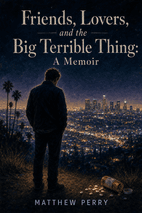
This page gathers lines from Matthew Perry's memoir that hit hard without trying too hard. You will find bits of dialogue, plain narration, and inner monologue that swings from self mocking to painfully honest. Some lines are funny, some are bleak, and many land because they sound like thoughts people have but rarely say out loud.
What makes the book so quotable is its mix of wit and blunt self awareness. Perry can turn a sharp joke, a simple observation, or a confession into a line that sticks with you. These selections focus on the writing itself, not gossip, and they show why readers keep returning to certain sentences.
Top Quotes from Friends, Lovers, and the Big Terrible Thing
“It is very odd to live in a world where if you died, it would shock people but surprise no one.”
He considers how the public would react to his death after addiction and near-death.
The line exposes the painful paradox of being known and still self-destructive.
“If I drop my game, my Chandler, and show you who I really am, you might notice me, but worse, you might notice me and leave me.”
He explains his fear of intimacy and hiding behind his Chandler persona.
It names the terror of being truly seen and rejected, a core wound behind his relationships.
“God, you can do whatever you want to me. Just please make me famous.”
— Matthew Perry
He remembers the desperate prayer he whispered three weeks before being cast in Friends.
It frames his fame as a dangerous bargain with God rather than a pure triumph.
“I wasn't trying to die; I was just trying to feel better.”
Perry describes his mindset before entering Hazelden rehab as his use escalated to fifty-five pills a day.
It distills the tragic logic of addiction without self-pity. The simplicity makes the self-deception painfully recognizable.
“I was lost. There was nowhere to turn. Everywhere I tried to hide, there I was.”
After Friends ended and he relapsed, the narrator describes feeling trapped by himself and his addiction.
It distills the inescapable self-confrontation of addiction into three short sentences. The rhythm makes it feel like a confession and a warning.
“I can distinctively remember holding pills in my hand and thinking, This could kill me, and taking them anyway. This is a very fine, and very scary, line.”
The narrator recalls a relapse after Friends ended, describing the compulsion to take pills despite knowing the danger.
It captures the terrifying split between knowledge and behavior in addiction. The plainness of the admission makes it more chilling, not less.
Themes Behind the Quotes
The selections circle around addiction and its relentless pull, showing how drinking and pills can promise relief while tightening their grip. Another major thread is the gap between public success and private emptiness. Fame looks like an answer from the outside, but the book keeps asking what it can actually fix. Loneliness runs through many lines too, especially the fear that being truly seen will lead to being left.
Identity and performance are another current. The writer keeps examining the difference between the character people love and the person underneath, and he notices how humor can hide pain. There is also a stubborn hope in the middle of self destruction, a sense that survival is strange and precious. These themes make the quotes feel raw and human rather than simply famous.
Quotes by Chapter
1. The View
“I keep coming back to this singular, inescapable fact: I am alive. Given the odds, those three words are more miraculous than you might imagine; to me, they have an odd, shiny quality, like rocks brought back from a distant planet.”
In a rented Pacific Palisades house, the narrator reflects on surviving a perforated bowel, aspiration pneumonia, and ECMO.
It makes survival feel like an improbable gift and anchors the chapter's gratitude.
“I could see the lights twinkling, streets splayed out like a great sparkling magic carpet, wide swathes of dark I now know were the hills, the city pulsing up toward me as I plastered my little face against the plane window, and I so vividly remember thinking that those lights, and all that beauty, meant I was about to have a parent.”
As a five-year-old unaccompanied minor, he flies into Los Angeles and sees the city lights below.
The image fuses beauty with a child's desperate hope for a parent, making abandonment visible.
2. Another Generation Shot to Hell
“By 1986, I was pretty sure fame would change everything, and I yearned for it more than any other person on the face of the planet. I needed it. It was the only thing that would fix me. I was certain of it.”
Reflecting on his early years in Los Angeles, the narrator admits he believed fame would solve everything.
It captures the dangerous fantasy that external success can heal internal pain.
“The drink, and that walk, had created a thinker, a seeker, but not some soft-focus, Buddhist crap—one who was on the edge of a deep crater of flames, haunted by the lack of answers, by being unaccompanied, by wanting love but being terrified of abandonment, by wanting excitement, but being unable to appreciate it, by a dick that didn’t work.”
After taking a big swig of vodka and walking through LA, the narrator experiences a sudden existential crisis.
The raw imagery makes addiction and existential fear feel physical, showing how one drink opened a lasting void.
“I watched my father drink six vodka tonics and live a perfectly functional life, so, I figured it was possible. I figured I'd be able to do the same thing. But there was something lurking in my shadows and my genes, like a creepy beast in a dark place, something I had that my father did not, and it would be a decade before we knew what it was.”
The narrator compares himself to his father, who drank heavily but remained functional.
It shows the narrator’s denial and the genetic shadow of addiction he could not yet name.
“Excuse me? You went for a walk and quit drinking? I have spent upward of $7 million trying to get sober. I have been to six thousand AA meetings. (Not an exaggeration, more an educated guess.) I've been to rehab fifteen times.”
The narrator reacts to hearing that his father quit drinking after simply going for a walk.
The bitter humor exposes the unfairness he feels between his father’s easy sobriety and his own costly struggle.
3. Baggage
“I felt my blood on fire for more to drink; I really wanted another drink, and I could think of nothing else. It was that night when I first felt the obsession for alcohol.”
After a magic show, at his girlfriend Gaby’s apartment, he realizes he is the only one desperate for another drink.
It captures the terrifying moment addiction becomes undeniable—wanting a drink consumes his thoughts.
“Alcohol was my best friend because it never wanted to talk about itself. It was just always there, the mute dog at my heel, gazing up at me, always ready to go on a walk.”
He describes why alcohol became his constant companion and comfort.
The mute-dog image makes dependency feel intimate and seductive rather than merely destructive.
“It took away so much of the pain, including the fact that when I was alone, I was lonely, and that when I was with people, I was lonely, too.”
He explains how alcohol numbed his pain, including the loneliness he felt alone or with others.
It names the paradox of loneliness that alcohol temporarily silenced, making self-medication feel achingly understandable.
“But fantasies and first loves don’t know about real estate, they don't know about real anything. I didn’t stand a fucking chance.”
At nineteen, while obsessed with Valerie Bertinelli, he recognizes he cannot compete with her marriage to Eddie Van Halen.
It distills the delusion of young obsession and the blunt pain of realizing reality does not bend to fantasy.
4. Like I’ve Been There Before
“I was going to fill all the holes with Friends Like Us. Fuck Charlie Sheen. I was going to be so famous that all the pain I carried with me would melt like frost in sunlight; and any new threats would bounce off me as though this show was a force field I could cloak myself in.”
After the first run-through, he imagines fame as a force field that will heal his pain.
It shows how he conflated celebrity with emotional repair and made the show a shield against shame.
“I swear there was a popping sound; if you listened really closely, you could hear it. It was the sound of people's dreams coming true. It was everything I thought I wanted.”
After the first day's run-through, the cast and creators sense the show will change their lives.
The line turns a professional triumph into a haunting premonition because he says it was everything he thought he wanted.
“I was lonely; I didn’t get laid; it was hot in Cabo but cold inside me. I could feel God watching me, waiting.”
During his solo pre-fame trip to Mexico, he describes drinking on a cruise while feeling empty and watched by God.
The contrast between the external trip and internal coldness captures the loneliness that fame could not cure.
5. No Fourth Wall
“I had not learned yet that fame would not fill the hole, but at the time it filled it just nicely, thank you very much.”
Reflecting on the early explosion of Friends fame while dating Julia Roberts.
It captures the seductive illusion that success can fill an inner emptiness. The self-aware hindsight makes it sting.
“You don't have to do that. You're interesting enough to watch without doing that.”
— Andy Tennant
On the set of Fools Rush In, director Andy Tennant pulls Perry aside after he keeps pitching jokes.
It offers the permission Perry has craved—to be enough without constantly performing. The line lands as both professional advice and a wound he still carries.
“I had felt heaven—not many people get that. I shook hands with God that morning. Was it God, or someone else?”
After injuring himself on a Jet Ski, Perry takes a doctor's painkiller and drives home in a Mustang.
It renders the ecstatic seduction of addiction as a near-spiritual experience. The final question makes that high feel haunting rather than triumphant.
6. Bruce Willis
“Something way, way bigger than me was in charge now. Miracles do happen.”
After three months of rehab, Matthew reflects on feeling better and no longer being ruled by addiction.
It frames recovery as surrender to something larger and offers a rare note of hope.
“Ina life riddled with mistakes, this may have been my biggest one. And mistakes are hard to undo.”
Looking back on his newly sober decision to pursue casual sex instead of real connection, Matthew calls it his biggest mistake.
It captures the regret of mistaking fleeting pleasure for the life he actually wanted.
“I'd been looking for an hour or two of pleasure with every woman ever invented when there was so much life I was missing.”
After Natasha tells him she has had a baby, Matthew breaks down in his car and realizes what his dating life was replacing.
The line turns a shallow pursuit into a devastating confession of wasted time and missed life.
“I was knowingly surfing down a long slide to oblivion. But it was bigger than me—there was literally nothing I could do about it.”
After taking Vicodin and ending two years of sobriety, Matthew describes how quickly he resumed drinking and using.
It conveys the terrifying self-awareness of addiction, where knowing better changes nothing.
7. The Benefit of Friends
“We had been in people's bedrooms and living rooms for a decade; in the end, we were an integral part of so many people's lives that what we'd missed was that there had never been a fourth wall to break in the first place.”
On the final Friends episode, the cast leaves their keys and the narrator reflects on the show's intimacy with its audience.
It captures how a TV show can become part of daily life and dissolve the boundary between performance and home. The line is both nostalgic and quietly profound about the nature of familiarity.
“But I felt nothing; I couldn't tell if that was because of the opioid buprenorphine I was taking, or if I was just generally dead inside.”
After the last Friends taping, everyone cries, but the narrator notices his own emotional numbness.
It sharply contrasts a milestone of professional closure with the hollowing effects of addiction. The honesty makes the moment painfully memorable.
8. Odyssey
“No, I was a man falling down a mountainside, lost in a raging river, hoping to find refuge on any safe and dry rock.”
Reflecting on the six years after Friends, the movies, and a six-year relationship, he describes his state as an odyssey.
The metaphor captures the helplessness and desperation of addiction with visceral, memorable imagery.
“As I sat there puffing on a Marlboro, a light snow began to fall, bringing on an intense hush, as though the universe was patiently listening to my head and heart. I wonder what the universe heard.”
During Family and Friends Week at Cirque Lodge, he sits alone outside in subzero cold, smoking and hoping to see a moose or turkey.
It turns a lonely rehab cigarette into a moment of quiet cosmic confession, making introspection feel almost sacred.
Continue Exploring
- Read the full Friends, Lovers, and the Big Terrible Thing summary →
- Friends, Lovers, and the Big Terrible Thing character guide →
- Friends, Lovers, and the Big Terrible Thing ending explained →
- Friends, Lovers, and the Big Terrible Thing themes and symbols →
- Friends, Lovers, and the Big Terrible Thing book club questions →
- Explore more book summaries →