Forgiving What You Can't Forget Quotes
by Lysa TerKeurst
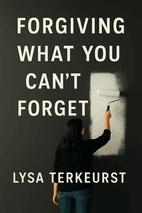
These quotes come from a book that doesn't sugarcoat the agony of forgiving deep wounds. Instead, it meets you right where the hurt lives and offers a way forward that feels both honest and possible. You will find lines that name the tricky ways our minds protect us, the weight of carrying old pain, and the quiet courage it takes to finally let go.
What makes this book so quotable is its refusal to offer shallow comfort. Lysa TerKeurst writes from personal experience, so every sentence feels earned. The words are simple but cut deep, giving you language for what you always felt but couldn't say. They stick with you long after you close the page.
Top Quotes from Forgiving What You Can't Forget
“Cynicism dressed like a security guard, making me believe that if I hoped for less, it would protect me and prevent more pain.”
The author personifies cynicism as a false protector that actually steals intimacy and closeness.
This metaphor vividly captures how self-protective cynicism can isolate us from love and God. It resonates because many readers recognize their own defensive patterns.
“Your heart is much too beautiful a place for unhealed pain. Your soul is much too deserving of freedom to stay stuck here.”
The author addresses the reader directly, encouraging them toward healing.
This line is poetic and affirmingly reminds readers of their inherent worth, motivating them to pursue forgiveness for their own sake.
“Forgiveness is a complicated grace that uncomplicates my blinding pain and helps me see beautiful again.”
The author scribbled this in her journal earlier that morning, feeling hopeful about her progress.
It beautifully captures the paradoxical nature of forgiveness as both complex and simplifying, resonating with those who struggle to reconcile pain and healing.
“All I'm asking is that you'd be willing to consider taking power away from the person who hurt you.”
The author directly addresses the reader, offering a tangible first step toward healing.
This is an empowering and actionable invitation that shifts focus from victimhood to agency, giving hope without demanding immediate forgiveness.
“My ability to heal cannot depend on anyone's choices but my own.”
Lysa realizes this while processing the need to separate her healing from others' actions.
It empowers readers to take ownership of their healing journey, removing the paralyzing dependency on others' repentance or cooperation.
“The greatest hell a human can experience here on earth is not suffering. It's feeling like the suffering is pointless and it will never get any better.”
The author describes the despair after a public rejection on the playground.
It captures the profound hopelessness that makes pain unbearable, offering validation to anyone who has felt stuck in suffering.
“We all have a story. And then we all have a story we tell ourselves.”
The author introduces the idea of internal narratives shaping our beliefs.
It succinctly highlights the gap between objective events and subjective interpretation, encouraging readers to examine their own internal scripts.
Themes Behind the Quotes
A central theme is that forgiveness is not a one time event but a journey that involves both a decision and a gradual process. It requires cooperation with grace rather than sheer willpower. Another key idea is the importance of personal responsibility: healing cannot depend on what someone else does or says. You have to take power back from the person who hurt you and own your own recovery.
Many quotes also explore how past wounds shape our present perceptions and beliefs. Recognizing those old patterns is essential to breaking free. The book emphasizes that holding onto resentment only poisons us, while letting go opens the door to real peace. It gently challenges the reader to stop treating painful memories as treasures and instead see them as debris that can finally be cleared away.
Quotes by Chapter
Chapter 1: Forgiveness, the Double-Edged Word
“Forgiveness isn’t an act of my determination. Forgiveness is only made possible by my cooperation.”
The author contrasts her previous belief that forgiveness requires sheer determination with the truth that it requires cooperation with God's grace.
This shift from 'determination' to 'cooperation' offers a liberating perspective, relieving the pressure to forgive in our own strength. It frames forgiveness as a collaborative process with God.
“Those who cooperate most fully with forgiveness are those who dance most freely in the beauty of redemption.”
The author states that fully cooperating with forgiveness leads to experiencing the freedom of redemption.
The imagery of dancing in redemption is beautiful and hopeful, promising that forgiveness leads to joy rather than drudgery. It inspires readers to pursue forgiveness as a path to freedom.
“Let go of clawing your way through the muddy pit, hoping there's some reward buried there.”
The author urges readers to stop striving to find reward in their pain and instead take God's hand.
This line powerfully dismisses the futile effort of trying to extract meaning from suffering. It encourages letting go and trusting God for new growth.
Chapter 2: Welcome to the Table
“Forgiveness is not adding on top of your pain a misery too great to bear. It is exchanging bound-up resentment for a life-giving freedom, thus making the mystery of the workings of God too great to deny.”
The author explains the true nature of forgiveness after acknowledging the reader's suffering.
It reframes forgiveness as an exchange that brings freedom rather than an additional burden, offering a hopeful and transformative perspective.
“While salvation is what brings the flesh of a human into perfect alignment with the Spirit of God, forgiveness is the greatest evidence that the Truth of God lives in us.”
The author draws a theological distinction between salvation and forgiveness.
This succinct statement elevates forgiveness as a tangible, observable proof of genuine faith, inspiring readers to see its profound significance.
“I know what it feels like to have been hurt so deeply that forgiveness feels like a command too cruel for you to consider.”
The author empathizes with the reader's struggle at the beginning of the chapter.
It validates the reader's pain and resistance, building trust by acknowledging how impossible forgiveness can seem before offering hope.
Chapter 3: Is This Even Survivable?
“Sometimes words sound so possible until the living of them feels impossible.”
The author writes this after being triggered and feeling that her earlier forgiveness rhetoric failed in the moment.
This line speaks to the universal gap between intellectual understanding and emotional experience, validating the reader's own struggles.
“Now I wasn’t just the one who was hurt. Now I was the one causing hurt in others.”
After her angry outburst scared a delivery person, the author realizes she has become a source of harm.
It powerfully illustrates the ripple effect of unhealed pain and the painful realization of becoming what you hate.
Chapter 4: How Is Forgiveness Even Possible When I Feel Like This?
“I only needed to bring my willingness to forgive, not the fullness of all my restored feelings.”
Lysa TerKeurst reflects on the forgiveness exercise with her counselor Jim.
This line frees readers from the pressure to feel ready before forgiving, emphasizing that willingness alone is sufficient and that emotions can catch up later.
“Forgiveness is both a decision and a process.”
Lysa explains the dual nature of forgiveness after describing her ongoing struggles with triggered emotions.
This concise distinction helps readers understand why forgiveness doesn't instantly erase pain and gives a framework for long-term emotional work.
“Refusing to forgive is refusing the peace of God.”
Lysa connects forgiveness to spiritual peace while discussing the importance of moving forward.
This stark statement challenges readers to see unforgiveness not as a protection but as a barrier to the peace God offers.
Chapter 5: Collecting the Dots
“Forgiveness isn't just about what's in front of us. Sometimes, a bigger part of the journey is uncovering what is informing us from long ago.”
The author reflects on the deeper work of forgiveness beyond immediate conflicts.
This line reframes forgiveness as a journey of self-discovery, resonating with readers who struggle to move past old wounds.
“I left that playground for the last time more than forty years ago. But to this day I sometimes wonder if the playground has left me.”
The author concludes her story of childhood betrayal and shame.
This poignant reflection illustrates how past traumas can linger for decades, making readers feel seen in their own unfinished healing.
Chapter 6: Connecting the Dots
“The things marking us from yesterday are still part of the making of us today.”
The author reflects on how past hurts continue to shape present identity.
This line succinctly captures the book's central theme that our history is not just history but actively influences who we are today, prompting self-reflection.
“Love is a thing of depth. When forced to stay on the surface, it flounders about like a fish out of water.”
The author uses a metaphor to describe the lack of depth in her relationship with Art.
The fish-out-of-water imagery is vivid and relatable, illustrating how love without honesty and vulnerability cannot survive.
“The secret to having healthy vulnerability doesn’t start with me feeling safe with Art. Safety is important, for sure. But it doesn’t start with others. It has so much more to do with me being safe with me. And Art being safe with Art.”
The author shares a key insight she gained about vulnerability after years of confusion in her marriage.
This passage offers a profound reframing of vulnerability, shifting the focus from external safety to internal self-acceptance, which is liberating.
“We can't change what we have experienced, but we can choose how the experiences change us.”
The author concludes the chapter with an empowering reminder about personal agency.
It's a concise, actionable truth that gives readers hope and control over their healing journey.
Chapter 7: Correcting the Dots
“It's easier to see what dots need to be corrected in others. It’s a little harder to see it in ourselves.”
The author reflects on the human tendency to notice others' flaws while missing our own.
This line exposes a universal blind spot in self-awareness, challenging readers to turn their critical eye inward.
“The experiences I have affect the perceptions I form. The perceptions I form eventually become the beliefs I carry. The beliefs I carry determine what I see.”
The author explains the chain reaction from experience to perception to belief to vision.
It succinctly captures how our past shapes our present reality, empowering readers to examine and shift their foundational beliefs.
“That collected proof is not a treasure, nor is it a souvenir proving the hard place you've traveled to or your secret weapon of justice. It’s debris.”
The author redefines grudges and resentments as useless rubble rather than valuable evidence.
The vivid metaphor reframes holding onto pain as clutter, urging readers to clear away what harms rather than protects.
“Making peace with the past doesn’t mean that you'll ever be able to make sense of what happened. Good thing there’s something better than answers.”
The author comforts readers who struggle to understand their hurts.
It releases the pressure to find logical explanations and redirects hope toward healing instead of closure.
Chapter 9: Boundaries That Help Us Stop Dancing with Dysfunction
“I found myself realizing I was just as powerless to fix what was happening with this person as I was to stop the rain.”
The author describes driving home at 1:30 a.m. in a rainstorm, feeling helpless about a loved one's destructive choices.
This metaphor perfectly captures the helplessness of watching someone you love self-destruct, normalizing the feeling of futility.
“It almost feels like they are standing over a flushing toilet dropping things inside that I can't bear to lose.”
The author uses a vivid analogy to describe the pain of watching a loved one make choices that destroy shared hopes.
The image of flushing away precious things is visceral and relatable, giving language to the unique grief of watching dreams go down the drain.