Flyweight Quotes
by Courtney Ellis
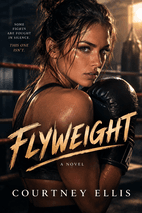
This page gathers lines from Flyweight that stay with you after the page turns. You will find sharp dialogue between boxers, promoters, and family members, plus quieter narration and inner monologue that gets at what characters cannot say out loud. Some lines are blunt and argumentative, others are tender or quietly rueful.
What makes the novel quotable is the way it mixes fight language with everyday emotional truths. The characters are trying to hold onto work, love, dignity, and a sense of self, and their words often land like small revelations. You do not need to know boxing to feel the punch.
Top Quotes from Flyweight
“And then Lucy's favorite part, the most poignant aspect of a beautiful game—no matter how hard a boxer fell, should he find it within himself, he was given the chance to stand back up.”
While watching two men brawl outside the Salmon & Ball, Lucy reflects on boxing’s structure and meaning.
It distills her love of boxing into a belief in resilience and the chance to rise after a fall.
“He had stopped asking about her work, and oddly, it made her feel worse. Though she had been the one to push him away, it hurt to see him resign and accept this distance she had created.”
On Saturday morning, Lucy reflects on the growing distance between her and Robin.
It captures the ache of guilt and intimacy slipping away even when one person has caused the separation. The line makes silence feel like its own kind of loss.
“It is possible to be soft and fierce all at once. Something leads me to believe your husband knows that already.”
— Siobhan
During their walk in Victoria Park, Siobhan responds to Lucy's belief that men want women to be soft and delicate.
It reframes femininity as compatible with strength rather than weakened by it. The hint about Robin adds hope that Lucy may not have to choose between love and ambition.
“These women fought to be seen, and the world couldn't help but look. If we keep stepping into the ring, they'll not be able to ignore us any longer. You might think women boxing won't change the world, but you'd be wrong. If we want true equality, we've got to demand it everywhere.”
— Siobhan
In Siobhan's office, after showing Lucy historical clippings of women boxers, she argues that stepping into the ring can force the world to take notice.
It turns boxing into a visible demand for equality and links personal courage to social change. The passage is rousing because it insists that being seen is the first step toward being counted.
“Nobody could decide what a woman ought to do with her body, because the rules changed depending on what the world needed from her. When would it be time for a woman to make her own decisions?”
— Lucy
As Bella argues against women's boxing, Lucy realizes how often women's bodily rules are set by external need.
It names the double standard at the heart of Lucy's awakening and turns a private realization into a feminist question.
“You'll never see me barring a man for his color. Women can't have equality until everybody does.”
— Siobhan
After Bella refuses to promote their exhibition, Siobhan criticizes the Burges' racial exclusion and connects women's rights to broader equality.
It is a crisp statement of intersectional solidarity and gives Siobhan's fight a wider moral horizon.
“But it isn't real love if you have to change who you are to win their affection.”
— Siobhan
Lucy admits she still longs for her parents' love despite their disapproval.
It names the painful difference between conditional approval and genuine love, offering Lucy a way to see her past clearly.
Themes Behind the Quotes
Flyweight is concerned with who gets to decide what a woman does with her body, her work, and her future. The quotes keep circling around independence, sacrifice, and the gap between what society asks of women and what it actually gives them in return. Boxing becomes a way to talk about strength, endurance, and the chance to get back up after a fall.
Another thread is the cost of love and loyalty, especially when characters hide parts of themselves or try to protect each other from difficult truths. The novel also explores solidarity across gender, race, and class, insisting that equality has to be shared to mean anything. Underneath it all is the question of whether a person can be tender and tough at the same time.
Quotes by Chapter
Chapters 1-3
“The national emergency is long over, and we have no need for female labor. You ought to be glad to give up your place for a veteran.”
— Mr. Keen
Mr. Keen dismisses Lucy from the brewery and justifies replacing married women with returning ex-servicemen.
It exposes the patronizing postwar rhetoric that pushed women out of the workforce while casting it as a favor.
“They once told us they couldn't win the war without our labor, remember that? And now we ain't worth piss to them. You know, I thought the war might change things for us. Silly old girl.”
— Martha
After both women lose their brewery jobs, Martha bitterly recalls how women’s wartime labor was praised and then discarded.
It captures the betrayal of women workers who were hailed as necessary during war and dismissed afterward.
“A shrapnel wound to Robin's head had taken the full sight from both eyes, despite them looking perfectly healthy. His body had recovered well, and his mind was far better than some who'd made it home. But he had lost his livelihood, his meat and drink.”
Lucy reflects on how Robin's war wound blinded him and ended the boxing career that had given him purpose.
It shows the war's lasting cost: Robin has survived physically but lost the work that defined him.
“There was no brutishness or masculine rage to Robin, as one might expect of a man who beat and was beaten for a living. He was gentle, allowing a bee to rest on his shirtsleeve rather than swatting it away, and Lucy imagined that whatever part of him fueled a fight was expelled and left in the ring.”
Lucy thinks about Robin's gentle nature, which contrasts with his brutal profession.
It reveals the tenderness beneath Robin's violent trade, making him vivid and sympathetic.
Chapters 4-6
“Men want to blame us for their own lack of character.”
— Siobhan
Siobhan argues that trainers wrongly blame women for fighters losing focus.
It is a sharp indictment of how women are made scapegoats for men’s failures.
“Crying would not help her now, but she longed for a corner to crawl into and let herself unravel.”
During a grueling wash day, Lucy is exhausted and close to tears.
It gives a raw, physical image of private despair and the effort of holding herself together.
“She had returned to her family smiling and leaping into their conversation as if nothing had happened—a perfect performance.”
After secretly crying in the privy, Lucy returns to her family as if nothing happened.
It reveals the emotional labor behind her cheerful façade and the isolation of her suffering.
Chapters 7-10
“The weight of the small piece of brass was enormous.”
Siobhan presses the key to Whitecross Boxing Club into Lucy’s palm.
It conveys how much responsibility and possibility the small key carries for Lucy.
“I've come through childbirth; nothing that can get me in the ring is as painful as that.”
— Siobhan
Lucy asks Siobhan whether she is afraid of being hurt in the ring.
It reframes toughness through lived pain and quietly challenges assumptions about women’s fragility.
“She had thought she would have no use for them after becoming a mother.”
Lucy handles Siobhan’s glove and remembers that her own gloves were sold long ago.
It captures the quiet loss of an athletic identity and the assumption that motherhood must end it.
“I have no desire to get stronger; I'm only here for the money.”
— Lucy
After a training session, Lucy rebuffs Siobhan's encouragement and insists she is only there for wages.
It reveals Lucy's defiant pride and the transactional wall she tries to keep around her secret work.
Chapters 11-13
“As the world flew by green on either side of her, Lucy realized that her body was far more capable than she gave it credit for.”
Lucy impulsively races Siobhan toward the park gate and discovers unexpected strength and joy in her own movement.
It marks a rare moment of physical confidence and delight after so much exhaustion and self-doubt. The line resonates because it lets Lucy see herself as capable rather than merely burdened.
Chapters 14-17
“It was easy for you, wasn’t it? Easy to go behind the back of a blind man.”
— Robin
After Lucy confesses she hid her work and training at Whitecross, Robin confronts the betrayal.
It distills the cruelty Lucy fears: her deception exploits the trust of a blind husband, making secrecy feel like contempt.
“You always want to help me carry my burdens, but you won't dare hand me any of yours.”
— Lucy
As they talk after Ellie's croup, Lucy asks Robin to share his past instead of shielding her from it.
It names the imbalance at the heart of their marriage: he protects her from his pain while she is left alone with hers.
“It isn’t something can be taught. We just got to love ‘em and do our best.”
— Mrs. Chapman
After helping treat Ellie’s croup, Mrs. Chapman answers Lucy’s confession that no one taught her how to be a mother.
It offers plain, unsentimental grace, defining motherhood as love and effort rather than expertise.
“That's not the same thing, and you know it. You broke my heart, Luce.”
— Robin
Robin rejects Lucy’s comparison between her secrecy and his own habit of hiding his burdens.
It is painfully direct, turning an abstract argument into the personal wound that trust has to heal.
Chapters 18-20
“I understand it very well. But women go to work every day and face far worse threats to their bodies— losing fingers, breathing deadly chemicals—and it is not only allowed but encouraged.”
— Lucy
Lucy challenges Bella's claim that women are physically too vulnerable for boxing.
It exposes the hypocrisy in which dangerous labor is permitted while sport is policed, and Lucy's argument links bodily autonomy to working women.
“I fought to have it, and I fight every day to hold on to it, to keep it the best hall in London, despite my husband being gone. They come round here looking for any excuse to close the place—the drinking, the raucousness, the brawls. I won't give them one more.”
— Bella
Bella explains why she cannot risk the Ring by promoting a women's exhibition.
It reveals the precarious legitimacy she has fought for and why fear of losing it overrides solidarity.
Chapters 21-24
“Would there be relief, she wondered, if in fact he had written that there was no venue that would have them? Would the weight of the endeavor be lifted from her shoulders?”
— Lucy
Lucy opens Harry Abrahams's letter with Siobhan, fearing his answer about a venue.
It captures the quiet ambivalence between wanting the match and dreading what it will cost her.
“We're going to fight an exhibition match at Hoxton Baths.”
— Lucy
After reading Harry's letter, Lucy tells Siobhan the news.
It is the turning point where their ambition becomes real and their fear briefly gives way to joy.
“It should not have mattered to her what her father thought of what she was doing with her life, but she found that somewhere deep within her, in a place she chose to keep hidden, it did.”
After reading hostile public reaction to their match, Lucy imagines her father seeing her name in the paper.
It captures the involuntary pull of parental judgment and the private place where childhood disapproval still lives.
Chapters 25-28
“Honor went to hell when they called my wife a whore.”
— Robin
Robin explains to Lucy why he threw the first punch at the pub after men insulted her.
His tenderness and violence collide in one blunt line, revealing the fierce loyalty beneath his battered pride.
“I am begging you— for our daughter's sake. We haven't anywhere else to go!”
— Lucy
Lucy pleads with Mr. Chapman for more time after he orders the family out of their rooms.
Her dignity collapses into raw desperation, making the threat of homelessness immediate and maternal.