Ferment Quotes
by Tim Spector
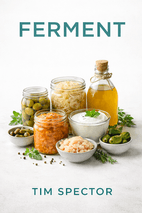
The quotes you will find on this page come from Tim Spector's book Ferment. Each one captures a moment where science meets storytelling, turning microbes into characters and processes into performances. Some lines shock with facts, others delight with playful imagery. They are the kind of lines you want to share because they make you see everyday foods in a new light.
What makes Ferment so quotable is Spector's talent for making complex biology feel like a conversation. He uses metaphors that stick in your mind, like comparing microbes to teams in a game show or describing the gut as a garden. His writing is vivid, personal, and often surprising. These quotes are not just informative; they are invitations to marvel at the hidden world inside us and inside our jars.
Top Quotes from Ferment
“Think of this motley crew as competing teams in a fermentation game show, where teams of microbes will compete for survival.”
The author describes the diverse microbes present on a cabbage before fermentation.
This playful analogy makes the invisible world of microbes relatable and engaging, transforming a scientific process into an entertaining contest that readers can easily visualize.
“Like a magician popping a bunny out of a hat, this is microbial wizardry at its finest and you have a front row seat.”
The author marvels at the creation of novel postbiotic chemicals during fermentation.
The magical metaphor captures the wonder and surprise of fermentation, inviting readers to appreciate the hidden complexity behind a simple kitchen activity.
“The difference between eating raw sliced red cabbage in a salad and fermented sauerkraut is huge - and this is all down to the power of the oldest form of cooking: fermentation.”
The author contrasts raw cabbage with fermented sauerkraut to emphasize fermentation's transformative effect.
This concise statement highlights fermentation as a profound, ancient culinary technique, making readers reconsider the value of a simple food process.
“About half our stools every day are made of tiny dead microbes, which gives you an idea of the sheer numbers involved as well as the fast pace of life in our guts.”
Discussing the fate of microbes after they pass through the gut.
This startling fact makes the invisible microbial world tangible and highlights the immense scale and rapid turnover of life inside us.
“The life of microbes is fast and furious; they can pack a lifetime into a sixty-minute action movie in which they are born, live, eat, fight, reproduce, excrete chemicals and die.”
Opening of the chapter, introducing the dynamic world of microbes.
This vivid metaphor makes the invisible world of microbes exciting and relatable, immediately capturing the reader's imagination.
“It has been proposed that before our discovery of fire, our discovery of fermented foods and their extra nutrients kick-started the rapid growth of human brains at the expense of our guts.”
The author discusses the evolutionary role of fermentation in human brain development.
This line offers a provocative and memorable hypothesis linking fermentation to the very expansion of human intelligence, reframing a simple food process as a catalyst for our cognitive evolution.
“One of my rare ‘Aha’ moments in science was when I found out that identical twin sisters shared less than 25 per cent of their microbiome species with each other.”
The author recalls a surprising discovery about the uniqueness of the gut microbiome in identical twins.
This personal revelation powerfully illustrates the extreme individuality of our microbiomes, even among genetically identical people.
Themes Behind the Quotes
A central theme is the mirror between fermentation and gut health. The same microbial processes that transform cabbage into sauerkraut also occur in our intestines, turning food into beneficial chemicals. This connection shows how fermented foods support our gut ecosystem by supplying live microbes and metabolites.
Another theme is the drama of microbial life. Spector portrays microbes as characters in a fast paced struggle for survival, from kefir grains with minds of their own to microbes forming teams. The quotes also touch on the evolutionary role of fermentation in brain growth and criticize misleading food labels. The message is that understanding fermentation is key to understanding our own biology and embracing microbial diversity for health.
Quotes by Chapter
By the Same Author
“This wonderful cocktail of microbes and metabolites, fibres and polyphenols then enters your internal gut universe to face further struggles for survival in the next round of the fermentation game show.”
The author describes fermented sauerkraut entering the human digestive system.
The vivid imagery of a 'cocktail' and 'gut universe' connects the external fermentation process to internal biology, emphasizing continuity and the ongoing journey of food within us.
Voyage of the microbes – from field to fermenting jar
“It has been a long journey for the microbes, from the cabbage in the field, to the salt-loving kraut microbes in a jar, to the heroic martyrs in the intestine who deliver their chemicals and die off.”
The concluding reflection on the entire microbial voyage from field to gut.
This poetic summary personifies microbes as heroic travelers, giving emotional weight to their role in human health and underscoring the chapter's central narrative.
Meet the fermenters
“A 2024 study, which was the culmination of five years of work from an EU consortium, finally answered some big questions and tripled the number of food microbes we know about.”
Describing a landmark research effort that expanded our knowledge of food microbes.
It highlights the rapid pace of scientific discovery and the vast unknown still waiting to be explored, inspiring curiosity.
“This 3 per cent figure emphasises that the trillions of microbes in your gut can come from many different non-food sources, including the air, soil, animals and other humans. It also shows that the microbes we do share with food punch above their weight in their health benefits.”
Discussing how only a small percentage of gut microbes originate from food.
It reframes the importance of food microbes, showing they are a small but disproportionately influential part of our microbiome, empowering readers to value fermented foods.
“What we discovered is that although newborn infants lack this microbe, just a kiss from a coffee-drinking parent can colonise the gut in low levels.”
Revealing findings about the coffee-associated microbe Lawsonibacter.
This surprising fact about microbial transmission through affection makes the science personal and intimate, showing how deeply our social lives shape our gut health.
Fermenting around the world
“In fact, what happens in a fermentation jar, whether it contains cabbage and salt or tea and sugar, is mirroring what happens every day in our large intestine as trillions of microbes attack and transform our food into healthy chemicals.”
The author draws a parallel between external fermentation and internal digestion.
This vivid analogy makes the abstract idea of gut health tangible and relatable, demystifying fermentation by connecting it directly to the body's own microbial processes.
“To understand fermenting is to understand gut health, so it is crucial to optimising your long-term health and preventing disease.”
The author emphasizes the practical importance of fermentation knowledge.
This concise, declarative statement elevates fermentation from a culinary tradition to a cornerstone of wellbeing, compelling readers to see it as essential, not optional, for a healthy life.
Health benefits – the latest science
“New science has once again shown we were underestimating the complexity of microbes, but it takes a long time to change a scientific dogma.”
The author reflects on their earlier belief that dead microbes were useless.
This line captures the tension between emerging evidence and entrenched scientific beliefs, making it resonate with anyone who has seen slow paradigm shifts in research.
“This keeps the mucous layer neat — like a freshly mown lawn in our gut garden - and so less prone to leakage and inflammation.”
Describing how Akkermansia bacteria maintain the gut barrier.
The vivid gardening metaphor makes a complex biological process instantly understandable and memorable, connecting gut health to a familiar image.
“Unlike taking a selection of shop-bought probiotics, fermented foods are not just a collection of random microbes: they are a tight team working together to use all the chemicals they produce without waste and maximise their collective survival.”
Comparing commercial probiotics to the microbial communities in fermented foods.
This contrast emphasizes the synergy and efficiency of natural ferments, challenging the simplistic view of probiotics and highlighting the wisdom of traditional foods.
“A total of 5,472 people (mean age 64 and BMI 24) managed to log foods every day and also increase their ferment intakes three-fold.”
Reporting results from the ZOE Ferment study.
The large, real-world sample size and specific metrics give credibility to the findings, showing that dietary changes are feasible even in older adults.
Part Three: Ferments
“The key to this new science is understanding that microbes — whether in our food or our gut — are essentially mini pharmacies or chemical factories.”
The author introduces the concept of microbes as chemical producers to explain how fermented foods achieve health benefits.
This vivid metaphor reframes microbes as beneficial miniature factories, making complex science accessible and memorable.
“You might imagine them as colonial invaders arriving in a foreign land and attempting to suppress multitudes of the indigenous residents.”
The author describes a common misconception about fermented food microbes entering the gut.
The colonial invaders image is striking and effectively sets up the correction that follows, emphasizing cooperation over conflict.
“The solution is to cover your bets and go for a full range of different microbes, hoping that at least some of them will differ from the residents.”
The author explains the niche theory of microbial colonization and recommends a practical approach.
This actionable advice simplifies a complex scientific principle into a clear, empowering takeaway for readers seeking better gut health.
Yogurt
“Yogurt magically appears if you cool milk down after heating, allowing lactose-loving microbes to acidify the milk at just the right temperature and curdle the milk protein, producing that smooth semi-solid texture we love.”
The author describes the simple process of making yogurt at home.
This line captures the almost alchemical wonder of fermentation, making a scientific process feel accessible and magical.
“It seems likely that the first yogurt was created - probably by accident — when milk-producing animals were first domesticated in Central Asia around 7,000 years ago.”
The chapter discusses the historical origins of yogurt.
It connects a modern food to ancient, accidental discovery, evoking a sense of deep human history and serendipity.
“That this is still allowed is a disgrace. Our children deserve better protection. We urgently need legislation and clearer labelling to help parents see past the disingenuous packing and health claims on these products.”
The author criticizes the high sugar content and deceptive marketing of children's yogurts.
This is a powerful call to action, blending moral outrage with a clear demand for policy change, making it highly memorable and persuasive.
“Without any health benefits associated with low-fat yogurts, this seems to be a monumental waste of time and energy.”
The author argues against the popularity of low-fat yogurts despite no evidence of health advantages.
The line is succinct, witty, and dismisses a widespread dietary trend with a sharp, almost comic judgment that sticks in the reader's mind.
Kefir
“Living kefir grains have minds of their own.”
Opening sentence of the 'Making kefir at home' section.
It personifies the grains, emphasizing their unpredictable, living nature and setting a tone of respectful curiosity.
“By coming together they have, in fact, become immortal.”
The author discusses how microbes in kefir grains evolved symbiosis.
This line captures the profound power of cooperation, transforming mortality into immortality through teamwork.
“No two kefirs will taste or smell exactly the same.”
The author describes the inherent variability of kefir due to its microbial diversity.
It celebrates the uniqueness of each batch, reminding readers that living foods resist replication and embrace individuality.
“I am addicted to my daily dose of kefir and the process of making it myself.”
The author describes their personal habit of consuming and producing kefir.
This line reveals a genuine, relatable enthusiasm that draws readers into the joy of homemade fermentation.
Tibicos (water kefir)
“I think a better name to use is the Mexican tibicos, but it has many other names including Japanese water crystals and, strangely, California bees.”
Author discussing the various names for water kefir.
The bizarre name 'California bees' makes this line memorable and highlights the obscure history of the ferment.