Do No Harm Quotes
by Henry Marsh
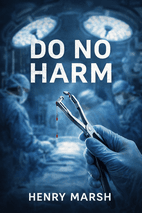
The quotes you will find here come from a brain surgeon's memoir, a book that is brutally honest about the highs and lows of operating on the human mind. You'll encounter lines of deep uncertainty, moments of profound guilt, and the strange beauty of cutting into thought itself.
Henry Marsh writes with a rare blend of technical precision and poetic vulnerability. What makes this book so quotable is not just the drama of life and death decisions but the quiet reflections on failure, aging, and the limits of knowledge. These are words that stay with you long after you close the book.
Top Quotes from Do No Harm
“The idea that my sucker is moving through thought itself, through emotion and reason, that memories, dreams and reflections should consist of jelly, is simply too strange to understand.”
The narrator reflects while operating on a brain, feeling the strangeness of the physical matter containing consciousness.
This line captures the profound disconnect between the tangible substance of the brain and the intangible essence of the mind, a haunting meditation on the mystery of consciousness.
“I also knew that as time went by the grief I felt at what I had done to the young woman would fade. The memory of her lying in her hospital bed, with a paralysed arm and leg, would become a scar rather than a painful wound. She would be added to the list of my disasters - another headstone in that cemetery which the French surgeon Leriche once said all surgeons carry within themselves.”
The narrator thinks about a patient he paralyzed during a previous surgery, acknowledging the inevitable fading of his guilt.
The metaphor of a cemetery of disasters inside every surgeon is stark and unforgettable, revealing the heavy emotional toll of surgical mistakes and the endurance of regret.
“When you approach a patient you have damaged it feels as though there is a force-field pushing against you, resisting your attempts to open the door behind which the patient is lying, the handle of which feels as though it were made of lead, pushing you away from the patient's bed, resisting your attempts to raise a hesitant smile.”
The narrator describes the visceral difficulty of visiting the paralyzed patient after the operation.
This passage powerfully conveys the shame and avoidance a surgeon feels when confronting the human cost of a mistake, making the emotional barrier almost palpable.
“I trusted you before the operation,’ she said. ‘Why should I trust you now?”
The paralyzed patient responds to the narrator's attempt to reassure her that she will improve.
This simple, devastating question lays bare the broken trust between doctor and patient, encapsulating the profound consequences of surgical error in just a few words.
“Death is not always a bad outcome, you know, and a quick death can be better than a slow one.”
Marsh says this to Patrik while discussing the prognosis of the second patient with a malignant brain tumour.
It confronts the uncomfortable truth that in medicine, extending life is not always the most compassionate goal, challenging the reader's assumptions about success and failure.
“The operating is the easy part, you know,' he said. ‘By my age you realize that the difficulties are all to do with the decision-making.”
A senior neurosurgeon tells the young author about the real challenge of neurosurgery.
This distilled wisdom reveals that technical skill is secondary to clinical judgment, a truth that applies to many fields.
“The only reality is intense fear, a fear driven by helpless, overwhelming love.”
The author describes his emotional state while his infant son was hospitalized with acute hydrocephalus and a brain tumor.
This line distills the primal terror a parent feels when a child is in danger, capturing the paradox of love and helplessness.
Themes Behind the Quotes
One central theme is the heavy cost of surgical mistakes. The author repeatedly confronts the guilt and lasting impact on both patient and surgeon. Another theme is the strange disconnect between the physical brain and the intangible mind, a mystery that haunts every operation.
A third theme is the slow erosion of youthful arrogance as experience teaches humility. The author acknowledges that the hardest part is not the surgery itself but the choices before it, and that even the most skilled surgeon cannot escape their own human fragility. Love, fear, and mortality are constant undercurrents.
Quotes by Chapter
2. Aneurysm
“The operation was elegant, delicate, dangerous and full of profound meaning.”
The narrator watches his first aneurysm operation and marvels at its qualities.
This line encapsulates the paradoxical nature of neurosurgery — combining beauty, danger, and deep meaning — and explains why the narrator fell in love with it.
“Neither of us could have known then that my obsession with neurosurgery and the long working hours and the self-importance it produced in me would lead to the end of our marriage twenty-five years later.”
The narrator reflects on how his career choice affected his personal life after telling his wife he would become a brain surgeon.
This sentence reveals the hidden cost of professional dedication, reminding readers that great achievements often come with personal sacrifices.
“I feel like a medieval knight mounting his horse and setting off in pursuit of a mythical beast.”
The narrator describes his feeling of excitement and purpose before starting an aneurysm operation.
The knight-and-beast metaphor elevates surgery to a mythic struggle, emphasizing the surgeon's solitary courage and the gravity of the task.
“Are the thoughts that I am thinking as I look at this solid lump of fatty protein covered in blood vessels really made out of the same stuff? And the answer always comes back — they are — and the thought itself is too crazy, too incomprehensible, and I get on with the operation.”
The surgeon pauses during a difficult dissection of the brain to reflect on the nature of consciousness.
This line captures the profound mystery of mind and matter, and the surgeon's pragmatic decision to suppress existential wonder and continue the operation.
3. Haemangioblastoma
“This is the kind of operation that neurosurgeons love - a technical challenge with a profoundly grateful patient at the end of it if all goes well.”
The narrator describes his enthusiasm for operating on a haemangioblastoma.
It captures the surgeon's passion for a high-stakes, technically demanding case and the deep satisfaction of a successful outcome.
“The reality is very different. Patients are both terrified and ignorant. How are they to know whether the surgeon is competent or not? They will try to overcome their fear by investing the surgeon with superhuman abilities.”
The narrator reflects on the flawed ideal of informed consent after explaining risks to the patient.
It exposes the unsettling power imbalance in surgical decision-making and the human tendency to trust blindly when terrified.
“This metamorphosis from person to object is matched by a similar change in my state of mind. The dread has gone, and has been replaced by fierce and happy concentration.”
The patient is anaesthetized and wheeled into the operating theatre, and the surgeon's anxiety turns to focus.
It poignantly reveals the emotional shift surgeons undergo to perform effectively, depersonalizing the patient while finding joy in the work.
“I then thought of how the value of my work as a doctor is measured solely in the value of other people's lives, and that included the people in front of me in the check-out queue.”
The narrator waits in a supermarket queue after a successful surgery and quells his impatience.
It offers a humble, grounding reminder that every life has equal worth, even when the surgeon's ego wants special treatment.
4. Melodrama
“The eyes are said by poets to be the windows to the soul but they are also windows to the brain: examining the retina gives a good idea of the state of the brain as it is directly connected to it.”
Henry Marsh examines Melanie's eyes with an ophthalmoscope during her examination.
This line elegantly bridges poetic metaphor and clinical reality, reminding readers that the body's secrets are both beautiful and brutally functional.
“But love is unconditional,’ I said and he burst into tears again.”
Marsh says this to the husband of the woman who died after surgery, after the husband expresses fear that his wife might wake up alone.
This simple, human response cuts through the clinical tragedy, showing that even a neurosurgeon can offer the raw comfort of empathy in the face of profound loss.
“She can see again! You're a miracle worker, Mr Marsh! She woke up from the op and she could see the baby! She said her eyesight’s almost back to normal! And our son is fine! How can we ever thank you enough?”
Melanie's husband joyfully rushes up to Marsh after she wakes from surgery and can see.
This exclamation provides the emotional payoff to the chapter's central drama, offering a rare moment of pure triumph amidst the grim realities of neurosurgery.
5. Tic douloureux
“I had to radiate a calm, surgical self-confidence, which was not what I felt.”
The author is operating under pressure with an audience, including a TV crew, during a risky brain surgery in Ukraine.
This line captures the intense internal conflict between professional composure and genuine fear, a universal experience in high-stakes situations.
“The Soviet Union, it used to be said, ‘is Upper Volta with rockets' - Upper Volta, as it was then called, being the poorest country in Africa.”
The author reflects on the disparity between Soviet military might and its failing healthcare system.
This stark metaphor powerfully illustrates the grotesque imbalance between technological achievement and human welfare in the Soviet era.
“Igor proceeded to declare in public that Ukrainian neurosurgery was primitive and backward and that a revolution was required.”
After training in London, Igor openly criticized the Ukrainian medical establishment.
This moment highlights the courage of speaking truth to power, and the tragic consequences of honest reform in a rigid system.
“The eel had disappeared the next day but I was rather saddened to find it later a few yards away under a bush - it had been rejected even by the fox.”
The author buries a rare smoked eel given as a gift, which even a fox refused to eat.
This poignant, absurd image symbolizes extinction, failed generosity, and the melancholy of things that have outlived their purpose.
6. Angor animi
“Even now, more than thirty years later, I can see very clearly the dying man’s despairing expression as he looked at me as I turned away.”
The author recalls a patient who died of a heart attack after he dismissed his symptoms.
This line hauntingly captures the lasting guilt and the painful lesson from a medical mistake.
“So I became hardened in the way that doctors have to become hardened and came to see patients as an entirely separate race from all-important, invulnerable young doctors like myself.”
The author reflects on his psychological change during his houseman year.
It honestly describes the defensive detachment that doctors adopt to cope with daily tragedy, a common but rarely articulated experience.
“I can dare to be a little less detached. Besides, with advancing age I can no longer deny that I am made of the same flesh and blood as my patients and that I am equally vulnerable.”
The author reflects on how his perspective has changed as he nears the end of his career.
It beautifully articulates the return of empathy and shared humanity that comes with the acceptance of one’s own mortality.
7. Meningioma
“I dislike telling patients that their operation has been cancelled at the last moment just as much as I dislike telling people that they have cancer and are going to die.”
The narrator reflects on the emotional toll of cancelling surgeries due to hospital bed shortages.
This line powerfully equates a logistical failure with the devastating act of delivering a terminal diagnosis, underscoring the deep human cost of systemic inefficiency.
“By 2050 a third of the population of Europe will be over sixty.”
The narrator discusses the aging population during a morning meeting with junior doctors.
This stark statistical projection forces the reader to confront the looming challenges in healthcare and society, making the personal stories in the chapter feel universal and urgent.
“I felt an almost overwhelming urge to play the part of a furious, raging surgeon and wanted to roar out, as I would have done in the past: ‘Bugger childcare! You'll never work with me again!’ But it would have been an empty threat since I have little say in who anaesthetizes my patients.”
The narrator is frustrated when an anaesthetist refuses to operate late due to childcare commitments.
This passage captures the tension between the old surgical culture of unchecked authority and the modern reality of shared power, revealing a poignant loss of agency and the impossibility of venting stress in a regulated workplace.
“It's not cool to lose your cool over venous haemorrhage,’ I said to Mike as I gazed a little anxiously into the swirling pool of blood through the microscope. ‘It will always stop with packing.”
The neurosurgeon says this to his registrar while trying to control a severe venous hemorrhage during a trigeminal neuralgia operation.
It captures the surgeon's forced calmness in the face of life-threatening bleeding, balancing bravado with underlying anxiety. The conflicting tone reveals the high stakes and psychological pressure of neurosurgery.
9. Leucotomy
“I am not a superstitious man but I found this very frightening.”
The night before his son's brain surgery, the author accidentally runs over a black cat and recalls the cat icon on his son's hospital wristband.
It reveals how even rational people can be unnerved by coincidence and symbolism when facing life-or-death stakes.