Design Love In Mindmap: Visual Summary of All Chapters | Insta.Page

Design Love In — Interactive Mindmaps

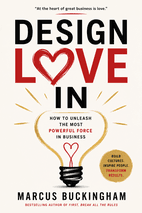
Design Love In by Marcus Buckingham Book Cover

by Marcus Buckingham

Marcus Buckingham's Design Love In provides a practical framework for leaders to operationalize love as a measurable business force, breaking it into five core ingredients and three disciplines for building experiences that drive loyalty, retention, and performance. For leaders at every level seeking to replace failing traditional management with a human-centric approach.

On Insta.page you also get an Apply This Book tool that lets you combine insights from up to 3 books to solve your specific situation.

Chapter mindmaps

Free preview: chapters 1–4 are fully interactive. Click any node to expand or collapse. Subscribe to unlock the rest.

Chapter 1: Introduction: What Now Must Leaders Do?

Key concepts: Introduction: What Now Must Leaders Do?

Introduction: What Now Must Leaders Do?

The New Leadership Context

  • Digital revolution reshaped work and life boundaries
  • Trust in large organizations collapsed to record lows
  • World is abundant yet amoral, efficient yet unloving
  • Original strengths insight still holds but context changed

DLI: Design Love In

  • DLI is deliberately creating genuine human connection
  • Josh renamed division '.Experiences' to signal intent
  • Remembered security guard's son's new job
  • DLI is a discipline, not random charisma

Leadership as Experience Crafting

  • Leadership is shaping experiences that shape behavior
  • Culture is the aggregated experiences of employees
  • Cues like email tone and lighting drive behavior
  • Most leadership advice ignores real human reactions

Local Leaders as Experience Designers

  • Brand and HR set stage but don't deliver experiences
  • Actual experience shaped by how leaders speak and act
  • Trash can location and break room energy matter
  • Local leaders keep promises that others make

The Transactional World We Accept

  • Classrooms focus on grades not talents
  • Employees called 'headcount' in organizations
  • Online attention is mined and monetized
  • We get more of what we accept as normal

Why DLI Matters Now

  • Attracts and retains top talent in tight markets
  • Deepens customer loyalty and fuels resilience
  • Creates flourishing not just functioning
  • Changes moral trajectory of organizations

The Core Leadership Question

  • How to earn best people in distrustful world
  • Deliver value to demanding and distrusting customers
  • Leverage technology while building goodwill
  • Rally people toward a better future

Chapter 2: 1: Experiences Drive Behaviors Drive Outcomes

Key concepts: 1: Experiences Drive Behaviors Drive Outcomes

1: Experiences Drive Behaviors Drive Outcomes

The Causal Sequence: Experiences → Behaviors → Outcomes

  • Outcomes stem from specific behaviors
  • Behaviors are driven by experiences
  • Sequence is straightforward but nonlinear

The Curvilinear Reality of Experience-Outcome Link

  • Relationship between experiences and outcomes is curvilinear
  • Only extreme positive experiences (5s) produce dramatic shifts
  • Moving from 1 to 4 barely moves profitability
  • Lumping 4s and 5s masks the truth

Love: The Only Predictive Feeling

  • Love is the only feeling that reliably predicts behavior
  • Satisfaction, liking, and enjoyment are nonpredictive
  • Love is the boiling point (212 degrees) of feelings
  • Only love transforms feelings into extreme outcomes

The 5s Deserve Serious Study

  • Top performers, loyal customers, and leaders all say love
  • Author initially resisted the unscientific term
  • Data refused to budge toward corporate alternatives
  • Love is measurable and designable

Designing Love In (DLI) as Strategic Shift

  • Shift from fixing problems to designing love in
  • Evaluate decisions through two core questions
  • Will this lead to more customers loving us?
  • Will this lead to more employees loving working here?

Undesigned Experiences Lead to Unpredictable Outcomes

  • Experiences vary wildly even with uniform training
  • High standard deviations show lack of control
  • Common focus on fixing 1-3 world misses opportunity
  • Negativity bias drives ineffective resource allocation

Love as the Most Powerful Business Force

  • No such thing as loveless excellence or loyalty
  • Love drives repeat purchases, advocacy, and extra effort
  • Organizations have strategies for everything except love
  • Love is a measurable, designable force

Chapter 3: 2: Loving versus Unloving

Key concepts: 2: Loving versus Unloving

2: Loving versus Unloving

Redefining Love as Commitment to Flourishing

  • Love is unwavering commitment to another's flourishing
  • Love takes proactive initiative, unlike mere care
  • Restraint can be profoundly loving, as with Mr. Hetherington

The Moral Spectrum and DLI Lens

  • Experiences range from exploitative to transactional to loving
  • Most daily interactions are amoral and indifferent to humanity
  • DLI lens sorts experiences as loving or unloving

Unloving Structures: Handoffs and Shape-Shifting

  • Handoffs break continuity and reduce you to a transaction
  • Shape-shifting erodes trust by changing rules without clarity
  • Delta and United examples show backlash from unloving shifts

Hidden Unloving Practices: Span of Control and Outsourcing

  • Large spans of control prevent humans from being seen
  • Nurses with 40:1 ratios need smaller, connected teams
  • Outsourcing fragments experience and taints overall event

AI and Love: Intent, Guardrails, and ROI

  • AI can be optimized for love by producing loving feelings
  • Intent matters; AI obscures intent, requiring transparency
  • Three guardrails: transparency, mimicry limits, no empathic overreach
  • Real ROI of AI is return on intent when people trust you care

Chapter 4: 3: The Five Feelings of Love

Key concepts: 3: The Five Feelings of Love

3: The Five Feelings of Love

The Five Core Ingredients of Love

  • Control: sense of navigating own actions and choices
  • Harmony: meeting someone where they are emotionally
  • Significance: honoring each person as a special case
  • Warmth of others: genuine connection in an atomized world

The Critical Sequence of Feelings

  • Order matters: control → harmony → significance → warmth → growth
  • Skipping steps makes love feel like empty perks
  • First three foundations must be laid before final two
  • Social media nails first three but stops short of warmth and growth

Control, Harmony, and Significance in Practice

  • Doctors explain conditions plainly to give patients control
  • Nurse shares pain by acknowledging and minimizing it
  • Best professionals ask open-ended questions for significance
  • One size fits one: remember each person's unique story

Warmth and Growth as Higher-Level Love

  • Most organizations design handoffs that isolate people
  • Lululemon celebrates ex-employees and invests in their dreams
  • Growth asks: 'How will you be more capable tomorrow?'
  • Every touchpoint is a teaching opportunity

The Opposite of Love: Legal Thinking

  • Legal thinking turns control into helplessness
  • Harmony becomes jarring, significance becomes unseen
  • Warmth becomes isolation, growth becomes stagnation
  • Love is forward-facing and generous; legality defines boundaries
You've reached the end of the free mindmaps

Next chapter: “5: Design Love In for Your Customers” is locked

See every chapter of Design Love In as an interactive mindmap — and unlock all 500+ book summaries with audio and AI Q&A.

$0.00 due today · 7 days free, then $59.99/year ($4.99/mo) · Cancel anytime before day 7

Continue exploring Design Love In