Delusional Quotes
by James Patterson
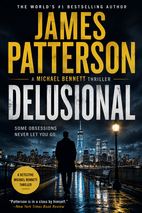
The lines in this collection come straight from the pages of James Patterson's Delusional. You will find sharp dialogue, wry narration, and the occasional inner monologue from characters who do not always say what they mean. Some moments are tense, some are darkly funny, and many stay with you longer than you expect.
What makes Delusional quotable is its mix of hard truths and dry humor. The characters face big questions about justice, loyalty, and human nature, but they still find room for sarcasm and small observations. These quotes work on their own, whether you are looking for a cynical one-liner, a thoughtful take, or just a glimpse of the novel's voice.
Top Quotes from Delusional
“There are two types of people in the world. Those who want to blow it up and those who're content to watch it slowly burn itself out. Which are you, Tom?”
— Ellis Warrenton
Ellis Warrenton tries to recruit Thomas Owens on his porch, framing their shared mission as a choice between destruction and passivity.
It crisply defines the novel's central conflict and gives Ellis a persuasive, quasi-philosophical edge.
“I'm a New Yorker, dammit. I can stand the weather.”
— Mike
Detective Mike Bennett refuses to admit the freezing wind bothers him while waiting outside the Manhattan crime scene.
It's a small, fierce flash of identity, showing Mike's stubborn pride and wry humor.
“You think that's cool? You think that attracts women? Don't be a douchebag.”
— Hernandez
At a Manhattan construction site, Hernandez confronts a worker who made a rude gesture at her.
It's a blunt, satisfying takedown of street harassment and shows Hernandez's refusal to let bullies get away with disrespect.
“It's tough to work a case with someone who can’t make fun of themselves.”
Bennett is glad when Maggie smiles at his teasing instead of taking offense.
It captures the value of humor and humility in any close working partnership.
“I don't care how much training you've been through as a Ranger. No one has ever defeated your mom when she's protecting dinner.”
— Chet Trilling
Chet watches Mona silently stop Rob from trying to sneak an empanada.
It’s a warm, funny reminder that no amount of training can beat a mother’s radar.
“In my experience, decent guys never have to tell me they're not bad guys.”
— Mike Bennett
At the car lot, Arnold Marks insists he isn't a bad guy, and Mike answers with this line.
It distills a hard-won life lesson into a single comeback: self-proclaimed decency proves nothing. It defines Mike as a cynical, experienced detective.
“That's the only philosophy I’m going to follow. All blood runs red.”
— Arnold Marks
After Mike needles him about misquoting philosophers, Arnold drops his friendly front and states his creed.
The line is a chilling, memorable villain motto that reduces moral questions to violence. It makes Arnold Marks immediately menacing.
Themes Behind the Quotes
A major thread is the tension between big ideas and real harm. Several characters wrestle with the urge to make a grand statement and the human cost that comes with it. The novel keeps circling back to extremism, whether through bombs, revolution, or the quieter damage people do to each other.
Another theme is the messy divide between personal and professional life. Cops, agents, and family members keep crossing those lines, especially when loyalty and duty pull in different directions. There is also a running interest in judgment and self-deception. Characters measure themselves by what they say, what they hide, and how they treat the people closest to them. All of this happens against a backdrop of city life, where violence and ordinary routines sit side by side.
Quotes by Chapter
Prologue and Chapters 1-5
“Ns liked to imagine he lived like Ted Kaczynski, the Unabomber.”
The narrator describes Owens's self-image as he works alone at his cabin in the woods.
One sentence reveals the character's dangerous delusion and sets an unsettling tone for the prologue.
“He was curious about the reaction of Pry’'s friends. They both kept their cool. That was a good sign.”
After Owens detonates a blasting cap and blows off Pry's fingers, he watches Ellis and Kimmy's reaction.
The cold detachment in this observation makes Owens genuinely frightening and memorable.
Chapters 6-11
“Every revolution has collateral damage. I'm not saying the cop was collateral damage.”
— Ellis
Ellis answers Kimmy's objection that the dead officer and the slain clerk were real people.
The line is chillingly succinct and reveals how ideology can be used to justify killing.
“But we've got to make a much broader statement if we want to get the entire country's attention. We can do something even greater than Ted Kaczynski did.”
— Tom Owens
At the group's Airbnb, Owens tells Ellis that he wants to escalate from the day's bombing.
It exposes Owens's dangerous ambition and sets up the threat of future violence.
“She was so bright. And friendly. Everyone loved her. Who would want to hurt her?”
— Mrs. Boyd
Abby Boyd's mother speaks to the detective in her brownstone after her daughter was killed in the bombing.
It captures a grieving parent's incomprehension and reminds the reader of the human cost behind the investigation.
Chapters 12-18
“There's nothing hypocritical about that. Church isn’t for everyone. Religion isn't for everyone. But personally, I've found through the trials of my life that it’s something I can depend on.”
— Michael Bennett
Maggie admits she only goes to church at Christmas and Easter, and Bennett responds about faith.
It offers a measured, nonjudgmental defense of personal faith and the comfort it can provide in hard times.
“This is New York. There's a lot more of everybody than we thought. Turns out there’s more domestic violence, more armed robbery, and more grifters than we could comprehend.”
— Harry Grissom
Harry responds after Bennett mentions how many local people have the skills to build sophisticated bombs.
It is a bleak, hard-boiled reflection on the scale of crime in New York and the toll the job takes.
“That's the nicest thing anyone from the FBI has ever said about me.”
— I
Maggie tells the narrator that an FBI profiler had heard of him and his arrests.
It is a dry, self-deprecating comeback that makes the distrust of the FBI sound like a badge of honor.
Chapters 19-24
“The ATF agent didn’t say a word. She didn’t change her pace or even look toward the man. Instead, she simply stuck out her arm and stiff-armed the man like a running back.”
A construction worker catcalls Maggie on a work visit.
It encapsulates Maggie's no-nonsense toughness without a single line of dialogue, making her instantly memorable.
“I kissed Rose good-bye at the back door and watched her walk to her car. The kids were running through the kitchen to try and see her one more time when she opened the door to her patrol car.”
— Armando Vega
Vega's husband describes the last morning of his wife's life.
The small domestic details make the sudden tragedy devastating and human.
“Theories don't stop killers. We need to find a way to prove the theory.”
— Mike Bennett
Mike tells Maggie his theory that someone in the neighborhood noticed Rose Vega's cruiser.
It captures Bennett's practical, driven detective mindset in a crisp, quotable line.
“This isn’t what I expected to be doing. I was trying to extend the warnings Ted Kaczynski gave to the world. He was right about so many things. People really didn’t listen to him back then. I hope people listen to us now.”
— Tom Owens
Owens confesses his doubts to Kimmy in the Airbnb where they are staying.
It reveals the bomber's self-justifying ideology and makes him more disturbingly human than a simple villain.
Chapters 25-30
“I hate to say it, but I don't think Pops even notices. He's kind of in his own little world more and more.”
— Gary
Rob asks Gary how their grandfather is handling the changes in Montana.
It is a quiet, heartbreaking acknowledgment that a beloved grandfather is fading, grounding the larger plot in family loss.
“No one ever really won a bar fight. But Rob Trilling didn’t intend to lose either.”
Rob braces for a fight with the pool players and the couple in the sports bar.
It captures Rob's quiet, stubborn resolve in the moment before violence breaks out.
“People talk. Everyone knows you caught her killer, even though you let the DC cops take the credit. They may have made the case, but you figured it out. You took the risks.”
— Maggie
Maggie tells Bennett why his reputation among federal agents led her to guess Emily Parker's name.
It gives Bennett rare, unsolicited recognition for a sacrifice he never publicized, making his grief and integrity feel seen.
“Right now there are nine of us on shift covering an area a little bigger than all of greater New York.”
— Kirby
The sheriff's deputy lectures Rob after Rob questions why he won't personally review security footage.
It sharply illustrates the resource gap between urban and rural law enforcement and challenges assumptions about small-town police work.
Chapters 31-35
“Well, that's the problem. This isn't a business decision. It’s a personal one.”
— Gary
Gary tells Arnold Marks why he cannot sell the family car lot.
This line names the story's central conflict: some things matter more than money.
“It was odd: He'd been in actual combat, but this kind of thing was what got him confused.”
Rob tries to decipher Cindy's wink and feels anxious about it.
It sharply contrasts battlefield courage with social vulnerability, making Rob relatable.
“Well, Dad's not nice all the time. He's a cop.”
— Shawna
An older woman tells Shawna and Chrissy they are lucky to have such a fun father.
Shawna's blunt honesty is both funny and revealing about how children see a police officer.
“Virtual Spaces is expanding throughout the country. They have no regard for the environment, and their method of tracking employees and people who utilize their services of a virtual office is outrageous. It makes Facebook look like the Yellow Pages.”
— Owens
Owens explains to Ellis why Virtual Spaces is their target.
It chillingly frames corporate surveillance as a justification for destruction.
Chapters 36-42
“It reminded Rob of a building he'd seen in Israel while on a training mission. The building had been hit by a rocket that killed the family of four inside. The smell had never left Rob's nose.”
Rob stands amid the smoke and stench of his brother’s burned car lot.
The image links present-day danger to a haunting traumatic memory, giving Rob’s fear a visceral and lasting weight.
“I was helping a friend in one of the few areas where I was an expert: human greed and violence.”
The narrator catches himself admiring the Montana landscape and remembers his real purpose for being there.
It’s a hard-boiled, self-aware line that distills the novel’s grim worldview.
“Actually it's more old-school. Back in the day, problems sometimes went away if we ignored them. It worked for a long time. Probably will work for a few days at least in this case. Just get your ass back here as quickly as possible.”
— Harry Grissom
Harry reluctantly approves the trip and jokes about leaving town to avoid Internal Affairs.
It captures Harry’s cynical, old-school cop humor and the way he shows approval by grumbling.