Dead in the Water Quotes
by John Marrs
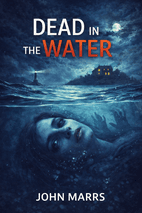
These quotes cut straight to the bone. John Marrs doesn't just write about drowning; he writes about what happens when your past refuses to stay buried. Each line here carries a weight that settles deep in your chest, whether it's the raw terror of someone fighting for survival or the quiet ache of a memory that won't let go.
What makes this book so quotable is its ability to make the invisible feel tangible. The fear, the guilt, the haunting images that cling to the edges of your mind. Every quote pulls you into a world where water isn't just water and a dead child can still walk through your living room. These are the lines you'll read twice, then maybe again.
Top Quotes from Dead in the Water
“It isn't only the water pouring down his throat and filling his lungs that's killing him. It’s her, the person who has him tied in restraints and is forcing his head under the surface.”
Narrator describes the victim's realization during drowning.
This line immediately establishes that the murder is personal and deliberate, not an accident, creating tension and intrigue.
“And then he sees him. A final image before the water consumes him and it all comes to an end. The dead child. The one who started all this.”
The victim's last vision before dying.
This abrupt, fragmented vision introduces a mysterious backstory and an emotional hook, leaving readers desperate to understand the connection.
“Damon turns to her, finds her eyes. ‘The boy I think I killed?”
Damon, barely conscious after being revived, asks Melissa about a boy he believes he killed.
This shocking twist ending recontextualizes the entire chapter, introducing a hidden tragedy that leaves the reader haunted and desperate for answers.
“I have seen things they haven't. Things I can’t explain. Things I keep replaying every time I close my eyes. Things they will never understand.”
Damon describes the haunting memories of his death experience.
The repetition emphasizes isolation and the way certain experiences permanently separate us from others’ understanding.
“I keep dwelling on the fact that I drowned. That for a time, I was dead. And I'm struggling to find a way to deal with the enormity of it.”
Damon admits his difficulty coping after surviving drowning.
This raw confession of existential struggle resonates with anyone who has faced mortality, highlighting the weight of coming back from the edge.
“In body, I am here. I’m living and breathing, but in my mind, I remain trapped under the waves off Brighton's coastline.”
Damon is startled by a coworker and realizes he is mentally reliving his near-drowning.
This line powerfully captures the dissociation between physical presence and psychological trauma, making the reader feel the haunting grip of the past.
“Blood drips through his fingers, some trickling along his arm like red spider legs.”
Damon describes the ghostly boy reaching out for help.
The grotesque simile 'like red spider legs' creates a visceral, creepy image that lingers in the reader's mind.
Themes Behind the Quotes
The most persistent theme is survival and its aftermath. Characters don't just face near death; they have to live with the psychological scars that follow. The act of drowning becomes a metaphor for being overwhelmed by guilt, trauma, and memories that refuse to fade. There is a constant tension between moving forward and being pulled under by what has already happened.
Another strong theme is isolation and the failure of others to truly understand. Friends and family gather to celebrate a second chance, but the person at the center feels completely alone in their experience. The presence of a dead child haunts every page, representing an unresolved past that demands to be confronted. Blood, water, and footprints are physical reminders that some things can never be washed away.
Quotes by Chapter
Prologue
“He fights and fights until he is too exhausted to carry on and the life inside him begins to ebb.”
Narrator depicts the victim's struggle as he drowns.
The repetition of 'fights' and the phrase 'life inside him begins to ebb' powerfully convey the futility and gradual loss of vitality.
“Surrendering to the inevitable marks the beginning and end for him.”
Narrator reflects on the victim's acceptance of death.
A concise, haunting reflection on fate and mortality that resonates with the universal fear of letting go.
Chapter 1: Six Months Earlier Damon
“A year of challenges,’ I blurt out. ‘You and me.”
Damon proposes a year of challenges to his wife Melissa in a pub.
This bold, spontaneous line hooks the reader and sets the central conflict of the chapter, hinting at the couple's shifting dynamics and the risks ahead.
“Damon,’ she says firmly, ‘aren’t we already about to step further away from our comfort zones than we've ever been before?”
Melissa responds to Damon's challenge idea, reminding him of their baby plans.
This line reveals underlying tension and foreshadows the couple's divergent priorities, making the reader question whether their relationship can withstand the challenges.
“I meant signing up for cookery classes or going to more gigs,’ Melissa says. ‘Not wing-walking on bloody biplanes.”
Melissa objects to Damon's extreme interpretation of a challenge.
The contrast between mundane activities and dangerous stunts adds humor while highlighting Melissa's grounded personality and the couple's mismatched expectations.
Chapter 3: Melissa
“The way you're carrying on, I’m doubting you had any in the first place.”
Melissa retorts after Damon complains about his testicles descending in the cold water.
This sharp, humorous jab captures the couple's playful banter and reveals Melissa's no-nonsense personality. It also underscores the tension between her competitive spirit and Damon's reluctance.
“Fear has Melissa in a chokehold as she swims back to where she thinks she last saw Damon, but it's such a disorientating environment, she can’t be certain.”
After losing sight of Damon in the sea, Melissa panics and searches for him.
The visceral image of fear as a physical chokehold immerses the reader in Melissa's sudden terror. The description of the disorientating environment heightens the suspense and isolation of the moment.
“The warmth of her tears as they streak down her face is at odds with the water's sharpness.”
During Melissa's desperate underwater search for Damon, she begins to cry.
This poetic contrast between warm tears and cold seawater powerfully conveys the emotional and physical strain of her rescue attempt. It highlights the raw vulnerability beneath her determined exterior.
Chapter 4: Melissa
“Regrets flow thick and fast, like a swollen river bursting through a dam and swallowing everything in its path.”
Melissa reflects on her regrets as she performs CPR on Damon.
The metaphor powerfully conveys the overwhelming and destructive nature of her guilt, making her internal turmoil vivid and relatable.
“She isn't ready to become the sole guardian of these memories.”
Melissa recalls their shared history while fearing Damon might die.
This poignant line captures the fear of losing a partner and being left alone to carry the weight of a shared life, resonating with anyone who dreads such a loss.
“He is as white as a ghost and she holds on to him for dear life, irrationally fearing that if she lets go, he might float back out to sea, never to be seen again.”
After Damon coughs up water and begins breathing, Melissa clings to him on the beach.
The vivid imagery and irrational fear emphasize the fragility of survival and the depth of her attachment, making the moment intensely emotional and gripping.
Chapter 5: Two Weeks Later Damon
“All my conversations require effort these days.”
Damon reflects on how different socializing feels after his near-death experience.
This line captures the invisible weight of trauma and how it turns even simple interactions into emotional labor.
“But they have yet to say, ‘Damon, how are you really doing after what happened?’ And I've yet to tell them, ‘I'm a bit shit, actually.”
Damon thinks about his friends avoiding the real conversation about his drowning.
It resonates because it exposes the gap between what people ask and what we truly need to say after something life-changing.
“They may be here to celebrate my second chance at life but none of them understands what it's like to have actually died.”
Watching his friends through the window, Damon feels detached from their celebration.
This line starkly contrasts external celebration with internal reality, highlighting how alone someone can feel in a crowd.
Chapter 6: Damon
“The boy I think I might've killed. A red-headed lad, his crumpled body on a pathway separated from a road by trees and bushes.”
Damon recalls a fragmented memory from his near-death experience.
This haunting image blurs the line between memory and guilt, drawing the reader into Damon's psychological turmoil and the central mystery of the chapter.
“You wouldn't have forgotten killing someone.”
Melissa responds to Damon's claim that he might have killed a boy as a child.
The line's simple logic contrasts with Damon's deep uncertainty, highlighting the tension between rational reassurance and unresolved trauma.
“Only two people on earth make me feel safe, and she is one of them.”
Damon thinks about Melissa as they leave the pub together.
This moment of raw vulnerability reveals Damon's fragile emotional state and the importance of his connection to Melissa, grounding the supernatural elements in human need.
“I know how quickly I could've slipped between the cracks.”
After giving money to a homeless woman, Damon reflects on his own precarious past.
The line underscores Damon's empathy and self-awareness, reminding readers of the thin line between stability and destitution, and deepens his character beyond the mystery.
Chapter 7: Damon
“I'm certain my brain was preparing me for the inevitable, protecting me, wanting me to exit this life experiencing something aside from terror.”
Damon reflects on the moment he lost consciousness while drowning.
It captures the mind's strange mercy in the face of death, turning terror into a protective, almost gentle farewell.
“The only person conspicuously absent from those life events was my mum. There wasn’t even a glimpse of her, the person I miss the most.”
Damon realizes his near-death life review omitted his mother.
The absence of the most missed person amplifies the grief and mystery of their relationship, making the loss feel even more profound.
“A deep red pool of blood in the centre of my bathroom floor. And a child's footprints leading into my bedroom.”
Damon steps out of the shower and discovers the disturbing sight.
This stark, visceral image jolts the reader into a new layer of horror and mystery, leaving an unforgettable cliffhanger.
Chapter 8: Damon
“What I saw was one dead person as my life flashed before me.”
Damon responds to Jason's joke about seeing dead people.
It succinctly ties the supernatural vision to a near-death experience, blending the literal and the psychological in a memorable, chilling statement.
“As clear as day, the dead boy is also here and he's standing in the centre of it.”
Damon enters the bathroom and sees the apparition of the boy in a pool of blood.
The phrase 'as clear as day' contrasts the supernatural with stark reality, making the horror immediate and undeniable.