Chain of Ideas Quotes
by Ibram X. Kendi
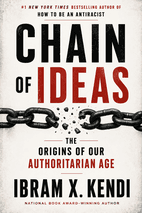
On this page you will find selected quotes from Ibram X. Kendi's Chain of Ideas. They trace the evolution of great replacement theory from its European origins to its modern American iterations. Each line cuts straight to the heart of how racist ideas are repackaged and recycled across generations.
What makes this book so quotable is Kendi's talent for sharp, almost aphoristic phrasing. He turns complex arguments about power, fear, and demography into lines that stick with you. His words are not academic abstractions but urgent, confrontational truths that demand your attention. These quotes are meant to be shared, debated, and remembered.
Top Quotes from Chain of Ideas
“But Hitler's ideological children in the twenty-first century—great replacement politicians—claim to be protecting White lives.”
The author's narrative after describing Germany's transition to dictatorship.
It highlights the ironic and dangerous reversal where modern far-right politicians claim to protect the very group that history shows was harmed by the original ideology's wars.
“Great replacement theory locates White people as the nation’s eternal natives and peoples of color as eternal immigrants—even if their ancestors have lived on the land for hundreds or thousands of years, even if they were born in the nation, even if they are citizens of the nation, even if they are the president of the nation.”
The author's definition of great replacement theory.
This precise definition lays bare the contradiction between the ideology and reality, showing how birth and citizenship are dismissed by racial nativism.
“The logical extension of the zero-sum story is that a future without racism is something white people should fear, because there will be nothing good for them in it. They should be arming themselves...because demographic change will end in a dog-eat-dog race war.”
Heather McGhee explains the zero-sum narrative in her 2021 book The Sum of Us.
This quote powerfully connects abstract racist ideology to concrete fear and violence, showing how the zero-sum story leads to arming against demographic change, a direct line to the Oslo attacks.
“There is no more violent political theory than great replacement theory, specifically White genocide theory.”
The author concludes that great replacement theory is the most violent political theory.
This line cuts to the core of the chapter's argument, directly linking an abstract ideology to concrete violence and making the danger unmistakable.
“Humanity looks away from the manifestos of great replacement soldiers—as humanity once did Hitler's manifesto—at our own peril.”
The author warns against ignoring the writings of far-right extremists like Breivik.
The historical parallel to Hitler’s manifesto creates a chilling sense of urgency, reminding readers that dismissing such texts has led to catastrophic consequences before.
“Racism is a virus of predatory policies, practices, and ideas that harm humanity.”
The author's analysis of how racism spread through the financial system during the Great Recession.
This powerful metaphor encapsulates systemic racism as a contagious, destructive force, making the abstract concept visceral and memorable.
“The great replacement political equation: more Black citizens = Black power = Black supremacy = White subjection = White genocide.”
The author summarizes the core logic of great replacement theory as articulated by figures like Johnson and Pollard.
The stark, almost mathematical brevity of this equation lays bare the irrational fear that has fueled racist policies from Reconstruction to the present.
Themes Behind the Quotes
The quotes from Chain of Ideas revolve around the dangerous logic of zero sum thinking. Demographic change is framed as a direct threat to White people, with equality for others meaning loss for them. This binary view has been used for centuries to justify exclusion and violence. Another persistent theme is the historical recycling of replacement narratives. From anti Catholic sentiment in the 1800s to modern anti immigrant rhetoric, the same core idea is repackaged in new language.
A third theme is the uncomfortable link between these ideas and real world violence. Multiple quotes reference shooters and lynchings, showing how abstract theories turn into deadly action. Kendi also reveals how political figures mainstream these ideas by softening their tone while keeping the structure intact. Ultimately, the book offers an alternative path, one that rejects the zero sum premise and instead builds policies that reduce inequality for all.
Quotes by Chapter
Chapter 1: Collaborators
“In 1948, Binet accused “anti-racists of the crime of genocide because they” are “imposing on us a crossbreeding that would be the death and destruction of our race and civilization.””
From the text describing René Binet's 1948 accusation.
It illustrates the rhetorical strategy of projecting one's own violent intentions onto opponents, a hallmark of great replacement theory.
“But once disguised in new language and aimed at new targets, the same ideas attracted new adherents.”
The author's commentary on the evolution of neo-Nazi ideology.
It encapsulates the core insight of the chapter: that the same toxic ideas can gain popularity when repackaged for modern audiences.
Chapter 2: Birther
“You feel betrayed. The president is their president, not your president.”
From Arlie Russell Hochschild's 'deep story' of white resentment.
It captures the emotional core of replacement fears, where political identity is framed as zero-sum and racial loyalty overrides civic belonging.
“They are Black people, women, immigrants, and Muslims who were at the back of the line, behind you.”
From Hochschild's deep story describing who is seen as cutting in line.
The line explicitly lists the scapegoats in replacement narratives, revealing the intersection of race, gender, and religion in white grievance.
Chapter 3: Orchestrated Distancing
“It's really an invasion. I call it the Camp of the Saints.”
Steve Bannon said this on his Breitbart radio show in January 2016, referencing the novel to describe migration.
The phrase captures how a key political strategist weaponized a fringe novel's imagery to reframe immigration as a hostile takeover. Its bluntness and viral potential make it a memorable soundbite that spread across far-right media.
Chapter 5: Oslo
“Stop your genocide against our white nations.”
Sign displayed by Anders Breivik during his trial after the 2011 attacks.
This line starkly reveals the perpetrator's twisted worldview, framing his mass murder as a defensive act against perceived racial annihilation, a chilling echo of great replacement theory.
“An allegory for great replacement theory.”
The author describes Breivik luring victims by pretending to be a police officer on Utoya.
This succinct sentence crystallizes the horrifying tactic as a metaphor for the entire ideology: deception and hunting under the guise of authority.
“It would be impossible to change the system democratically.”
Breivik's stated reason for leaving the Progress Party and planning his attack.
This line demonstrates the fatal turn from political engagement to violent extremism, a key point in understanding how radicalization occurs.
Chapter 6: Declaration of Independence
“Both cultural Bolshevism and cultural Marxism defy any stable meaning beyond the intent to stigmatize and otherize antifascist and antiracist intellectuals, particularly those who are Jewish or Black.”
The author explains how the term 'cultural Marxist' was repurposed from Nazi vocabulary to target specific groups.
This exposes the hollow but dangerous function of these labels, revealing how they are used as weapons rather than as definitions, and it resonates with anyone targeted by such smears.
“Breivik defined multiculturalism through a zero-sum logic: a “European hate ideology which was created to destroy our European cultures.””
The author describes Breivik's twisted redefinition of multiculturalism in his manifesto.
It vividly captures the paranoid, zero-sum worldview that drives great replacement theory, showing how a concept of inclusion is reframed as an attack.
Chapter 8: Who Is France?
“France is Brigitte Bardot. That's France.”
Marine Le Pen in a 60 Minutes interview, defining France in opposition to Muslim symbols like the burkini.
This line crystallizes exclusionary nationalism by contrasting a white, secular icon with contemporary diversity.
“We are still above all a European people of the white race, of Greek and Latin culture and of the Christian religion.”
Charles de Gaulle writing about the integration of Algerian Muslims into France.
It reveals the racial and religious foundations of French identity from a revered leader, exposing the deep roots of the 'great replacement' mindset.
“The real question, the one that really arises, is the life or death of some forty million French people.”
Charles Maurras in 1912, articulating the zero-sum logic of demographic replacement.
This phrase encapsulates the existential panic that drives anti-immigrant rhetoric, framing diversity as a threat to national survival.
“When a politician wages war on another religion, it opens the door to war being waged on their own religion too.”
The author's analysis of the self-destructive nature of zero-sum religious rhetoric.
It offers a universal ethical warning that applies beyond France, showing how persecution of minorities ultimately undermines religious freedom for all.
Chapter 9: Lost Cause
“Because they thought in a zero-sum imaginary: that some group had to be enslaved, and those enslaved peoples could secure their freedom only through the enslavement of their former masters.”
The author explains the mindset of historical enslavers and colonizers who justified barbaric systems.
This line crystallizes the paradoxical zero-sum logic at the heart of many historical atrocities, making it a powerful distillation of the chapter's thesis.
“But what Blum and his fellow crusaders have done—what great replacement theorists the world over have done—is to convince everyday White people to resist antiracist policy changes that actually help them by reducing the advantages of super-rich White people.”
The author critiques Edward Blum's campaign against affirmative action and the broader strategy of great replacement advocates.
This sentence exposes the cynical manipulation that pits ordinary people against their own interests, revealing the class dimension often hidden in racial rhetoric.
“There is a third way beyond the zero-sum choices of White supremacy or White subjection: antiracist policy.”
The author offers a conclusion after detailing the historical and contemporary failures of zero-sum thinking.
It provides a clear, hopeful alternative that reframes the debate, reminding readers that equitable solutions exist beyond the false binary.
Chapter 10: Long Shadow
“Her orchestrated distancing from him ensures that no one knows where his shadow of bigotry ends and hers begins.”
The narrator reflects on Marine Le Pen's attempts to distance herself from her father Jean-Marie Le Pen's overt racism.
This line crystallizes the insidious nature of modern far-right politics, where rebranding obscures ideological continuity, making complicity harder to pin down.
“As if the antiracist demonstrators are the problem. As if the living and breathing police officers are the victims.”
The narrator contrasts Le Pen's call to ban protests against police brutality with Trump's similar rhetoric after George Floyd's murder.
The stark inversion of victim and perpetrator exposes the gaslighting logic that protects state violence and blames those who resist it.
“Is her father’s flame now burning as brightly as ever?”
After Marine Le Pen kept the party's flame logo despite renaming the party, the author questions whether the ideology truly changed.
This rhetorical question lingers, forcing readers to consider whether cosmetic changes mask an unchanged core of bigotry and nationalism.
“But their children, the people leading their political parties in the twenty-first century, are commonly described by reporters in more anodyne terms—as a conservative, “a practiced politician,” or “a straight-talking working mom and French everywoman, doing her best to make people forget her party’s past,” to use Cooper's description of Marine Le Pen.”
The narrator contrasts how past racists were labeled versus how their modern successors are portrayed by media.
This passage exposes the media's role in sanitizing extremist lineages, normalizing figures who inherit and repackage hateful ideologies.
Chapter 11: Know Nothings
“The Know Nothings pushed a great replacement theory that Catholic priests and bishops were influencing Catholic immigrants, like Cesar Lombardi, to assume control of the United States, to serve the interests of the pope, and to eliminate the civil and religious freedoms of Protestants.”
The narrator describes the ideology of the Know Nothing Party.
This passage explicitly ties a historic political movement to the 'great replacement' conspiracy, making the reader realize such ideas are not new and have targeted different immigrant groups over time.
“Between 1886 and 1910, mobs lynched more than twenty-nine White people of Italian descent in the United States, including eleven from Sicily in a single mass lynching in New Orleans in 1891.”
The narrator recounts violent consequences of anti-Catholic and anti-immigrant sentiment.
The stark statistic and the specific mention of a mass lynching underscore how deadly xenophobic fears can become, grounding abstract conspiracies in brutal historical reality.