Catch the Devil Quotes
by Pamela Colloff
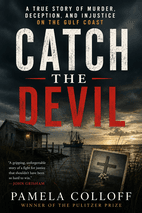
This collection of quotes from "Catch the Devil" captures the raw and unsettling world Pamela Colloff reveals. You will find lines that shock with their casual cruelty, moments of eerie self awareness, and the quiet desperation of those caught in a predator's web. The book is quotable because its dialogue and observations are so vivid and real, they feel like eavesdropping on a tragedy. Each quote peels back another layer of a story that is equal parts true crime and human nature. Whether it is a boast, a lie, or a stark image of violence, these lines stay with you long after you read them.
Top Quotes from Catch the Devil
“If I was on the witness list, people would take deals,” Skalnik said. “I never lost a case—never ever.”
Skalnik boasts about his reputation as a star witness in Pinellas County, Florida.
It reveals his arrogance and the power he believed he held, while also hinting at the manipulative nature that would later become apparent.
“That Christmas, to win her over, he presented her with a lavish gift: a glittering Seiko watch that he told her was made of 24-karat gold and inlaid with diamonds. It glittered in the light. Lisa looked up at him, unsmiling, and asked if it was real. Skalnik broke into a grin. “Looks real to me,” he said.”
Skalnik gives Lisa an expensive watch as a bribe for affection, but she challenges its authenticity.
This exchange is a microcosm of Skalnik's entire persona—all glitter, no substance. Lisa's unsmiling question and his evasive, cheeky reply reveal her skepticism and his hollow charm, making it a memorable turning point.
“One of them, he recounted, had pushed Torres off a steep embankment into the bayou, crying out, “Let's see if this wetback can swim.””
A rookie officer recounts what he saw during the beating of José Campos Torres.
This line captures the racist dehumanization that fueled the violence, and it became a rallying cry for the community's outrage.
“Florida prison officials characterized him shortly before his transfer to Arizona as a “con artist of the highest degree” who was “without any remorse,” warning that his “post-release prognosis would be guarded.””
Official assessment of Skalnik by prison authorities, contrasting with the leniency advocated by prosecutors and law enforcement.
This stark evaluation exposes the true nature of Skalnik that was ignored by the system that used him, highlighting the moral cost of cutting deals with informants.
“Her death, it was immediately evident, had been singular in its violence.”
The narrator describes the discovery of Shelly's body at the crime scene.
This line starkly summarizes the brutality of the murder, setting a chilling tone for the investigation.
“Water had lodged in her lungs, suggesting that she had still been alive when her head went under the water.”
The narrator reveals the cause of death and the additional suffering Shelly endured.
This detail adds a layer of tragic cruelty, implying she was conscious while being drowned after being stabbed, deepening the emotional impact.
“Throughout the investigation, Shelly remained a ghost in her own narrative: a girl reduced to her name, her age, and the awful circumstances of her death.”
The narrator reflects on how Shelly Boggio was treated as a mere abstraction in the murder investigation.
This line powerfully captures the dehumanization of a victim, reducing her life to a few grim details. It resonates with readers by highlighting the tragic erasure of a person's full humanity.
Themes Behind the Quotes
A central theme is the chasm between appearance and reality. Time and again characters are deceived by charm, confidence, and grand gestures, only to discover a monstrous truth underneath. The quotes highlight how easily trust can be manipulated and how people rationalize what they want to believe, even when the warning signs are clear. Another theme is the dehumanization of victims, who are often reduced to statistics or ghosts in their own stories. Their suffering is depicted with brutal honesty, forcing the reader to confront the violence and neglect that society can overlook. The interplay of power, greed, and the failure of institutions also runs through many of the selections, showing how a con artist can operate unchecked for years.
Quotes by Chapter
Prologue
“Like much of what he told me during our brief time together, it was impossible to know if this was true.”
The author reflects after Skalnik shows him a bloody rag and claims he is dying of cancer.
It encapsulates the central uncertainty of the story, forcing readers to question the truth of everything Skalnik says.
“I refused to admit to myself, until it was much too late, that Skalnik had been stringing me along.”
The author realizes after Skalnik stops responding to letters that he had been manipulated.
It shows the author's painful self-awareness and the theme of deception, making the reader reflect on their own gullibility.
Chapter 1: Skalnik
“Restraint, Lisa noticed, was not his strong suit.”
Lisa observes Skalnik's behavior after he began dating her mother.
This line succinctly captures Skalnik's lack of moderation and foreshadows his later excesses and deceit. It resonates because it's a simple, damning observation that reveals character through the eyes of a perceptive teenager.
“Despite his show of outrage, he seemed to enjoy being the center of attention, she thought. As he barked orders, Lisa wondered if anyone was on the other end of the line.”
Lisa watches Skalnik pretend to arrange a Learjet trip to New York, suspecting his fury is performative.
This passage highlights Lisa's growing awareness of Skalnik's theatricality and possible deception, making readers question his authenticity. The image of a one-sided phone call is powerfully unsettling.
“His wolfish appetite for all things—alcohol, spending money, her mother's attention—seemed to have no limits.”
Lisa's internal summation of Skalnik's insatiable greed and need for control.
The visceral 'wolfish appetite' metaphor vividly conveys his predatory nature and his inability to be satisfied. It encapsulates the core threat he poses to the family.
Chapter 2: Fool Me Once
“But to actually see such a thing unfold— to witness a man lying when three people's lives were on the line—floored him.”
Narrator describes Thomas Hirschi's reaction during Skalnik's false testimony at trial.
This passage captures the shock and disbelief of watching a witness lie so effortlessly, underscoring the injustice of the trial and the corruption of the informant system.
“All he said was, “Why the handcuffs, Kenny?””
Skalnik asks Rodgers why he is handcuffed after being arrested at the beach house, wearing Rodgers's own clothes.
The audacity of the question, given Skalnik's blatant theft and betrayal, highlights his manipulative and unrepentant character.
“He is not a threat to society in any way. He is a good person.”
Penny, Skalnik's wife, writes a letter to the judge asking for mercy on his behalf after he abused and financially drained her.
The plea shows the tragic cycle of abuse and loyalty, revealing how victims can still defend their abusers, adding depth to Skalnik's manipulation.
Chapter 3: Sunshine State
“People came to Pinellas County because it promised to be better than whatever they left behind.”
The narrator describes the motivation of newcomers to Florida's Pinellas County.
This line captures the universal human desire for a fresh start and the seductive promise of Florida as a land of opportunity, setting the stage for the characters' hopes and disappointments.
“Just leave him there,” the woman said with a tired wave of her hand. “Walk away and don’t look back.”
A bail-bond woman gives unsolicited advice to Suzanne after she learns her husband Skalnik has been arrested for grand theft.
The blunt, weary advice foreshadows Skalnik's pattern of deceit and betrayal, and resonates with readers who recognize the futility of trusting a habitual liar.
“I have never violated the trust of a judge,” Skalnik had assured Penick in a letter he wrote before his sentencing, “and promise you I will not in the future.”
Skalnik writes to Judge Penick ahead of his sentencing for grand theft.
The irony is devastating: Skalnik's entire history is a series of broken trusts, yet he makes this solemn promise with apparent sincerity, highlighting his masterful manipulation.
“Whatever he wanted, it seemed, was his for the taking.”
The final line of the chapter, as Skalnik relaxes with new friends after being placed on probation.
This chillingly optimistic sentence captures Skalnik's apparent invincibility and the unsettling ease with which he evades consequences, leaving readers uneasy about what he will do next.
Chapter 4: Confidence Man
“We had a great deal of confidence in Paul.”
Harry Garner explains to a detective why he and his wife trusted Skalnik despite knowing he was a convicted thief.
The stark contrast between the word 'confidence' and Skalnik's betrayal highlights the tragic gullibility of victims and the cunning of a confidence man.
“Are you now concealing any facts concerning your sexual contact with Paul Skalnik?”
A polygraph examiner asks Karen this accusatory question while she is strapped to a lie detector.
The question's invasive tone reveals how the burden of proof was placed on a twelve-year-old victim, making it a powerful symbol of systemic injustice.
Chapter 6: The Closer
“The message I got was that what he did was okay —that it wasn't serious, it wasn't a crime.”
Karen reflecting on the state's decision not to prosecute Skalnik for molesting her.
This line powerfully conveys the betrayal and invalidation felt by a child victim when the justice system fails to hold an abuser accountable.
“He is not who you think he is. You've been taken in by him.”
Suzanne pleading with those who continued to support Skalnik after learning of his crimes.
The line underscores Skalnik's masterful manipulation and the tragic blindness of those who believed his facade.
“Of course he would be nice to me; he took all my money.”
Viola Giovanniello later reflecting bitterly on Skalnik's kindness after realizing she had been defrauded.
The dark irony and resigned clarity of this remark resonate with anyone who has been deceived by a manipulative predator.
Chapter 7: Jim
“And they came back, and they were different boys.”
Jim's mother describing the change in Jim and his brother after their military service in Vietnam.
This line encapsulates the devastating psychological toll of war, showing how it fundamentally altered men who left as 'lovely young men.'
Chapter 8: Shelly
“Thirty-one stab wounds pierced her body. Her right jugular vein was severed, her left lung punctured, her face slashed.”
The narrator lists the specific injuries found on Shelly's body.
The precise and graphic detail forces readers to confront the extreme violence inflicted on a young girl, making the horror unforgettable.
“Until becoming the focus of an urgent homicide investigation, Shelly had passed through the world almost unnoticed.”
The narrator reflects on Shelly's life before her murder became a high-profile case.
This poignant observation highlights the tragedy of a young life that went unnoticed until the moment of her violent death, evoking empathy and a sense of injustice.
Chapter 9: Jack
“I may be carrying your child!” she cried out. “Why don't you kick me again?”
Lori Cupp cries out to Jack as he kicks her in the stomach while she may be pregnant.
This raw, desperate plea highlights the brutality of domestic violence and the vulnerability of the victim, evoking outrage and sympathy.
“What they got, the electric chair down there?”
Jack, realizing the severity of his situation, asks about the death penalty in Florida.
This abrupt, darkly casual question shows Jack's sudden fear of consequences, contrasting with his earlier coolness and highlighting the stakes of the murder investigation.
“I was just scared. I just wanted to get out of the area. I went back home and I packed my suitcase and hit the road.”
Jack explains why he fled after the murder, admitting his fear and desire to escape.
This admission of cowardice reveals Jack's self-preservation instinct and his moral evasion, making him a compellingly flawed figure.