Can't Hurt Me Key Takeaways
by David Goggins
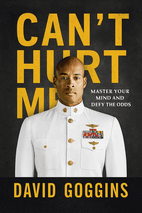
5 Main Takeaways from Can't Hurt Me
Embrace Suffering as the Only Path to Growth
David Goggins argues that comfort and avoidance keep us operating at just 40% of our potential. True transformation only happens when we deliberately seek out pain—whether physical, emotional, or psychological—and learn to see it as proof of progress rather than punishment.
The 40% Rule: You Are Capable of Far More
Goggins believes that when your mind says you're done, you've only used about 40% of your actual capacity. By pushing through that mental wall using tactics like the Cookie Jar (recalling past victories) and Taking Souls (silently dominating opponents), you can unlock hidden reserves of strength.
Brutal Self-Honesty Destroys Excuses and Fuels Change
Goggins teaches that you must confront your weaknesses, past trauma, and failures head-on. Whether it's admitting you're 'dumb' or owning your role in a setback, this raw accountability strips away denial and creates the foundation for relentless self-improvement.
Use the Cookie Jar to Power Through Crisis
When suffering hits its peak, Goggins instructs you to mentally reach into a 'Cookie Jar' of past achievements—moments where you overcame impossible odds. Re-experiencing those feelings of triumph releases adrenaline and endorphins, giving you the psychological armor to endure.
Stop Competing Against Others — Outdo Your Former Self
External validation is a trap. Goggins emphasizes that the only true competition is with the person you were yesterday. By focusing on incremental, consistent gains (1% better each day) and refusing to compare yourself to others, you build unshakable resilience and sustainable excellence.
Executive Analysis
These five takeaways converge on a single thesis: human potential is almost entirely untapped because we avoid discomfort and cling to comfortable lies. Goggins systematically dismantles the excuses of genetics, environment, and past trauma, replacing them with a playbook of mental callousing—embracing pain, radical self-honesty, memory-based resilience (Cookie Jar), silent domination (Taking Souls), and internal competition. The central argument is that sustained suffering, not motivation or talent, is the only reliable engine for growth.
"Can't Hurt Me" matters because it flips traditional self-help on its head. Instead of offering gentle encouragement, Goggins delivers a brutal, no-excuses manifesto grounded in SEAL training, ultra-running, and his own harrowing childhood. The book sits in the extreme-accountability subgenre alongside works by Jocko Willink and Tim Ferriss, but its visceral storytelling and concrete daily challenges make it uniquely actionable. Readers finish it not with inspiration but with an uncomfortable call to actually do the work—starting with one uncomfortable thing every day.
Chapter-by-Chapter Key Takeaways
Introduction (Introduction)
Denial is universal: Most people operate at 40% capacity, trapped in comfort zones by neurological habits.
Motivation fails: Inspirational shortcuts don’t rewire brains; lasting change requires embracing suffering.
Limits are illusions: Genetic ceilings are excuses disproven by those willing to do "impossible" work.
Pain is power: Adversity (racism, poverty, depression) becomes transformative fuel when confronted.
Warrior awakening: Transcending mediocrity demands adopting a battle-ready mindset for daily self-mastery.
Try this: Identify the areas where you're operating at 40% capacity—your comfort zones—and commit to one daily act that forces you to embrace discomfort, such as a cold shower or a difficult conversation.
1. I Should Have Been a Statistic (Chapter 1)
Escape requires strategy and courage: Jackie’s meticulous planning and Betty’s guidance enabled their flight from abuse, highlighting how resourcefulness can break cycles of control.
Toxic stress has lifelong impacts: Childhood trauma physically alters brain development, creating learning barriers and health risks that extend far beyond youth.
Environment shapes resilience: Sister Katherine’s high expectations fostered growth, while Ms. D’s inflexibility reinforced David’s insecurities—proving that support systems dictate recovery.
Confront your "bad hand": David challenges readers to inventory their personal adversities—abuse, prejudice, self-doubt—and harness them as fuel for transformation.
Try this: Take an honest inventory of your personal adversities (abuse, prejudice, self-doubt) and write them down as raw materials; then consciously choose to use each one as fuel for a specific goal today.
2. Truth Hurts (Chapter 2)
Wilmoth’s Legacy: His murder shattered fleeting stability, compounding David’s childhood trauma.
Racist Encounters: From gunpoint threats to public slurs, Brazil’s racism intensified David’s alienation.
Identity Struggles: Academic cheating and basketball failures mirrored his internal fraud; hip-hop style became armor.
Institutional Neglect: School leaders dismissed violent racism, deepening David’s isolation.
Radical Refuge: Malcolm X’s ideology offered emotional shelter amid relentless prejudice.
Self-Honesty Ignites Change: Brutal self-assessment ("You’re dumb! Own it!") dismantles excuses.
Micro-Actions Build Momentum: Daily discipline (study routines, fitness) compounds into transformation.
Environment Isn’t Destiny: Systemic barriers matter, but personal accountability unlocks agency.
Discomfort Is Fuel: Seeking challenges (e.g., running in rain) forges resilience.
The Mirror Doesn’t Lie: Physical reminders of goals enforce consistency where willpower falters.
Try this: Stand in front of a mirror and deliver a brutally honest self-assessment of your biggest excuse—own it completely—then schedule one micro-action (e.g., 15 minutes of study or a short run) to start dismantling it immediately.
3. The Impossible Task (Chapter 3)
Breakthroughs Follow Breakdowns: Hitting rock bottom (roach infestation, failed run) forced a choice between perpetual misery or relentless action.
Embrace Discomfort as Fuel: Physical suffering (hypothermic swims, 1,200-rep circuits) became proof of progress, silencing self-doubt.
No Shortcuts Exist: Every corner cut (one skipped pull-up) was repaid with compounded effort to avoid lifelong regret.
Mind Over Misery: Redefining depression as "confirmation I was no longer aimless" transformed anguish into momentum.
Daily Micro-Battles: Sustainable change starts with doing "one thing that sucks every day"—making beds, pre-dawn runs, or confronting weaknesses.
Challenge #3: List discomforts you avoid (especially beneficial ones). Complete one daily. Post evidence with #discomfortzone #pathofmostresistance #canthurtme.
Try this: Choose one task you've been avoiding because it's uncomfortable, and complete it today without shortcuts—no skipping reps or half-measures—to prove to yourself that breakdowns lead to breakthroughs.
4. Taking Souls (Chapter 4)
Psychological Warfare: Hell Week’s true test is mental, breaking recruits through surf torture, sleep deprivation, and manipulative incentives to quit.
Ritual of Surrender: The brass bell forces quitters to confront their choice, separating those who lack resolve.
Mindset as Armor: The narrator’s stolen schedule and defiant humor (e.g., Platoon theatrics) exemplify seizing control in chaos.
Crew Solidarity: Boat crews become lifelines; races and shared suffering forge unspoken bonds critical for endurance.
Voluntary Crucible: Enduring Hell Week rests on answering "Why am I here?"—a question that either breaks or forges SEALs.
Psycho's Grueling Run
After lavish Hell Week meals, trainees faced a brutal run carrying their 200-pound boat. Psycho Pete deliberately extended the route, sprinting, crouch, and changing pace to break them. Boat Crew Two, led by the narrator and anchored by Freak Brown, mirrored Psycho’s every move. Despite exhaustion, they stayed on his heels, refusing to let him break them while other crews fell behind.
Harnessing Defiance
By Wednesday, Boat Crew Two was physically shattered—bleeding, swollen, and mentally drained. During a boat-raising drill, the narrator ignited their spirit by taunting the watching instructors: "They can go fuck themselves!" The crew threw the boat overhead with violent energy, chanting, "YOU CAN’T HURT BOAT CREW TWO!" Their pain faded as they entered a euphoric second wind. Instructors stared in disbelief; only SBG (Senior Chief) seemed pleased.
Defining "Taking Souls"
This moment birthed the narrator’s lifelong tactic: Taking Souls. It’s about summoning hidden reserves by dominating opponents mentally. Key principles:
Self-Game: It’s internal—your opponent may never know.
Tactical Prep: Study the "terrain" (rules, weaknesses) and your adversary. List your insecurities to disarm bullies (e.g., laughing at yourself).
Leverage Pain: Smile at suffering—it’s temporary. Second winds (endorphin-driven or psychological) follow relentless effort.
Universal Tool: Apply it to interviews, office politics, or physical trials by excelling when you feel weakest.
SBG’s Ultimate Test
Post-drill, instructors granted an hour’s sleep. Psycho woke the narrator after one minute for solo surf torture. Later, SBG ordered him to swim alone through stormy, pitch-black ocean to find his distant boat crew—a lethal risk. Swallowing terror, the narrator flailed through waves, shouting hoarsely until rescued by Brown. SBG later admitted this was an unprecedented test of his limits.
Hell Week’s Climax
In the final hours, trainees balanced on a mud-slick rope bridge while instructors shook it violently. The narrator, nursing a grapefruit-sized knee, held firm until thrown off—laughing in the freezing mud. When SBG secured Hell Week, only 30 men remained. Boat Crew Two was the sole unit intact, having won every race.
Aftermath and Symbolism
Celebrating with pizza and brown T-shirts (marking Hell Week survivors), the narrator saw helmets of 100+ quitters. His knee required crutches, but Walk Week offered brief respite. Yet First Phase loomed: knot-tying drills in a pool where instructors would "try to drown" him. The chapter closes with a visceral taunt: Enjoy your extended stay in Hell!
Challenge #4: Claiming Excellence
Apply "Taking Souls" to any competition:
Identify your adversary: Boss, coach, or critic.
Outwork them: Arrive earliest, leave latest, exceed standards.
Dominate silently: Study opponents’ tendencies; submit flawless work.
Force their awe: Make them witness achievements they couldn’t replicate.
Goal: Transform their negativity into your fuel—and take their soul.
Mental Alchemy: Convert exhaustion into empowerment by attacking challenges with theatrical defiance.
Soul-Taking Blueprint: Research adversaries, master your weaknesses, and excel when you’re at your worst.
Universal Resilience: This tactic transcends SEAL training—use it in careers, sports, or personal battles.
Pain as Catalyst: Embrace suffering as finite; string seconds of endurance together to break opponents.
Silent Victory: Often, the most powerful wins are those where only you know you’ve conquered.
Try this: Identify a person or situation that intimidates you, then silently outwork them by arriving earlier, leaving later, and exceeding every standard—smile through your pain and let your performance speak for itself.
5. Armored Mind (Chapter 5)
Confront Your Core Wounds: Mental armor forms only by facing the source of fears—denial leaves foundations cracked.
Ego Destroys Resilience: Dobbs’ collapse shows that measuring yourself against others ignores the team reliance needed in extreme trials.
Callousness ≠ Heartlessness: Accepting harsh realities (like Skop’s death) is survival armor in high-stakes environments.
Pain as Fuel: David’s tape ritual proves suffering can be harnessed when framed as proof of growth, not punishment.
The Mind Commands the Body: Running on fractures defies logic but demonstrates absolute will—"You are a fucking machine!"
Embrace Suffering as Refinement: Physical agony in training (e.g., weighted swims) forges mental armor by exposing limits and expanding them through repetition.
Psychological Exclusion as Victory: When instructors halted beat-downs, it signaled the narrator’s mental dominance—proof that relentless enthusiasm can disarm oppressors.
Graduation ≠ Fulfillment: Achievement often sparks emptiness if the process of struggle becomes the purpose; true growth lies in perpetual self-challenge.
Visualization Demands Strategy: Success requires rehearsing both triumph and adversity while grounding dreams in relentless work.
Define Your Darkness: Answering "why" sustains momentum; past pain, when harnessed, becomes propulsion.
Try this: List your deepest fears or insecurities, then deliberately confront one of them today (e.g., publicly laugh at a weakness) to begin forging mental armor that no external attack can penetrate.
6. It’s Not about a Trophy (Chapter 6)
Embrace the Cookie Jar: Revisit past victories—big or small—to fuel resilience during suffering.
Suffering Reveals Purpose: Extreme challenges strip away external motivations, forcing confrontation with inner resolve.
Small Sparks Ignite Infernos: Incremental wins build the confidence to tackle monumental tasks.
Mind Over Matter: Human potential expands when mental discipline overrides physical collapse.
The author reflects on his grueling 101-mile run, viewing the intense suffering afterward as his true "trophy ceremony"—proof he’d temporarily mastered his mind. Curled shivering in a tub, he savored the pain as validation of his achievement while envisioning greater feats with actual preparation. This visceral experience anchors the chapter’s core tool: the Cookie Jar.
Suffering as proof: Extreme discomfort can signify mental mastery, not just physical achievement.
Cookie Jar as weapon: Your documented past victories become instant psychological armor against quitting.
Active recall: Merely listing triumphs isn’t enough—reignite the feeling of overcoming to power new goals.
Micro-challenges: Regularly test limits (physical/mental) to practice cookie deployment in real-time.
Try this: Create your own 'Cookie Jar' by writing down three past victories where you overcame odds, and when you feel like quitting today, pause for 60 seconds and vividly re-experience the emotions of one of those triumphs.
7. The Most Powerful Weapon (Chapter 7)
Resilience vs. Rejection: David’s triumph in San Diego is met with bureaucratic dismissal, forcing him to seek validation through even greater challenges.
Breakthrough in Adversity: The unplanned Boston qualification in Vegas becomes a metaphor for untapped human potential, challenging societal complacency.
Ingenuity Under Duress: His makeshift injury management—tape, inserts, wedges—highlights adaptability when conventional recovery is impossible.
The Cost of Inexperience: Underestimating trail-running demands (nutrition, gear, terrain) turns the Hurt 100 into a survival test, exposing David’s tactical gaps.
Camaraderie in Suffering: Shared struggle bonds runners, yet the sport’s brutality demands solitary resolve when others falter.
Embrace Suffering: Physical agony trains mental command—each battle against quitting fortifies resilience.
Incremental Gains: Small, consistent pushes (5–10%) compound into transformative breakthroughs.
No Ceilings: Elite performance demands abandoning comfort; "finish lines" are illusions.
Self-Accountability: Compete only against your former self—victory lies in perpetual growth.
Hashtags: #canthurtme #The40PercentRule #dontgetcomfortable
Try this: After any setback, immediately schedule your next attempt before doubt can settle in, and force yourself to examine what went wrong with forensic honesty—focus first on what went right, then on the single biggest gap.
8. Talent Not Required (Chapter 8)
Inspiration through action: Physical demonstrations (e.g., training with youth) prove potential beyond talent.
Non-negotiable work ethic: The 40% Rule rejects mediocrity; true success demands obsessive scheduling and bullshit elimination.
Adaptive resilience: Setbacks require pivoting, not surrender. Use injuries to strengthen weaknesses.
Mindset over biology: Even severe physical limitations (like a heart defect) can be overcome with mental callousing.
Adversity demands adaptation: Physical limitations forced a tactical pivot to administrative excellence, proving value can be created in any role.
Discipline defeats self-pity: Choosing focused work over victimhood maintains momentum during setbacks.
Time is your most critical resource: Intentional scheduling eliminates multitasking and reclaims wasted hours for meaningful progress.
Rest requires rigor: True recovery necessitates completely disconnecting from work demands.
Accountability fuels commitment: Publicly sharing structured schedules (#canthurtme) reinforces discipline.
Try this: For one week, schedule every hour of your day with laser focus—including dedicated rest blocks—and share your schedule publicly on social media with #canthurtme to build accountability and eliminate time waste.
9. Uncommon Amongst Uncommon (Chapter 9)
Elite Standards Demand Elite Discipline: Safety and precision under fire separate competent operators from liabilities.
Competition Forges Collective Excellence: A high-bar environment pushes entire units beyond perceived limits.
Nonconformity as Strength: Embracing isolation to pursue mastery can redefine "brotherhood" on one’s own terms.
Leadership Through Extreme Ownership: True command means prioritizing others’ success in life-threatening trials.
Transform adversity strategically: Use setbacks as propulsion, not excuses.
Validate your uniqueness: Internal confirmation matters more than external approval.
Outperform the exceptional: Standing out among elites requires relentless, sustained effort.
Embrace friction: Self-created challenges prevent stagnation among high achievers.
Accept isolation: Ultimate excellence often demands sacrificing comfort and conformity.
Try this: Identify one area where you're already strong, then create an artificial friction (e.g., train in worse conditions, take on a harder role) to prevent stagnation and force yourself to remain exceptional among your peers.
10. The Empowerment of Failure (Chapter 10)
Environment matters: Match your physical and mental space to your authentic self (e.g., gritty gyms over "happy factories").
Support is strategic: Cultivate allies who demand resilience, not comfort.
Forensic learning: Post-failure AARs must spotlight positives before dissecting flaws.
Own the inevitability: Decouple goals from timelines to transform "impossible" into "inevitable."
Tactical adaptation: Protect vulnerabilities (e.g., grip) innovatively within constraints.
Embrace the grind: Suffering isn’t fun but essential for breaking barriers.
Victory’s emptiness underscores a growth mindset: achievements matter less than continual self-exhaustion in pursuit of excellence.
Failure is tactical data: Systematically dissect setbacks to identify mindset gaps and actionable improvements.
Immediate reengagement neutralizes failure’s sting—schedule next attempts before doubt resurges.
Mental sovereignty wins: Weaponize rivalry, fatigue, and fear by dominating internal narratives.
Try this: After a failure, conduct a personal After-Action Review that lists three positives before diving into mistakes, then decouple your goal from any fixed timeline and commit to seeing it as inevitable, not impossible.
11. What If? (Chapter 11)
Healing Through Discipline: Chronic physical issues can be addressed through consistent, painful effort—transforming the body’s "frozen" state.
Transformative Resilience: Former comrades and family members exemplify how owning failure fuels reinvention.
Suffering as Catalyst: Trauma and loss are inevitable, but embracing pain builds mental calluses to pursue audacious goals.
The Power of "What If?": This question defies doubt, silencing external negativity and unlocking untapped potential.
Lifelong Reinvention: Growth never stops—whether firefighting at 43 or running faster than in youth, pushing limits is a perpetual journey.
Try this: Choose a chronic physical or emotional pain you've been avoiding, and commit to a daily 10-minute practice (stretching, journaling, or cold exposure) that directly addresses it—transforming that frozen state into fuel for reinvention.
Continue Exploring
- Read the full chapter-by-chapter summary →
- Best quotes from Can't Hurt Me → (coming soon)
- Explore more book summaries →