Blockers Quotes
by Michael Lewis
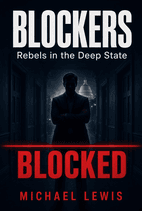
This page gathers lines from Michael Lewis that cut through the noise around institutions, power, and public service. You will find sharp observations about civil servants, political bosses, tech-style management, and the strange ways people justify doing damage. Some lines are funny, some are cold, and some land like a diagnosis.
What makes the book quotable is its habit of turning complicated fights into plain images. A meteor, a vaccine, a scalp, a fire. Lewis keeps the focus on people who try to hold things together while the ground shifts under them. That mix of anger, clarity, and dark humor is why these lines stick.
Top Quotes from Blockers
“The second Trump administration was a bit like a meteor strike or some other massive environmental shift. It killed off entire species and made room for new ones.”
The narrator describes how the second Trump administration transformed the federal government.
The metaphor makes political destruction feel ecological, permanent, and sweeping.
“An institution dedicated to the idea that conflict did not need to lead to violence now found itself in a society in which might meant right. Of course it had to die.”
The narrator reflects on the takeover's meaning after DOGE, police, and the FBI helped strip the institute from Colin.
It starkly captures the inversion of the institute's mission: a peace organization destroyed in a system where force and control decide legitimacy.
“The bosses served the narrow political interests of the president; the workers, dealing with ever more complicated problems, served the Constitution.”
The narrator summarizes the historical tension between political appointees and career civil servants.
It distills the core conflict of the book: partisan bosses versus career officials loyal to the Constitution.
“The plan was the same plan Musk had executed two years earlier at Twitter: Make sweeping statements about the incompetence and dishonesty of the people working inside the place before you know much about them.”
The chapter describes Musk’s federal playbook, repeating what he had done at Twitter.
It captures the strategy of manufacturing contempt before firing people, making cruelty sound procedural.
“They thought of themselves as the smartest people in the room and couldn't understand why the rest of the room didn’t simply stand up and cheer.”
The chapter profiles the young recruits who joined Musk’s effort to remake the federal government.
It names the blend of self-regard and grievance that made them so aggressive. The line also explains why they saw disagreement as ingratitude.
“Everyone could see how many of these places you'd gone into and kicked ass, because with each new government agency came a phone and a laptop. The gadgets were scalps.”
DOGE team members competed over how many agencies they entered.
It turns bureaucratic destruction into a status game, with laptops and phones as trophies. The metaphor exposes the juvenile competitiveness beneath the official mission.
“The biographer sets out to make sense of a person's life. The homicide detective cares only about the manner of his death.”
The narrator contrasts biography with homicide investigation while probing why Francis was forced out.
It crystallizes the chapter's shift from a life story to an unexplained removal. The line is stark, memorable, and thematic.
Themes Behind the Quotes
The quotes keep circling the same tension: institutions that once promised stability are being hollowed out by political loyalty, personal ambition, and careless disruption. Civil servants try to serve a larger compact while bosses chase the president's agenda. The result is a world where competence becomes suspicious and self-interest goes unpunished.
Another thread is catastrophe, both natural and man-made. Fire, failing infrastructure, and public indifference show how disaster builds quietly until it cannot be ignored. Lewis also returns to the cost to individuals, especially people who are praised, trusted, or targeted. They often see the danger too late because the system around them has already changed. The book watches how power reshapes work, truth, and survival.
Quotes by Chapter
Prologue: The Guns
“Holding the building meant more, to Colin, than just holding the building. “I knew what I was fighting for,” he said. “I knew what I was trying to protect.””
Colin explains what was at stake for him as DOGE tried to take the U.S. Institute of Peace building.
It turns a bureaucratic standoff into a personal fight over principle and protection.
Chapter 1. The Refs
“He was himself a kind of vaccine. If he did his job well, it meant that some massive workplace injustice or scandal didn’t happen.”
The narrator describes Tim Curry’s behind-the-scenes work at the Office of Personnel Management.
It captures how good governance often works invisibly, preventing crises rather than producing headlines.
“Stories were unfair. Stories shined spotlights. Spotlights gave him headaches.”
The narrator describes Tim Curry’s reaction to the 9/11 Pentagon attack that killed everyone in the room he had originally booked.
It reveals Tim’s instinct to avoid attention and drama, even when he has a heroic story to tell.
“In the old system, civil servants were more likely both to be put to nefarious purposes, such as playing dirty tricks on political opponents, and to be unfairly punished. In the new system, the civil servant was less likely to be pressured to do bad things but more likely to go unpunished if they got up to no good all by themselves.”
The narrator contrasts the pre- and post-1978 civil service systems after describing Maxine's case.
It distills the book's central trade-off: protections reduce political abuse but can also shield misconduct.
Chapter 2. The Information
“What you couldn’t say is that the government actually sort of worked.”
The narrator summarizes why Sahil Lavingia was fired after speaking publicly about his DOGE experience.
It inverts the usual critique of government incompetence and shows that DOGE punished evidence of functioning institutions. The line lingers because it suggests the real goal was disruption, not improvement.
Chapter 3. The Risk
“The striking aspect of the Nation's fire problem is the indifference with which Americans confront the subject. Destructive fire takes a huge toll in lives, injuries, and property losses, yet there is no need to accept those losses with resignation.”
These are the opening lines of the 1973 report America Burning, quoted as Alex begins studying fire science.
It indicts public indifference while insisting that fire deaths are preventable. The tension between resignation and action remains urgent.
“He wanted a new problem to solve. He wanted to do something big. Then he discovered fire.”
Alex has discarded naval architecture and aerospace and is searching for a field where not everything is already understood.
It captures the moment a person finds a calling in three blunt sentences. The final line is simple, fateful, and memorable.
“They could see that overgrown wild spaces were firebombs waiting to explode, and that suburbs and exurbs were effectively rising up inside munitions bunkers.”
At the 1993 Missoula wildfire conference, experts recognize the danger of the wildland-urban interface.
The metaphor turns abstract risk into a vivid, terrifying image. It explains why fire in the WUI becomes Alex's obsession.
“His grandfather had described to him in loving detail how the magnificent Twin Towers had gone up. It was now his job to figure out why they’d come down.”
After 9/11, Alex joins NIST to investigate the World Trade Center collapse.
It links a family memory of creation with a national task of understanding destruction. The symmetry is poignant and haunting.
Chapter 4. The Long Term
“He then went home and wrote a press release saying that he had retired—and in the days that followed, declined requests from the media to explain why. No one would ever know he had been whacked. And no one would ever know who had whacked him.”
After being ordered off campus, Francis retires quietly and refuses to explain what happened.
It captures the quiet violence of an anonymous purge. The repetition of 'whacked' makes the bureaucratic act feel like a hit.
“Whoever had come for Francis Collins had come for more than just Francis Collins.”
The narrator realizes the attack on Francis is also an attack on something larger.
It turns one scientist's removal into a warning about institutional and political targeting. The line is short and chilling.
“And yet Francis obviously had a blind spot. In that way, he was like science itself: being praised so loudly for so long had left him unwary. Someone had it out for him, and, unable to understand why, he hadn't seen them coming.”
The narrator explains how Francis, like science, was left vulnerable by long praise.
It links personal tragedy to a broader critique of science's political innocence. The final clause is both ominous and sad.