Beneath a Midnight Moon Themes
by Catherine Cowles
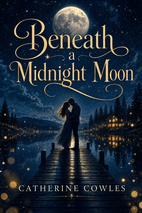
Underneath its plot, this novel is really wrestling with how cruelty and violence leave lasting trauma, and how healing takes slow, active work. It also asks who counts as family, how lies like Camilla’s staged photo reshape relationships, why grief gets hidden behind strength or jokes, and where the line sits between possessive obsession and love. Home and legacy run through all of it.
On this page you’ll find each major theme with concrete moments, from Christian’s cruelty and the Archer brothers’ chosen family to Camilla’s staged photo, the fake engagement, Boone’s death, and the fight over Moonridge Meadow. Recurring symbols include stars and darkness, the family ring, the meadow as sanctuary, and messages and markings that carry both care and threat.
Major Themes in Beneath a Midnight Moon
Abuse, trauma, and healing
The book repeatedly connects Christian Carrington's cruelty and other violence to long-lasting trauma, then shows healing as slow, active work rather than simple recovery. Aster hides fear and grief behind control and makeup, while Maverick's scars, nightmares, and fear of becoming his father show how abuse follows people. Therapy, horses, consent, family support, and the eventual Sanctuary project frame healing as something built deliberately.
- Christian backhands, punches, and kicks Aster until she blacks out after Camilla tells him she was with Maverick.
- Maverick voices fear that he might become like his serial-killer father, and later has nightmares of his father stabbing him.
- Aster tells Wylder she wants the ranch to be a place of healing and therapeutic workshops, and two years later Sanctuary at Moonridge Meadow opens.
Family by blood versus chosen family
The Carringtons are repeatedly shown as toxic, competitive, and abusive, while the Archer brothers and Aster's friends form a protective chosen family. The novel contrasts inheritance and bloodline with daily care, loyalty, and deliberate inclusion. Eli's adoption and Waylon's claim that Aster has always been part of his family make belonging something chosen and practiced.
- The Archer brothers coordinate over group chat so Aster and Eli are not alone, and Kol, Dex, and Wylder put the Hourglass cases on hold because it is family.
- Waylon gives Aster the fire-and-ice cuckoo clock and tells her she has always been part of his family.
- Eli asks Maverick and Aster whether they could be his mom and dad, and they reveal adoption paperwork.
Deception, manipulation, and hidden truth
Much of the plot turns on lies that reshape relationships: Camilla's staged photo, Christian's manipulation of Jay, the fake engagement, and Logan's hidden surveillance. The truth is repeatedly buried in objects, messages, and old memories, and uncovering it changes how Aster understands her past. The novel treats deception as both intimate betrayal and a tool of control.
- Camilla drugs Maverick, stages a scene with him, and has Edison take a Polaroid that makes Aster believe Maverick slept with her twin sister.
- Roger confirms Christian suggested Jay scare Aster and that her death would leave the ranch to Jay.
- Logan confesses to installing spyware, sending messages, setting fires, weakening the stairs, and killing Camilla.
Grief and emotional masking versus vulnerability
After Boone's death, Aster often performs strength and hides grief, while Maverick hides pain behind jokes and the fire crew's dark humor. The book shows these masks as survival strategies that also isolate people. Healing comes when characters let themselves be seen, whether through panic attacks, tears, confession, or physical comfort.
- After learning Boone is dead, Aster goes robotic on the phone and later swallows a sob at the piano because she believes she cannot show weakness.
- Aster applies her makeup like a mask and stands apart at Boone's grave, while Maverick hates that she will not let herself feel or accept comfort.
- Maverick helps Aster through a panic attack with box breathing, and later Aster comforts him after a nightmare about his father.
Possessive obsession versus love
The novel sharply separates controlling possession from loving care. Christian, Jay, and Logan all treat Aster as property, a birthright, or a fantasy to be taken, while Maverick's love is repeatedly tied to consent, protection, and letting Aster choose. Logan's stalking and hidden room crystallize the threat that runs beneath the romance.
- Maverick finds a room filled with photos of Aster, a camping cot, and binoculars aimed at the ranch.
- Logan insists Aster is meant to be his wife, says he is allowed to watch her through spyware, and tries to kill Maverick so they can be together.
- During intimacy, Maverick refuses to accept only Aster's silent answer and insists, 'Give me the words, Rebel.'
Home, legacy, and sanctuary
Moonridge Meadow is more than property: it carries Boone's legacy, Aster's conflicted family history, and the possibility of refuge. The fight over the will is also a fight over what the ranch will mean. By turning the main house and ranch into a recovery program, Aster transforms inheritance into a healing place for others.
- Aster inherits Moonridge Meadow, Starlight Grove holdings, and the ranch trust, while Christian threatens to contest the will and says he has a buyer for a resort and housing development.
- Aster says she wants the main house to feel like theirs and to carry her grandparents' legacy, and she proposes a mental health recovery program on the ranch.
- At the Sanctuary opening, Aster says she loves that Sanctuary at Moonridge Meadow will heal many people like it healed her.
Symbols and Motifs
Stars and darkness
The stars represent light and beauty that become visible against darkness, echoing the novel's idea that trauma and pain can make moments of connection stand out. The town's tidy surface also hides pitch-black secrets beneath it.
- Aster and Maverick say the stars burn brighter because it is darker.
- Aster thinks the town hides pitch-black behind tidy yards and smiling faces.
- Aster remembers Maverick's voice saying the stars are most beautiful there.
The family ring
Maverick's great-grandmother's ring begins as a prop for the fake engagement but becomes a symbol of family legacy, commitment, and the blurring line between performance and real feeling.
- Maverick gives Aster his great-grandmother's ring in the barn, and Aster accepts it after learning it is not fake.
- Maverick removes the ring from Aster's necklace, puts it on her finger, and announces their engagement at dinner.
- Nova is stunned by the word fiances and stares at the ring.
Moonridge Meadow and Sanctuary
The ranch symbolizes refuge, legacy, and the possibility of healing after abuse. It is a contested inheritance, a working home, and finally a deliberate sanctuary for others.
- The ranch is described as hiding healing magic, and Aster rests her head against Daisy and thanks her for the reminder to breathe.
- Aster tells Harlan, 'This is my ranch now. Granddad gave it to me because he wanted me to run it.'
- Two years later, Moonridge Meadow hosts the grand opening of Sanctuary.
Anonymous messages and markings
Written messages in the novel carry both care and threat: dust-written affection, anonymous sympathy, and carved or spray-painted violence. They show how intimacy and surveillance can both arrive as words left where Aster will find them.
- Aster finds Love You written in the dust on her truck hood.
- Aster finds anonymous wildflowers with a note reading 'SORRY FOR YOUR LOSS.'
- Aster finds her truck carved with 'GREEDY BITCH,' and later her cottage is spray-painted with threats including 'Greedy girls die quick.'