Being Mortal Key Takeaways
by Atul Gawande
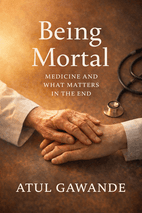
5 Main Takeaways from Being Mortal
Medicine must prioritize patient well-being over relentless cure.
The book argues that the healthcare system is structured to fix problems but struggles when cure is impossible, leading to unnecessary suffering. By focusing on what matters most to patients—like quality of life and personal goals—medicine can reduce suffering and honor individual values.
Autonomy in aging means authoring your own story, not total independence.
Modern society venerates independence, but decline is universal. True autonomy involves retaining the freedom to make choices aligned with personal identity and relationships, as seen in innovative models like the Green House that prioritize homelike environments and individual preferences.
Honest conversations about mortality are essential for compassionate end-of-life care.
Doctors often avoid discussions about death, leading to choices based on false hope. The book emphasizes that clear, compassionate conversations about prognosis and priorities align medical care with patient values, preventing unnecessary interventions and promoting peace.
Safety-focused elder care often sacrifices meaning and quality of life.
Nursing homes and assisted living facilities prioritize safety and efficiency, creating medically safe but existentially empty lives. The book shows that well-meaning families often prioritize safety over autonomy, but models that focus on dignity and purpose can foster a better life.
Hospice and palliative care enable living well until death, not giving up.
Hospice is often misunderstood as surrender, but it provides comprehensive support that manages symptoms and allows patients to pursue meaningful activities. The book highlights that such care can improve quality of life and even reduce costs through models like concurrent care.
Executive Analysis
Atul Gawande's 'Being Mortal' argues that modern medicine has lost its way in caring for the elderly and dying by prioritizing survival over well-being. The five key takeaways interconnect to show how the medical system's fixation on cure neglects the psychological and emotional needs of patients, leading to institutionalized care that sacrifices autonomy for safety. Through stories and analysis, Gawande demonstrates that by embracing honest conversations, redefining autonomy, and integrating palliative principles, we can create a system that honors what makes life meaningful until the very end.
This book is a crucial intervention in the fields of medicine and elder care, challenging professionals and families alike to rethink their approach to aging and death. It provides practical guidance for having difficult conversations and making care decisions that align with patient values, offering hope for a more compassionate and dignified end-of-life experience. 'Being Mortal' sits at the intersection of medical ethics, personal memoir, and social critique, inspiring widespread change in how we perceive and manage mortality.
Chapter-by-Chapter Key Takeaways
Introduction (Introduction)
Medical training emphasizes curing disease but neglects teaching how to care for the dying, leaving doctors ill-equipped for one of their most critical roles.
Honest, compassionate conversations about mortality between doctors and patients are frequently avoided, leading to choices that prioritize false hope over quality of life.
The shift of death from the home to the hospital has medicalized dying, but the healthcare system is structured to "fix" problems and struggles profoundly when cure is impossible.
A doctor's professional identity is often tied to solving problems, making the inevitability of death for some patients a source of deep personal and systemic conflict.
The current approach to end-of-life care often inflicts unnecessary suffering, and there is an urgent need to find better ways to honor what matters most to people as they die.
Try this: Advocate for your own end-of-life priorities by initiating honest conversations with doctors and loved ones about your fears and goals, rather than defaulting to aggressive treatments.
1. The Independent Self (Chapter 1)
Modern society venerates the independent self, a dramatic departure from historical models where elders were cared for within family units.
This shift is not a tragedy but a product of progress—greater longevity, economic means, and personal freedom desired by both generations.
However, this ideal fails to account for the universal reality of decline. When independence becomes impossible, our society lacks a clear, supportive pathway, leaving individuals and families adrift without adequate systems or philosophy for this final chapter.
Try this: Recognize that independence in aging is an ideal that may not be sustainable, and proactively discuss with family what support systems or living arrangements would preserve your autonomy and happiness as abilities change.
2. Things Fall Apart (Chapter 2)
The greatest threat to an elderly person’s independence is often not a specific disease, but the cumulative effect of frailty, with falling being a critical risk.
Geriatric medicine focuses on holistic management—simplifying medications, ensuring nutrition, foot care, and social connection—to build resilience and maintain function.
While powerfully effective at preserving quality of life, geriatric care is undervalued and underfunded because it manages unfixable decline rather than offering dramatic cures.
Personal stories illustrate the stark difference between managed decline (Jean Gavrilles, Felix Silverstone) and unrecognized, cascading decline (Alice).
There is a severe shortage of geriatric specialists, necessitating a shift toward training all primary care professionals in core geriatric principles.
Competence and Risk Coexist: Even within a narrative of decline, moments of preserved ability and normalcy can persist, creating a complex picture of aging.
The Specter of Loss Looms: Every display of current capability is shadowed by the known statistical risks and the inevitable future loss of that same ability, such as driving.
The Value of Autonomy: The simple act of driving represents profound independence and a connection to the wider world, making its eventual relinquishment a deeply significant and difficult milestone.
A Moment of Presence: Amidst the clinical discussions of risk, the chapter ends on a human note—a quiet, appreciative moment that transcends the medical framework and captures a quality of life worth preserving.
Try this: Prioritize holistic geriatric assessments that simplify medications and address nutrition, foot care, and social connection to build resilience and maintain function, rather than focusing solely on disease-specific cures.
3. Dependence (Chapter 3)
The modern nursing home system was created accidentally to solve hospital overcrowding and regulatory loopholes, not to address the needs of the frail elderly.
Life inside a nursing home often resembles a “total institution,” prioritizing safety, medical management, and efficiency over privacy, autonomy, and individual purpose.
Residents frequently engage in small, daily rebellions to assert control, which the system typically interprets as behavioral problems to be managed rather than expressions of human need.
The fundamental failure of the system is its focus on survival and safety instead of on what makes life meaningful for individuals in the final phase of life.
Try this: When considering institutional care, evaluate facilities based on how they respect resident autonomy, privacy, and individual purpose, not just their safety protocols and medical management.
Next chapter: “4. Assistance” is locked
Keep learning from Being Mortal — and unlock all 600+ book summaries with audio, mindmaps and AI Q&A.
$0.00 due today · 7 days free, then $89.99/year ($7.49/mo) · Cancel anytime before day 7
plus sales tax where applicable