BE 2.0 - Beyond Entrepreneurship 2.0 — Interactive Mindmaps

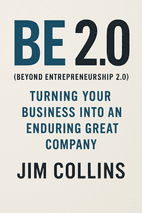
BE 2.0 - Beyond Entrepreneurship 2.0 by Jim Collins Book Cover

by Jim Collins

Jim Collins's BE 2.0 - Beyond Entrepreneurship 2.0 refines his principles for building an enduring great company, providing a framework of disciplined leadership, core values, and strategic concepts like the Hedgehog Concept for leaders transitioning from entrepreneurial chaos to systematic excellence.

On Insta.page you also get an Apply This Book tool that lets you combine insights from up to 3 books to solve your specific situation.

Chapter mindmaps

Free preview: chapters 1–4 are fully interactive. Click any node to expand or collapse. Subscribe to unlock the rest.

Chapter 1: Introduction: What Is Be 2.0?

Key concepts: Introduction: What Is Be 2.0?

1. Introduction: What Is Be 2.0?

Motivation for BE 2.0

  • Enduring passion for supporting entrepreneurs and small-to-mid-sized companies
  • Addition of substantial new material covering people decisions, leadership, and strategy
  • Honoring the legacy and wisdom of mentor Bill Lazier
  • Nearly half the book consists of new content and updated perspectives

Bill Lazier's Mentorship Philosophy

  • Character over commerce as foundation for great companies
  • Money should never be the primary scorecard in life
  • Values must precede all business decisions like a 'Declaration of Independence'
  • Success measured by meaningful relationships and adherence to personal values
  • Living by core values is challenging but essential for integrity

Enjoyment and Process-Focused Approach

  • Finding joy in the process sustains long-term commitment
  • Making work fun rather than relying on sheer perseverance
  • Life as a bonus to be savored, not just endured
  • Prioritizing a life well-lived over mere longevity
  • Balancing ambition with appreciation of each moment

Core Principles for Business and Life

  • Values First: Core values guide all decisions for enduring success
  • Legacy of Mentorship: True impact comes through integrity and relationships
  • Embrace Joy: Sustaining passion and fun in work for fulfillment
  • Live Fully: Meaningful life prioritized over longevity, balancing ambition with presence

Chapter 2: 2. Jim's View From 2020: Great Vision Without Great People Is Irrelevant

Key concepts: 2. Jim's View From 2020: Great Vision Without Great People Is Irrelevant

2. Jim's View From 2020: Great Vision Without Great People Is Irrelevant

The Personal Foundation

  • Life well-led measured by positive impact on others
  • Bill's profound influence contrasted with absent father guidance
  • Memorial service demonstrated scale of one person's positive ripple effect

Steve Jobs' People-First Turnaround

  • First priority was finding 'hidden Jedi' who believed in Apple's vision
  • People prioritization preceded product innovation (iPod/iPhone)
  • Transformation proved great teams outlast individual founders

The 'First Who' Principle

  • Get right people on bus before deciding direction
  • Adaptable people can pivot through strategic changes
  • Apple's shift from computers to iPhones enabled by right team

Pixar's Creative Process

  • Bet on people, not perfect ideas
  • All films start as flawed concepts refined through collaboration
  • 14 consecutive hits demonstrate team-driven excellence

Leadership Development Framework

  • Key metric: percentage of key seats filled with right people
  • Develop-or-replace dilemma for underperformers
  • Greatness grown through continuous self-improvement

Evolution of Leadership

  • Steve Jobs evolved from temperamental to reflective leader
  • Anne Bakar's journey from unexpected CEO to evolved leader
  • Founders can scale with personal growth and adaptation

Motivation and Culture

  • Top performers driven by intrinsic factors, not financial incentives
  • Wells Fargo scandal shows dangers of misaligned rewards
  • Compensation should attract values-aligned individuals

Building Enduring Organizations

  • Culture of mutual commitment transforms work into meaningful pursuit
  • Unit-level excellence naturally attracts greater responsibility
  • People machines create virtuous cycles of talent and ambition

The Paramount Metric: Key Seats Filled

  • Focus obsessively on the percentage of key seats filled with the right people, aiming for 90% or higher
  • Key seats are defined by significant people-deciding power, potential for major risk if failed, and outsized positive impact if successful
  • This metric should dominate management discussions as it directly influences company greatness

Navigating the Develop-or-Replace Decision

  • Leaders commonly wait too long before acting on underperforming key seat holders
  • Seven reflective questions guide the decision between development and replacement
  • Blend courage in decision-making with compassion in execution - rigor without ruthlessness
  • Assess whether issues relate to values, will, or skills, and whether it's a bus problem (wrong person) or seat problem (wrong role)

Anne Bakar's Evolution as a Leader

  • Unexpectedly became CEO at 29 and evolved through multiple versions of leadership
  • Grew by learning to hire for values, delegate effectively, and foster strong culture
  • Demonstrates that leadership isn't innate but developed through continuous self-improvement
  • Sought external mentors during crises to enable significant company expansion

The Ripple Effect of Self-Growth

  • To elevate others, leaders must first elevate themselves
  • Exceptional leaders cultivate capabilities over time, inspired by responsibility to those they lead
  • Investing in people starts with investing in oneself
  • Growth is possible with the right mindset and opportunities, as exemplified by Eisenhower's transformation

From Entrepreneurial Immaturity to Mature Leadership

  • Steve Jobs evolved from temperamental behavior to reflective, company-building leadership
  • Leadership is not static genius but continuous growth and evolution
  • Debunks the myth that founders inevitably hit a ceiling and must be replaced
  • Leadership should be understood as a dynamic, evolving process rather than a fixed trait

Defying Myths: Founders and Family Leaders

  • Many great companies were built by founders who grew alongside their organizations for decades
  • Challenges the notion that founders can't scale their leadership capabilities
  • Family successors like Katharine Graham shattered expectations and transformed organizations
  • Leadership potential isn't bound by origin or circumstance but by growth and courage

The Serendipity of "Who Luck"

  • Unexpected encounters with people can profoundly shape lives and work trajectories
  • Reframe questions from "what" to "who" - the right people drive meaningful accomplishments
  • Stay attuned to talent in everyday settings, as illustrated by discovering Terrence the server
  • Serendipitous relationships often define trajectory more than any plan or idea

Navigating Constant Uncertainty

  • In a landscape of constant uncertainty and inevitable disruption, the "first who" principle acts as a hedge
  • Predicting the future is less important than ensuring your team can handle whatever comes their way
  • Companies need resilient, adaptable people to navigate surprises, similar to climbers needing reliable partners
  • Great people provide the adaptability needed to handle unforeseen challenges

The Foundation of Unit Leadership

  • Great organizations thrive on well-led units where cohesion and audacious goals converge
  • Focusing on people and immediate unit rather than career creates pockets of excellence
  • Exceptional results in current responsibilities naturally attract greater responsibility
  • People-centric leadership prioritizes team well-being over personal advancement

The Momentum of Great People

  • Obsessive recruitment and development creates a 'People Machine' that demands bigger challenges
  • Great people need grand opportunities, which in turn attract more great people
  • Culture and talent precede market opportunities in driving organizational success
  • Nurturing ambition within meritocratic frameworks propels companies to unprecedented heights

Excellence Beyond Financial Incentives

  • True high performers are driven by inner passion and intrinsic motivation
  • Shared commitment to excellence and collaboration drives peak performance
  • Intrinsic motivations like pride in work and camaraderie fuel exceptional results
  • Mission-driven environments attract elite professionals more effectively than financial rewards

The Dangers of Misaligned Incentives

  • Wrong incentives can attract and retain the wrong people, degrading organizational culture
  • Compensation systems that clash with core values trigger destructive 'doom loops'
  • Aggressive incentive structures can pressure employees into unethical behaviors
  • Misaligned incentives breach customer trust and drive away the right people

Building Cultures of Mutual Commitment

  • Cultures where people depend on each other inspire extraordinary dedication
  • Mutual accountability to peers creates deeper motivation than external rewards
  • Trust and mutual reliance transform work into meaningful purpose
  • Shared commitment fosters resilience and willingness to go to extraordinary lengths

Strategic Compensation Alignment

  • Compensation should attract self-motivated individuals who embody company values
  • Pay systems should reward behaviors aligned with organizational ethos
  • Fair compensation supports cultures where people feel valued by shared success
  • Incentives should reinforce rather than replace intrinsic motivation

Chapter 3: 3. Leadership Style

Key concepts: 3. Leadership Style

3. Leadership Style

The M Syndrome: Destructive Leadership Patterns

  • Contradiction between professed values and actual behaviors
  • Indecisiveness leading to missed opportunities and crises
  • Poor communication and lack of compelling vision
  • Constant criticism without positive reinforcement
  • Resistance to innovation causing stagnation and talent drain

Leadership Tone as Cultural Multiplier

  • Leader's style shapes the entire organizational culture
  • Positive style amplifies motivation and collaboration
  • Negative style acts as a 'heavy, wet blanket' on enthusiasm
  • Most impactful in small to mid-sized companies
  • Determines whether organization thrives or withers

Authenticity in Diverse Leadership Styles

  • No one-size-fits-all model for effective leadership
  • Charisma is not essential - authenticity matters most
  • Leaders should cultivate unique approaches, not mimic others
  • Styles must align with individual personality and strengths
  • Historical examples show diverse successful approaches

Core Leadership Function and Style Integration

  • Universal function: articulate and champion shared vision
  • Style serves as vehicle for executing leadership function
  • Effective styles share clarity, decisiveness, and trust
  • Sincerity and consistency enable team empowerment
  • Successful leaders integrate function with authentic style

Chapter 4: Jim’s View from 2020: Just What Exactly Is “Leadership”?

Key concepts: Jim’s View from 2020: Just What Exactly Is “Leadership”?

4. Jim’s View from 2020: Just What Exactly Is “Leadership”?

Common Misconceptions About Leadership

  • Leadership is not about charisma or personality
  • Formal authority and power do not constitute leadership
  • Celebrity-driven culture often misrepresents true leadership
  • Coercion and brute force abdicate genuine leadership influence

Core Definition of Leadership

  • "The art of getting people to want to do what must be done"
  • Requires clarifying what needs to be accomplished through collaboration
  • Focuses on fostering intrinsic motivation rather than compliance
  • Leadership as an art form requiring personal style and craftsmanship

Universal Elements of Leadership Style

  • Authenticity as the foundational element
  • Decisiveness in making timely decisions
  • Focus on priorities and vision
  • Personal touch in relationships
  • Communication and people skills

Authenticity in Leadership

  • Living out company vision through consistent actions, not just words
  • Showing conviction and passion that makes values palpable
  • Being the best role model where actions speak louder than declarations
  • Strategic alignment of major decisions with core beliefs

Real-World Leadership Examples

  • Wendy Kopp: Mobilized thousands without formal authority or charisma
  • Sam Walton: Embodied frugality through personal behavior matching company culture
  • Jim Gentes/Phil Knight: Demonstrated raw emotion and passion in leadership
  • Yvon Chouinard: Prioritized environmental values even when unpopular

Continue exploring BE 2.0 - Beyond Entrepreneurship 2.0