Autism Out Loud — Interactive Mindmaps

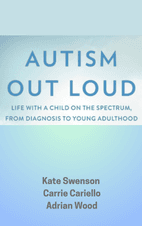
Autism Out Loud by Kate Swenson Book Cover

by Kate Swenson

Kate Swenson's Autism Out Loud is a candid memoir detailing her family's journey raising an autistic son, sharing the challenges and joys to foster understanding. It offers support and advocacy insights for parents, caregivers, and anyone seeking a deeper, humanizing perspective on autism.

On Insta.page you also get an Apply This Book tool that lets you combine insights from up to 3 books to solve your specific situation.

Chapter mindmaps

Free preview: chapters 1–4 are fully interactive. Click any node to expand or collapse. Subscribe to unlock the rest.

Chapter 1: Introduction

Key concepts: Introduction

1. Introduction

Three Mothers, Shared Journeys

  • Mothers from diverse backgrounds united by raising autistic sons
  • Jack (19), Cooper (13), and Amos (10) represent different points on the autism spectrum
  • Pandemic-era Facebook Live session evolved into deep connection
  • Solidarity found in the isolation of parenting children with autism
  • Narrative balances raw honesty with hope and practical guidance

Finding Community in Isolation

  • Pandemic forced unconventional ways of seeking community
  • Initial virtual meeting revealed deeper kinship beyond autism discussions
  • Bonded over shared challenges like nonverbal communication and missed milestones
  • Digital space transformed strangers into confidantes
  • Connection thrived despite geographic and cultural divides

Autism as Daily Life

  • Autism is woven into the fabric of daily routines and experiences
  • Juxtaposes mundane activities with emotional developmental shifts
  • Highlights humor and tenderness in chaotic moments
  • Rejects pity, redefines joy through autism's lens
  • Examples: child streaking through church, blunt questions, mastered life skills

Embracing Authenticity

  • Book title 'Autism Out Loud' emerged from messy, iterative process
  • Declaration to live unapologetically with autism's quirks and needs
  • Challenges stereotypes of autism as tragedy
  • Invites readers to find resonance in their stories
  • Emphasizes community and vibrancy in unexpected places

Core Themes

  • Autism manifests uniquely but shares universal parental emotions
  • Isolation can birth unexpected solidarity
  • Joy is redefined through autism's perspective
  • Authentic living means embracing both laughter and struggles
  • Mission to normalize 'out loud' autism experiences

Chapter 2: 1. Who We Are

Key concepts: 1. Who We Are

2. 1. Who We Are

Intertwined Stories of Three Mothers

  • Isolation, resilience, and unlikely connections redefine identities
  • Shared struggles with systemic barriers and societal norms
  • Virtual communities and unconventional tribes form through vulnerability
  • Tension between grief and joy in parenting children with autism
  • Advocacy for one child sparks collective change

Kate’s Journey: From Reluctance to Relentless Advocacy

  • Transforms fear into advocacy through her blog Finding Cooper’s Voice
  • Highlights duality of autism—challenges (societal cruelty) and gifts (Cooper’s resilience)
  • Fights for systemic change (e.g., six-foot fence precedent)
  • Balances advocacy with marital struggles and parenting four kids
  • Mantra: Advocating for one child changes lives for many

Adrian’s Unconventional Tribe

  • Academic ideals clash with raising Amos, her son with autism
  • Embraces imperfection over her previous 'tidy ship' life
  • Finds healing in virtual communities with Kate and Carrie
  • Grief over losing her brother intersects with parenting challenges
  • Belief in authenticity over perfection

Carrie’s Path from Loneliness to Connection

  • Early isolation due to scarce autism resources (2004 diagnosis)
  • Writing and blogging anchor her and connect her to others
  • Humorously contrasts chaotic life with societal motherhood ideals
  • Tracks Jack’s growth—from toddler quirks to young adult independence
  • Theme: Autism reshapes families but doesn’t define their joy

Narrative Threads

  • Advocacy as legacy: Fighting for children’s needs creates systemic change
  • Community over perfection: Raw, unfiltered solidarity in virtual tribes
  • Redefining identity: Motherhood as messy, evolving journeys
  • Shared struggles bind them: Pandemic amplifies digital connections
  • Rejecting pity/inspiration tropes—celebrating fierce love in a 'normal'-centric world

Virtual Bonds and Unexpected Connections

  • Online communities like 'Autism Magic Happy Fun Time' provided solace and connection for the author.
  • An impulsive outreach to Kate, a mother with a similar story, led to an eight-year virtual friendship.
  • Shared experiences of loneliness and contrasting autism manifestations (Cooper's rituals vs. Jack's social struggles) deepened their bond.

Pandemic Shifts and Expanding Networks

  • COVID-19 lockdowns amplified the role of virtual platforms like Facebook Live for candid discussions.
  • Adrian, another autism mom and writer, joined the author's circle, highlighting diverse parenting styles and needs.
  • Shared vulnerability reinforced the strength of community and the 'power in numbers'.

A Story Unfolding

  • The author's narrative evolved beyond autism to encompass marriage, loss, hope, and defiance against limitations.
  • Fears for Jack's future coexist with faith in his resilience as he navigates independence.
  • Symbolism of seasons (e.g., spring) reflects themes of renewal and enduring hope.

Key Takeaways

  • Blogging served as emotional catharsis and a bridge to others in similar situations.
  • Virtual communities transformed isolation into meaningful, lasting connections.
  • Autism's unique manifestations in children share common emotional ground for caregivers.
  • The story transcends diagnosis, embracing resilience, community, and belief in a brighter future.

Chapter 3: 2. Diagnosis Day

Key concepts: 2. Diagnosis Day

3. 2. Diagnosis Day

Parental Intuition and Early Signs

  • Instincts often dismissed by professionals ('wait and see' responses)
  • Kate's realization through research and observation of Cooper's autism signs
  • Sensory-seeking behaviors and developmental delays as red flags
  • Breaking point: Isolation after diagnosis despite relief

Navigating Medical Gaslighting

  • Adrian's pursuit of answers amid inconclusive tests and specialists
  • Unexpected autism diagnosis clashing with hopes for a 'solution'
  • Grief and guilt transformed by Amos's resilience
  • Purpose found in advocating for neurodivergent needs

The Weight of Uncertainty

  • Carrie's dread over Jack's atypical milestones (speech, emotional detachment)
  • Flashbacks to early signs: vacant stares, public meltdowns
  • Diagnosis as a confrontation of unnamed fears
  • The paradox of craving clarity yet fearing its implications

The Diagnosis Moment

  • Clinical detachment vs. parental emotional turmoil
  • Jack's outburst in the office as a visceral confirmation
  • Heartbreak in admitting Jack's lack of seeking comfort
  • PDD-NOS label: A mix of relief and shattered expectations

Redefining Hope and Identity

  • Diagnosis as duality: Grief coexists with recalibrated dreams
  • From 'fixing' to embracing neurodivergent strengths
  • Unexpected support (e.g., pregnancy as a 'big family' prophecy)
  • Hindsight reveals growth and love within uncertainty

Long-Term Reflections

  • Jack's adulthood defying bleak projections
  • Parental resilience forged through unpredictability
  • Community and solidarity replacing initial isolation
  • Love thriving within uncertainty, not despite it

Emotional Duality of Diagnosis

  • A diagnosis can trigger simultaneous grief and determination in parents.
  • Initial reactions often mask deeper resilience that emerges over time.
  • Parents may oscillate between fear for the future and hope for progress.

Defining Moments in the Process

  • Seemingly small interactions (e.g., a doctor’s tone) can leave lasting emotional imprints.
  • A child’s unexpected behavior during evaluation may reveal hidden strengths.
  • The way professionals frame the diagnosis impacts parental perception.

The Evolution of Perspective

  • Early fears often overshadow unrecognized possibilities in the moment.
  • Time allows parents to reframe challenges as part of a larger journey.
  • What initially feels like loss may later be seen as a call to advocacy.

The Nature of Hope

  • Hope isn’t the absence of struggle but the capacity to hold both pain and joy.
  • Uncertainty doesn’t negate hope—it redefines its shape.
  • Parents learn to celebrate small victories without abandoning realism.

The Role of Professional Guidance

  • Doctors’ phrasing and demeanor can either amplify or alleviate parental anxiety.
  • Clear, compassionate communication helps families process the diagnosis.
  • A balanced approach (acknowledging challenges while highlighting potential) fosters resilience.

Chapter 4: 3. This New Normal

Key concepts: 3. This New Normal

4. 3. This New Normal

Grief and Acceptance in Diagnosis

  • Autism diagnosis triggers grief over lost expectations and imagined futures
  • Parents experience denial, anger, and bargaining before acceptance
  • Small moments (e.g., a child's joy with park chairs) shift perspectives
  • Gradual acceptance reveals resilience and unexpected beauty in differences

Redefining Family Life and Success

  • Autism upends routines, requiring complete family adaptation
  • Success is redefined through small victories and neurodiverse milestones
  • Siblings often step into supportive roles, demonstrating resilience
  • Lowered expectations and flexibility lead to unexpected joy (e.g., pared-down ski trips)

Public Struggles and Advocacy

  • Public spaces become battlegrounds due to sensory overload and judgment
  • Parents grapple with shame before turning vulnerability into advocacy
  • Vocalizing diagnoses (e.g., at the Bronx Zoo) breaks isolation
  • Tension exists between protecting children and fostering public understanding

From Isolation to Connection

  • Families initially shrink into isolation due to stigma and logistical chaos
  • Shared vulnerability (e.g., zoo confession) builds empathy and community
  • Storytelling becomes a tool to dismantle the myth of 'normal' parenthood
  • Connection emerges through embracing unscripted, messy realities

The New Normal as Collective Awakening

  • Autism becomes a lens to rediscover resilience and simplicity
  • Family unity forms through adaptation, not grand gestures
  • Beauty is found in the cracks between expectations and reality
  • Love grows wilder in unplanned futures than in rigidly imagined ones

Advocacy as a Lifeline

  • The mother becomes Jack's voice, teaching others to pause and adapt to his needs.
  • Rejects aggressive 'Mama Bear' stereotypes in favor of bridging gaps through storytelling.
  • Frames autism as intrinsic to Jack's identity, challenging reductive labels like 'naughty' or 'rude.'
  • Autism becomes a catalyst for the family to redefine their identity and simplify life.
  • Encourages reflection on identity: 'Who are we now?'

The Myth of the 'Perfect' Intervention

  • Rejects the idea of a single therapy or strategy 'fixing' autism.
  • Highlights the importance of balancing academic goals with emotional and social skills.
  • Emphasizes that progress is non-linear, with challenges and joys coexisting.
  • Advocates for flexibility over rigid formulas in raising a 'whole child.'
  • Focuses on everyday moments (e.g., family dinners) as equally important as formal interventions.

A Family Transformed

  • Autism reshapes family priorities, anchoring them in simple rituals and intentional living.
  • Diagnosis becomes a collective journey, not just Jack's individual experience.
  • Adopts the mantra 'Tell. Discover. Decide.' to navigate challenges openly.
  • Finds resilience and meaning in reframing autism through 'possibility rather than limitation.'
  • Connects with others through shared vulnerability, even in small moments like a smile at the zoo.

Key Takeaways

  • Openly discussing autism shifts shame into empowerment and advocacy.
  • Effective advocacy prioritizes connection over defensiveness through storytelling.
  • Autism impacts the entire family, requiring shared adaptation and intentional simplicity.
  • Raising a 'whole child' means valuing emotional growth alongside practical goals.
  • Viewing autism through possibility fosters unexpected unity and purpose.

Continue exploring Autism Out Loud