American Hagwon Themes
by Min Jin Lee
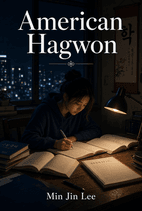
Underneath its plot, the novel is really about how education becomes pressure, sacrifice, and a commodity, with money and class anxiety driving housing, immigration, work, and marriage choices. Family duty keeps postponing people's own plans, while loyalty, secrecy, displacement, and respectability complicate what belonging and virtue actually cost.
On this page you'll find theme notes on corporal punishment and repeated exams, hidden debt and stigma, migration and caregiving, affairs and workplace favors, relocations across Seoul, Sydney, and California, and church status masking private compromise. It also tracks recurring symbols: Hong Gildong, Exodus, the children's JanSport knapsacks, and blue aerograms and letters.
Major Themes in American Hagwon
Education as pressure, sacrifice, and commodity
The novel treats schooling as both a family's best hope and a market that consumes money, childhood, and dignity. Corporal punishment, repeated exams, hagwon expansion, and admissions anxiety show education as a site of sacrifice and competition rather than pure learning.
- Mr. Na strikes Mido's palms with a brass ruler for erasing a wrong answer, and Helen later places a cash-filled envelope in his open briefcase.
- Bo takes the Suneung three times and scores below 300; Isul studies for the civil service exam in the gosiwon kitchen.
- At Fortress Seoul, 612 applicants become 200 finalists and a Ping-Pong ball drawing selects 50; Professor Kim pressures Peter and Mido to admit Sung and calls Mido unqualified for lacking a degree.
Money, class, and survival
Financial precarity drives nearly every major decision, from housing and immigration to work and marriage. Characters hide debt or wealth, take stigmatized jobs, and measure self-worth through status and respectability.
- Helen budgets after key money consumes the family's savings, later loses her Crawford's job during the Asian financial crisis, and the family faces medical bills without insurance.
- John works in a hairnet and borrowed rubber boots at Shrimp Castle and later manages the Rose Salon; he keeps a ledger and separate savings account to repay Sonya.
- Peter lives in a designer-furnished house but asks Mido to keep his wealth quiet because 'money ruins everything'; Sobin wears a four-and-a-half-carat diamond ring while refusing to spend extra on luggage.
Family duty and obligation
Family members repeatedly postpone or sacrifice their own plans for siblings, parents, or children. The notes link this duty to migration, caregiving, and the pressure to succeed on behalf of the whole family.
- Mido postpones her own college degree to send Bo $1,200 a month plus car expenses, and John promises to work as many hours as needed for DH's law school.
- Sonya pays for Bo's gosiwon, buys the Rose Salon building, cares for the dying Helen, and asks John to manage the salon; John later takes Anna in when Shin asks.
- Nari travels to Bom Retiro to bring Joonho home with a job offer and money for debts, and Yun and Lion take Ginny in and later invite Nari and Joonho to live with them.
Loyalty, betrayal, and secrecy
Close relationships are compromised by affairs, workplace pressure, and favors that require concealment. Characters protect reputations and futures by hiding information, staging scenes, or accepting secret patronage.
- Shin asks John to make Danbi appear incapable, John withholds information about the Queensland mines and fires her, and Danbi stages an assault that leads to John's unpaid leave and forced resignation.
- Danbi hides affairs with Bonhwa Han and George, George takes money from the church building fund, and both are arrested; Shin also hides his continuing financial support to Mary.
- Sonya and the Chairman conduct their affair behind Yong-gil's back, while Tom Song arranges DH's anonymous Andover scholarship and Renee's connection to the funding is kept secret.
Displacement and belonging
Repeated relocations across Seoul, Sydney, and California produce instability and a search for belonging. Characters reinvent themselves abroad while feeling judged, observed, or out of place in Korea and in immigrant communities.
- Helen lists the family's moves through New Jersey, Paramus, Seoul, Sydney, and back, and worries that Mido's Korean and math have suffered.
- Sonya says that if she goes back to Seoul she feels like she will die, and in California no one knows who she is; Peter says in Korea he felt observed and judged but 'Here he could just be Peter.'
- Joonho leaves for Brazil and Nari later flies to Bom Retiro to bring him home, while Renee funds Fortress Seoul partly to bring Peter back to Korea.
Respectability and religious hypocrisy
Church status and social appearance often mask private compromise, affairs, and fraud. Public virtue, forgiveness talk, and respectability are shown as performances that can conceal damage.
- Pastor Kim preaches about idolatry and child sacrifice, invoking Molech and Shimcheong, while Sonya tells Helen her primary responsibility is her children's education and to borrow money if necessary.
- Shin and Danbi are church elders/deacons while Danbi carries on an affair with George and later embezzles; Danbi invokes Christian forgiveness after the confrontation with John and Helen.
- John keeps formal distance from the women at the Rose Salon and never meets anyone alone, while Sonya's respectable family breakfast contrasts with her affair in the Chairman's downstairs apartment.
Symbols and Motifs
Hong Gildong
A myth of the superhero outsider who rises by exceptional merit; Lion uses it to critique unrealistic expectations placed on children.
- Lion gives talks at Exodus and Fortress arguing that Hong Gildong is not a role model and that the myth pushes children to perform like superheroes.
- Danbi asks how Korean children can 'learn to fly' like Hong Gildong so they will be noticed, and Lion answers that no one needs to be a superhero.
Exodus
The hagwon name is explicitly glossed as a story of freedom, representing education as liberation from hierarchy and status obsession.
- Lion explains the name Exodus as a story about freedom and says teaching freed him from hierarchies and status obsessions.
- Lion tells Ginny she no longer has to be perfect and discourages her from skipping grades just to save money or be admired.
The children's JanSport knapsacks
The old knapsacks become containers for Helen's jewelry and her final maternal legacy to her children.
- Helen directs DH to place the pearl necklace in Mido's knapsack, the diamond engagement ring in Bo's, and the Swiss watch for DH's future wife.
- Helen puts the pearl necklace in Mido's green knapsack and the diamond engagement ring in Bo's black knapsack.
Blue aerograms and letters
Letters are a motif of intimacy across distance, allowing characters to hear one another's voices and sustain bonds through migration.
- Yun fills two blue aerograms to Mido from Los Angeles.
- Mido writes back that she can hear Yun's voice when reading her letters.