All About Allergies Quotes
by Zachary Rubin MD
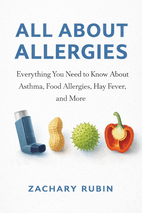
Welcome to a collection of the most striking lines from Dr. Zachary Rubin's book on allergies. Here you will find quotes that range from ancient wisdom to modern science, from surprising bodily facts to heartfelt personal stories. Some are easy analogies that make complex immune reactions click, while others are blunt truths about living with chronic conditions.
What makes this book so quotable is how Dr. Rubin mixes clear explanations with real human experience. He doesn't shy away from the gross details, the emotional toll, or the frustrating misconceptions. Each quote captures a moment of clarity, a surprising insight, or a shared frustration. They are the kind of lines you want to remember and pass along.
Top Quotes from All About Allergies
“Quod ali cibus est, aliis fuat acre venenum.”
The chapter opens with an ancient Latin quote from the Roman poet Titus Lucretius Carus.
This timeless aphorism perfectly encapsulates the core concept of allergy—that one person's nourishment can be another's poison—and sets a memorable, philosophical tone for the entire chapter.
“An adult typically swallows approximately 1 to 1.5 liters of nasal mucus each day, an amount that can significantly increase during an illness!”
The author describes the volume of nasal mucus produced and swallowed.
The startling statistic is both gross and fascinating, making it a memorable fact that readers will likely share. It underscores the body's constant, unseen activity.
“If the guard dog is highly sensitive, it will bark at anything potentially suspicious such as real intruders, the mailman, or a squirrel.”
The author explains sensitivity vs. specificity using a guard dog analogy.
This vivid metaphor makes a complex medical concept instantly understandable and memorable for readers.
“Within five minutes of placing the test, the area where a peanut extract was placed on her back grew into a welt the size of a quarter, which confirmed that she had a peanut allergy.”
The author describes the skin test result for baby Isabella.
The vivid, specific image makes the diagnosis tangible and memorable, illustrating how quickly and clearly an allergy can be confirmed.
“It did a number on me mentally. I developed an eating disorder. I would end up calling an ambulance six times in the course of just two months eating at restaurants or eating at home because I had these phantom pains...and there was nothing wrong, but it was that panic disorder.”
Congressman Maxwell Frost describing the psychological trauma after a severe anaphylactic reaction.
This raw, personal account reveals the often‑overlooked mental health toll of food allergies, moving beyond physical symptoms to show the lasting anxiety and disordered eating they can cause.
“Food allergy is a chronic disease that can be potentially life-threatening, not a lifestyle choice or a fad diet.”
The author's statement after discussing bullying and public misconceptions.
It succinctly corrects a common and harmful misunderstanding, asserting the seriousness and legitimacy of food allergies.
“Before antiviral medications were available, up to 50 percent of people with eczema herpeticum died from these complications.”
The author describes the dangerous complication of eczema herpeticum caused by herpes simplex virus.
This stark statistic shocks readers into recognizing the serious, life-threatening risks of severe eczema, underscoring why prompt treatment is critical.
Themes Behind the Quotes
A major theme running through these quotes is the idea that allergies are ancient and universal, yet still misunderstood. The book emphasizes how the immune system, designed to protect us, can misfire against harmless substances. It also highlights the importance of understanding the underlying biology through vivid metaphors like guard dogs and water treatment plants.
Another strong theme is the human side of allergies. The quotes reveal the mental strain, the social teasing, and the life threatening reality of food allergies and eczema. They push back against the notion that allergies are trivial or imaginary. There is also a thread of practical wisdom about managing triggers, from masking to early food introduction, and a call to take allergic disease seriously as a chronic illness that affects every aspect of life.
Quotes by Chapter
Chapter 1: The History of Allergies
“Allergic diseases are nothing new—they have been around for thousands of years.”
The author states this fact in the introductory section of the chapter.
This sentence directly challenges the common misconception that allergies are a modern phenomenon, grounding the reader in a deep historical perspective that makes the subsequent rise in allergies even more striking.
“Throughout history, allergies have puzzled and afflicted humanity, shaping our daily lives in ways that are often overlooked.”
The author reflects on the broad impact of allergic diseases across time.
This line is both eloquent and poignant, emphasizing how a pervasive medical issue has silently influenced human experience, which resonates with readers who may have personal or familial encounters with allergies.
“We need a new...word for the altered state which the organism finds out by the acquaintance with any organic, living or lifeless poison...For this general concept of altered responsiveness, I suggest the term allergy.”
Clemens von Pirquet, an Austrian pediatrician, proposed the term 'allergy' in a 1906 medical journal.
This is the origin of the very word that defines the field, making it a historically pivotal moment; reading the exact phrasing from von Pirquet himself gives readers a direct connection to the birth of modern allergy science.
Chapter 2: The Immune System
“While the immune system is designed to protect the body from harmful pathogens such as bacteria, viruses, and cancer, it can mistakenly identify harmless substances such as pollen, pet dander, and food as significant threats.”
The author explains the paradoxical nature of allergies within the immune system.
This line captures the core irony of allergic disease in a clear, powerful contrast, making it memorable and relatable to anyone who has experienced allergies.
“If you understand the underlying immunologic mechanisms, then allergic diseases become less confusing.”
The author addresses the reader directly, emphasizing the value of learning immunology.
It empowers readers with a sense of control through knowledge, turning a potentially intimidating subject into an accessible tool for understanding their own health.
“IgG4 almost acts like a sponge to soak up allergens to help prevent an allergic reaction.”
The author describes the mechanism of immune tolerance via IgG4 antibodies.
The vivid analogy makes a complex immunological concept instantly understandable and memorable, helping readers grasp how tolerance can develop.
Chapter 3: The Anatomy of Allergies
“Think of lymph nodes as water treatment plants for your immune system.”
The author explains the function of lymph nodes.
This analogy simplifies a complex biological process, making it easy to remember. It resonates because it connects an invisible system to a familiar infrastructure.
“The immune system is everywhere, so allergic reactions may affect multiple organs differently.”
The opening of the chapter, setting up the discussion of anatomy.
This line encapsulates the core theme of the chapter—the systemic nature of allergies. It reminds readers that allergic responses are not isolated.
“Mucus acts like flypaper and traps foreign particles and pathogens.”
The author explains the function of mucus.
The vivid simile makes the role of mucus instantly understandable and visual. It's a simple, powerful image that sticks with the reader.
Chapter 4: What to Expect at the Allergist’s Office
“It is easy to get discouraged because treatment plans may take weeks to months to show results, and testing may be inconclusive.”
The author advises patients to be prepared for the timeline of diagnosis and treatment.
This line validates the emotional struggle many patients face, offering reassurance that slow progress is normal.
“I learned this the hard way when I was in fellowship training because one of my co-fellows put a skin test on me for practice, which ended up leaving a rash that persisted for a couple of weeks!”
The author shares a personal anecdote about post-test rash treatment.
The doctor’s first‑hand experience humanizes the medical advice and makes the warning about untreated rashes feel credible.
“The human body is incredibly complex, and many symptoms can overlap with different diseases.”
The author explains why doctors may not immediately diagnose a condition.
This statement fosters patience and trust between patient and doctor, acknowledging the limits of medical certainty.
Chapter 6: Sinusitis
“The Old Friends mechanism, proposed by Graham Rook in 2003, builds upon the hygiene hypothesis by arguing that the vital exposures during childhood are not to childhood infections such as the common cold or chickenpox. Instead, early exposure to other relatively harmless microbes that colonize the skin, gut, and respiratory tract may be vital to properly regulating the immune system.”
The author explains a key theory about why allergic diseases are increasing.
This passage shifts the narrative from 'being too clean' to the importance of beneficial microbes, offering a more nuanced and hopeful perspective on immune system development.
“Since the COVID-19 pandemic, there has been a better appreciation of the benefits of masking. When it comes to reducing allergen exposure while outside, when using public transportation, in indoor spaces with poor air ventilation, or while you are cleaning, wearing a KN95 or N95 mask can significantly reduce exposure to allergens.”
The author provides practical advice for allergen avoidance.
This quote connects a lesson from the pandemic to everyday allergy management, empowering readers with a simple, evidence-based tool that many already have on hand.
“Your immune system has a circadian rhythm and operates differently at night while you sleep, so you may be more susceptible to allergens during this important resting period.”
The author explains why reducing allergens in the bedroom is especially important.
This insight about the immune system's nighttime vulnerability resonates with anyone who struggles with sleep due to nasal congestion, highlighting a specific reason to prioritize bedroom hygiene.
“In fact, analysis of dust from a NASA space shuttle found measurable quantities of cat allergen, but no dust mites were found!”
This appears in the discussion of how persistent cat allergens are, even in extreme environments.
The surprising contrast between a highly sterile environment like a space shuttle and the presence of cat allergen makes this fact memorable and underscores the difficulty of removing cat allergens.
Chapter 7: Food Allergies
“Ever I see Hannah, I usually can’t sleep well that night, because I play in my head whether I gave the best advice to her parents.”
The doctor reflects on a complex pediatric patient with multiple food allergies.
This line humanizes the physician, showing the emotional weight and self-doubt that comes with managing difficult medical cases.
Chapter 8: Eczema
“I vividly remember kids asking me at school, “What happened to your face?! Did you get cooties?!” No, eczema is not contagious, but the teasing at the time felt like it was contagious.”
The author recounts a childhood memory of being teased about eczema on his face.
This personal anecdote humanizes the condition and powerfully conveys the emotional sting of social stigma, making it deeply relatable for anyone who has felt different or mocked.
“Think of filaggrin as the mortar between bricks in a wall. Just as mortar holds bricks tightly together to create a weatherproof structure, filaggrin proteins bind skin cells to create a strong barrier.”
The author explains the role of filaggrin in maintaining a healthy skin barrier.
This simple, vivid analogy makes a complex biological concept instantly understandable and memorable, helping readers grasp the root cause of eczema's skin barrier dysfunction.
“One study reported that children with eczema who eliminated peanuts from their diet until five years old have more than five times higher relative risk of developing a peanut allergy than those who did not eliminate peanuts.”
The author discusses the risks of food elimination diets for eczema patients.
This counterintuitive finding challenges common assumptions about food triggers and highlights the potential harm of well-meaning but misguided dietary restrictions.
Chapter 9: Contact Dermatitis
“Some people told her that her symptoms were “all in her head.” Erin did not feel that she was taken seriously.”
Erin, a teenager with chronic contact dermatitis, shares her frustration with how others dismissed her condition.
This line powerfully captures the emotional toll of having an invisible illness dismissed by others, making readers empathize with the struggle for validation.
“You can be allergic to steroid medications that are meant to suppress the immune system.”
The chapter discusses patch testing and notes that even steroids can be contact allergens.
This surprising fact challenges common assumptions about medical treatments and highlights the paradoxical nature of allergies, leaving readers shocked and intrigued.
“When you see a product that contains a label saying it is “hypoallergenic,” it does not necessarily mean that it is safe to use.”
The author warns about misleading product labels while discussing avoidance strategies for contact dermatitis.
This practical, eye-opening statement empowers readers to question marketing claims and take a more informed approach to managing their skin health.