A Statin-Free Life Key Takeaways

by Aseem Malhotra
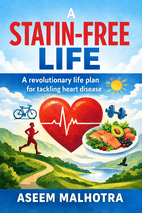
A Statin-Free Life by Aseem Malhotra Book Cover

5 Main Takeaways from A Statin-Free Life

Statins offer minimal benefit for primary prevention, with significant side effects.

The book reveals that for people without existing heart disease, statins provide very small absolute risk reduction, and side effects like muscle pain are common. Clinical trials often underreport these harms, leading to overprescription.

Cholesterol is essential; the ratio of total cholesterol to HDL matters most.

Cholesterol is vital for hormone production and cell function. The book debunks the 'bad cholesterol' myth, showing that the total cholesterol to HDL ratio is a better predictor of heart disease risk than LDL alone.

Chronic inflammation and insulin resistance are the root causes of heart disease.

Heart attacks often occur from inflamed, unstable plaque, not just blocked arteries. The book emphasizes that diet and lifestyle changes that reduce inflammation and improve insulin sensitivity are key to prevention and reversal.

A coronary calcium score provides a more accurate heart disease risk assessment.

Standard risk calculators can be misleading. The book advocates for using a coronary calcium scan to measure actual plaque buildup, which better predicts heart attack risk and can guide personalized treatment decisions.

Lifestyle changes can reduce cardiovascular risk by over 80%, outperforming medication.

Adopting five principles—addressing addictions, sleep, nutrition, exercise, and mental well-being—can drastically lower heart disease risk. The book provides a practical 28-day plan to implement these changes.

Executive Analysis

The five takeaways collectively form a powerful critique of the conventional cholesterol-centric approach to heart disease. Dr. Malhotra argues that statins are overprescribed based on exaggerated benefits and underreported side effects, while the real culprits—chronic inflammation and insulin resistance—are best addressed through lifestyle. The book positions lifestyle medicine, encompassing diet, exercise, stress management, and sleep, as not just complementary but superior to pharmaceutical intervention for most people, especially in primary prevention.

This book matters because it empowers patients to question standard medical advice and take control of their heart health. By providing evidence-based alternatives, such as using coronary calcium scores for risk assessment and adopting a Mediterranean-style diet, it challenges the pharmaceutical industry's influence and advocates for a paradigm shift towards holistic, preventive care in cardiology. It offers practical tools for lasting health changes, making it a vital resource for anyone seeking to prevent or reverse heart disease without sole reliance on medication.

Chapter-by-Chapter Key Takeaways

Imprint Page (Chapter 1)

  • The book positions itself as a serious work of investigative nonfiction from a established publishing house, with the author taking full responsibility for its content.

  • The comprehensive health disclaimer is crucial, as it anticipates the potentially controversial nature of the medical advice to follow and places the onus on the reader to consult professionals.

  • The dedication and acknowledgments reveal the author’s motivation—patient care—and highlight the importance of diet, specifically the Mediterranean model, which is reinforced by the subsequent recipe section.

  • The table of contents provides a logical roadmap, moving from critiquing established medical narratives to proposing a holistic, lifestyle-based alternative for heart health.

Try this: Approach medical advice with a critical eye and always consult healthcare professionals before making changes.

Foreword (Foreword)

  • Genes vs. Lifestyle: You are not a victim of your genetics; your lifestyle choices are the primary trigger for genetic predispositions to disease.

  • Critique of Statins: The benefits of statins are vastly overstated for primary prevention (those without existing heart disease), and their significant side effects are commonly underreported.

  • Lifestyle as Primary Medicine: Adopting the five principles of optimum health—addressing addictions, sleep, nutrition, exercise, and mental well-being—can reduce cardiovascular risk by over 80%, far outweighing the marginal benefits of medication for most.

  • Systemic Failure: The healthcare system often prioritizes quick, billable interventions (like prescriptions) over time-consuming but vital lifestyle counseling.

  • Empowerment Through Knowledge: Patients must advocate for themselves by seeking evidence-based information and engaging in informed discussions with their doctors to prioritize sustainable lifestyle changes over quick pharmaceutical fixes.

Try this: Prioritize sustainable lifestyle changes over medication and advocate for informed discussions with your doctor.

Introduction (Introduction)

  • The global campaign to fight heart disease by lowering cholesterol has not succeeded, despite the widespread use of statins.

  • The benefits of statins have been exaggerated, their harms minimized, and a flawed understanding of cholesterol persists.

  • Medical evidence is often biased by commercial interests, corrupting the practice of true evidence-based medicine and informed consent.

  • A narrow focus on cholesterol and drugs has distracted medicine from addressing the root lifestyle causes of heart disease.

  • This book aims to empower readers with knowledge to make informed choices about statins and to prevent heart disease through lifestyle changes, heralding a needed paradigm shift.

Try this: Question the standard narrative on cholesterol and seek evidence-based information on heart disease prevention.

1 The great cholesterol con (Chapter 2)

  • Heart disease remains the leading cause of death in the Western world, despite widespread use of cholesterol-lowering statin drugs.

  • The historical focus on LDL cholesterol as the primary culprit in heart disease is based on influential research, but population-level data does not show a clear reduction in death rates from statin use.

  • Side effects from statins, such as fatigue and muscle pain, appear to be more common in real-world clinical practice than reported in major clinical trials.

  • Individual patient cases, like that of Mr. Patel, demonstrate that a one-size-fits-all approach to statin therapy can sometimes cause more harm than good, necessitating personalized medical care.

  • The chapter calls for a critical reevaluation of the cholesterol hypothesis and encourages a broader perspective on preventing and treating heart disease.

Try this: Reevaluate your statin prescription with your doctor if you experience side effects or lack clear benefit.

2 What is cholesterol and how is it related to heart disease? (Chapter 3)

  • Cholesterol is not a poison but an essential molecule for hormone production, cell structure, and digestion.

  • The historical framing of LDL as "bad" cholesterol is based on scientifically weak foundations, including studies on inappropriate animal models and observational correlations mistaken for causation.

  • The most important finding from the landmark Framingham Heart Study is that the total cholesterol to HDL ratio is a far better predictor of heart disease risk than total or LDL cholesterol alone.

  • For individuals over 50, lower cholesterol levels may paradoxically be associated with a higher risk of death.

  • Progressively lowering the "normal" cholesterol threshold has medicalized more of the population and may lead to inaccurate risk assessments that prioritize drug treatment over a nuanced understanding of individual health.

Try this: Request your total cholesterol to HDL ratio from blood tests to better assess your heart disease risk.

3 What is the evidence for lowering cholesterol? (Chapter 4)

  • The evidence for a direct, causal relationship between lowering LDL cholesterol and reducing heart attacks is inconsistent and frequently absent from clinical trial data.

  • Aggressively driving LDL to very low levels may be harmful and is associated with higher mortality in some patient groups.

  • For the general population, the optimal LDL level for longevity appears to be approximately 3.6mmol/L (139mg/dL), with both very high and very low levels linked to shorter lifespans.

  • LDL cholesterol plays a crucial and protective role in the immune system, helping to fight infections.

  • In people over 60, higher LDL is not associated with heart disease and is correlated with living longer.

  • A diagnosis of familial hypercholesterolaemia does not automatically mandate cholesterol-lowering medication; metabolic health and the actual presence of coronary disease are critical factors in deciding on treatment.

Try this: Discuss the optimal LDL level for your age and health status with your doctor, rather than aiming for arbitrarily low numbers.

4 Statins and their side effects (Chapter 5)

  • Real-World Disconnect: High rates of statin discontinuation due to side effects likely explain why population-level heart disease mortality has not fallen in line with trial predictions.

  • Ethical Practice Mandates Shared Decision-Making: Doctors have an ethical duty to discuss absolute benefits (NNT), alternatives, risks, and uncertainties with patients before prescribing.

  • Informed Consent is Rare: Transparent risk communication using NNT is not routinely taught or practiced, leaving many patients unaware of the minimal absolute benefit they might receive.

  • The Patient as Investigator: Tony Royle’s case proves that when patients are given (or seek out) clear data on NNT and potential harms, they can make rational, informed decisions that diverge from standard guidelines but dramatically improve their health and quality of life.

  • Lifestyle Over Medication: A fundamental dietary shift, not medication, was the cornerstone of Tony’s remarkable health recovery and athletic achievements post-heart attack.

Try this: Ask your doctor for the Number Needed to Treat (NNT) to understand the absolute benefit of statins before starting them.

5 What actually causes heart disease? (Chapter 6)

  • The coronary calcium score is a critical tool for assessing existing heart disease by measuring arterial plaque.

  • Chronic inflammation, driven by insulin resistance, is a fundamental cause of heart disease.

  • Most heart attacks occur at unstable, non-severely narrowed blockages, emphasizing plaque vulnerability over stenosis.

  • Lifestyle changes that address insulin resistance offer the most effective strategy for reducing heart attack incidence.

Try this: Inquire about a coronary calcium scan to assess your actual plaque buildup and heart attack risk.

6 The coronary calcium score (Chapter 7)

  • For middle-aged and older adults, the coronary calcium score is a highly reliable tool for predicting future heart attack risk, often correcting the flaws of standard risk calculators.

  • Tracking the change in a person's calcium score over time provides even greater insight into their immediate risk of a cardiac event.

  • Evidence from calcium score progression studies indicates that statin therapy does not meaningfully halt the calcification process, raising important questions about the mechanism of their benefit and the primacy of LDL cholesterol in heart disease.

Try this: Consider periodic coronary calcium scans to monitor plaque progression and adjust your prevention strategy accordingly.

7 Diet and heart disease (Chapter 8)

  • Heart disease is fundamentally linked to chronic inflammation and metabolic dysfunction, not simply cholesterol levels.

  • Saturated fats from whole foods like dairy do not cause heart disease and may even be protective, debunking past nutritional guidelines.

  • Lowering LDL cholesterol through dietary means alone shows no clear benefit and could be harmful in some contexts.

  • The strongest dietary protection against heart disease comes from anti-inflammatory foods, such as those in the Mediterranean diet: extra virgin olive oil, oily fish, nuts, and abundant fruits and vegetables.

  • Ultra-processed foods and low-quality carbohydrates are major drivers of insulin resistance, significantly increasing cardiovascular risk.

Try this: Shift your diet to emphasize anti-inflammatory foods like extra virgin olive oil, nuts, and vegetables while avoiding ultra-processed foods.

8 Exercise and heart disease – what is the optimal amount? (Chapter 9)

  • More is not always better: Excessive endurance exercise can place unhealthy stress on the body and is associated with an increased risk of coronary artery calcification and cardiovascular events.

  • Diet is foundational: The health benefits of exercise are greatly diminished, if not nullified, by a poor diet high in sugar and processed carbohydrates. You cannot out-exercise a bad diet.

  • Moderation is optimal: For lifelong heart health, 150-300 minutes of moderate weekly activity, like brisk walking, is ideal. This promotes key protective mechanisms without the risks of overexertion.

  • Lifespan lessons: The longevity blueprint is found in lifestyles like those in Pioppi, which prioritize consistent, natural movement and an excellent diet over extreme athleticism.

Try this: Aim for 150-300 minutes of moderate weekly activity, like brisk walking, and prioritize diet quality over extreme exercise.

9 Stress: the not-so-silent killer (Chapter 10)

  • Chronic stress is a major, independent risk factor for heart disease, comparable in impact to high blood pressure and type 2 diabetes.

  • Work dissatisfaction (particularly a lack of control and reward) and relationship strain are the most significant sources of chronic psychosocial stress.

  • Stress causes tangible physical harm by increasing blood clotting factors and promoting systemic inflammation, which directly damages the cardiovascular system.

  • Effective stress management, such as mindfulness practices, is a crucial and often missing component in both preventing and recovering from heart disease.

  • Inadequate sleep exacerbates metabolic and cognitive dysfunction, compounding the risks posed by stress and poor lifestyle choices.

Try this: Incorporate daily mindfulness or meditation practices to manage chronic stress and improve heart health.

10 Can heart disease be reversed? (Chapter 11)

  • Heart disease can be stabilized and potentially reversed through comprehensive lifestyle changes, without sole reliance on medication.

  • The triglyceride:HDL ratio is a crucial blood marker for risk; improving it through diet is a key goal.

  • Scientific studies confirm that regimens combining diet, exercise, and stress reduction can reduce coronary artery blockages.

  • Daily, sustained meditation may be one of the most powerful independent factors for reversing plaque buildup.

  • Statins do not halt disease progression or cause meaningful reversal; their benefit is marginal and likely unrelated to cholesterol lowering.

  • Addressing the dual root causes of insulin resistance and chronic inflammation is essential for lasting heart health.

Try this: Focus on improving your triglyceride to HDL ratio through diet and consider daily meditation to help reverse plaque buildup.

11 The heart-disease prevention plan (Chapter 12)

  • The Power of Routine: The plan’s effectiveness lies in its consistent daily structure—mindfulness, intentional nutrition, and movement—which builds automatic, healthy habits.

  • Nutritional Philosophy in Practice: The meal choices consistently reflect a low-carb, high-flavor diet centered on vegetables, lean proteins, healthy fats, and legumes, with a strong emphasis on anti-inflammatory ingredients.

  • Built-in Flexibility and Choice: Within the firm structure, there is significant choice at every meal and for snacks, preventing monotony and allowing for personal taste and dietary preferences.

  • Holistic Health Integration: Heart disease prevention is framed not just as a dietary change, but as a daily practice that equally values mental calm (via mindfulness and digital detox) and physical vitality (via consistent exercise).

Try this: Establish a daily routine that includes mindfulness, intentional nutrition, and movement to build sustainable heart-healthy habits.

12 What do I do after 28 days? (Chapter 13)

  • Progress is a Continuum: Success after 28 days means seamlessly integrating the plan's principles into a permanent lifestyle.

  • Track the Five Markers: Objective data (waist size, blood pressure, glucose, triglycerides, HDL) is your best guide to improved metabolic health.

  • Embrace Flexible Consistency: The 80/20 rule allows for sustainability and pleasure, with a complete ban on ultra-processed foods.

  • Your Journey Can Inspire Others: Sharing your experience educates your community and can motivate those around you.

  • Lifestyle is the Best Medicine: Optimizing diet, activity, sleep, and stress offers a superior benefit to quality of life and long-term health than any pill alone can provide.

Try this: After initial changes, regularly monitor key health markers like waist size and blood pressure to maintain long-term metabolic health.

BREAKFAST (Chapter 14)

  • Breakfast is framed as an opportunity to integrate high-quality fats, protein, and fiber from whole food sources like eggs, nuts, seeds, and full-fat dairy or alternatives.

  • The recipes emphasize flavor through natural ingredients such as cacao, fresh berries, spices, and aromatic vegetables, avoiding processed sugars.

  • Each dish is designed for practical preparation with clear, straightforward techniques, making nutrient-dense eating accessible at the start of a busy day.

  • The chapter advocates for dietary flexibility, offering vegetarian options with room for personal adaptation based on appetite and ingredient preference.

Try this: Start your day with a breakfast rich in whole foods like eggs, nuts, and berries to stabilize energy and reduce inflammation.

LUNCH (Chapter 15)

  • The chapter emphasises adaptable, modular cooking, with techniques and sauces (like the tomato-chilli base) reappearing across different proteins.

  • Courgettes are used innovatively as both a low-carb pizza base and a pasta substitute when spiralised.

  • Many recipes employ a one-pan or simple assembly method, prioritising ease and quick cleanup for a lunchtime cook.

  • Flavours are built using a reliable pantry of aromatics: garlic, chilli, quality olive oil, and fresh herbs.

  • The structure thoughtfully provides direct vegetarian alternatives to meat-based recipes, ensuring inclusive options.

Try this: Prepare lunches using simple, adaptable recipes with aromatics and fresh herbs to make healthy eating convenient and enjoyable.

DINNER (Chapter 16)

  • Foundation for Flavor: A base of sautéed aromatics (shallot, garlic, mushrooms) seasoned with paprika can be transformed into a versatile, protein-rich mixture for multiple dishes.

  • The Power of a Finish: Simple final additions—a drizzle of tahini, a splash of soy sauce, or a swirl of balsamic vinegar—lift and define the entire dish.

  • Efficient Cooking: Several recipes utilize a hot oven (200°C/180°C fan) and shared techniques, allowing for efficient batch-cooking or meal preparation.

Try this: Master a base of sautéed aromatics for dinners and use simple finishes like tahini or balsamic to create varied, nutrient-dense meals.

SIDES (Chapter 17)

  • Vegetable Versatility: Common vegetables like cauliflower, zucchini, and broccoli can be reinvented with simple techniques such as grating, roasting, or sautéing to create satisfying sides.

  • Flavor Foundations: Aromatics like garlic, chili, and spices such as garam masala are used generously to build depth without complexity, while acids like lemon juice or vinegar add brightness.

  • Global Inspirations: Recipes draw from Indian, Italian, and other cuisines, showcasing how cultural touches can elevate everyday meals.

  • Practical Techniques: Key methods include blanching to preserve color, marinating for enhanced flavor, and quick wilting to maintain texture, all accessible for home cooks.

  • Adaptable Pairings: Most sides are designed to complement curries but can easily adapt to other mains, with tips for spice variations to suit different dishes.

Try this: Transform common vegetables into flavorful sides using spices and quick cooking methods to enhance your meals without complexity.

Continue Exploring