A New World for the Irish Daughter Themes
by Kate Hewitt
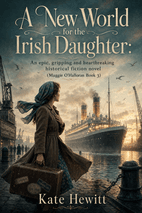
Underneath its plot, A New World for the Irish Daughter is really about how survival bends women's choices, how starting over can disappoint, and how family, love, class, and guilt shape what people can admit to themselves and each other. It keeps asking what respectability costs and who gets to belong.
On this page you'll find theme breakdowns with concrete moments: brothel life, low-paid work, pregnancy and nursing; fresh starts in San Francisco, nursing, Alaska, and business; the O'Hallorans' elusive father and departures; Maggie and Brendan's stalled timing and unspoken feelings; charity and social prejudice; and guilt and atonement. The recurring symbols are the cameo brooch and garnet ring, the pistol, the Nob Hill mansion, and the Juneau cabin.
Major Themes in A New World for the Irish Daughter
Survival, Respectability, and Women's Limited Choices
The novel repeatedly shows women balancing safety and respectability against economic survival, with brothel life, low-paid work, pregnancy, and nursing all presented as constrained choices. Maggie's horror at the parlor house coexists with her need for lodging, while Jenny and Miss Jessie embody competing views of sex work as economic necessity.
- Maggie is horrified to stay at a brothel but has only enough money for a few nights and cannot refuse her father.
- Jenny fears Miss Jessie will throw her out if she is pregnant and later falls down the stairs and loses the baby.
- Jenny refuses Dr. Brown's maid position because she makes as much at the parlor house.
- Miss Jessie argues that the girls are better off there than in a cannery or laundry.
Starting Over, Purpose, and Disillusionment
Characters repeatedly seek clean slates in San Francisco, nursing, Alaska, and business, but renewal is fragile and often shadowed by lost ambition and compromise. Maggie moves from believing she wants only survival to finding purpose in nursing, then leaves that path for family and later hides her disappointment about Brendan's grand house.
- Maggie calls San Francisco a clean slate and resolves to take her fate into her own hands.
- Maggie feels her old dreams were cheap, tawdry things compared with the shining sense of purpose she feels after accepting nurse training.
- Maggie tells Danny that her hat-making time has passed and later quits the nursing program to follow her family to Alaska.
- Brendan says he came to Alaska partly to escape Maggie and try to make a different life.
Family, Belonging, and Abandonment
The O'Hallorans' search for home is shaped by an elusive father, repeated departures, and Maggie's determination to keep her family together. She follows Danny and Da to Alaska, takes in Sheetka, and defines family through commitment, even as loved ones keep leaving her.
- Danny rushes joyfully to embrace Declan, while Maggie notices their father looks shabby and lives in a brothel.
- Maggie tells Charlotte she cannot let her family leave her again and cannot be all alone.
- Maggie leaves Sheetka at Diana's home to rescue Danny and Da, then after the reunion declares they are a family forever.
Love, Timing, and Unspoken Feeling
Maggie and Brendan's relationship is repeatedly stalled by mismatched timing, pride, and things left unsaid. The novel traces their estrangement, Maggie's confession, Brendan's offered friendship, their marriage, and later Maggie's suppression of doubts about the mansion.
- Brendan rejects Maggie's advance and says she made her choice long ago and it was not him.
- Maggie confesses her love at the Saturday dance, but Brendan remains reserved and offers only friendship.
- On deck Brendan confesses that he came to Alaska partly to escape Maggie and does not want to love her anymore.
- After Brendan buys the Nob Hill house, Maggie suppresses her questions and tells him she loves and adores it.
Class, Charity, and Social Prejudice
The book contrasts respectable institutions and wealthy benevolence with the stigma attached to poverty, brothels, and racial difference. Maggie is both helped and judged by benefactors, and she confronts the line between charity and equality in San Francisco and Juneau.
- At the Browns' Christmas, Maggie realizes their expensive gifts make her feel like an object of charity rather than an equal or friend.
- Charlotte tells Maggie her admission was much debated and that she vouched Maggie was respectable.
- A Tlingit man refuses Sheetka as nitckakaku, and boarding-house residents call her a heathen child and an Injun.
- Maggie worries that Nob Hill neighbors will look down on her and wonders how Sheetka will fit in.
Guilt, Complicity, and Atonement
Characters carry guilt for past failures and try to make amends through care, work, or fresh starts. Maggie feels complicit in the brothel world she mends for, Brendan is haunted by Holmes's victims, and Danny vows to change after his leg is amputated.
- Maggie says she feels complicit because she mends the girls' clothes and smiles along while they are trapped.
- Brendan admits he feels he let down the girls who worked for Holmes and that helping at Miss Jessie's felt like making it right, just a little.
- After his leg is amputated, Danny says he has wasted his years and vows to be different.
Symbols and Motifs
The cameo brooch and garnet ring
These are Maggie's last mementoes of her mother and of the past she sacrifices for survival; pawning them marks desperation, while Brendan's retrieval of them signals love and restoration.
- Maggie pawns her mother's cameo brooch and garnet ring for twenty-one dollars to pay rent at Miss Jessie's.
- Brendan sees Maggie leaving the pawnshop, later buys the cameo and ring back, and leaves them on Maggie's pillow.
The pistol
The pistol represents self-protection and hard-won self-reliance on the frontier, as well as the threat of gender and racial violence that Maggie must be prepared to meet.
- Declan gives Maggie a small pistol for protection before leaving for the Klondike.
- Brendan teaches Maggie to shoot before leaving Juneau.
- Maggie draws the pistol and shoots a drunken prospector in the arm to protect Sheetka.
The Nob Hill mansion
The mansion embodies Brendan's vision of success and Maggie's old dreams, but for Maggie it also symbolizes decisions made without her, class anxiety, and the gap between grand status and the simple home she values.
- Brendan stops the carriage in front of a brick mansion on Nob Hill and uses a key instead of the brass knocker, revealing he has bought it.
- He carries Maggie over the threshold and says he wanted to give her silks, satins, diamonds, pearls, and a proper house.
- Maggie is privately ambivalent, worried about the neighborhood and Sheetka, but tells Brendan she loves and adores the house.
The Juneau cabin
The cabin represents simple belonging and chosen family rather than grand social status; it is the physical home Maggie makes for Danny, Da, Sheetka, and herself.
- Maggie rents a two-room cabin on the edge of town for six dollars a month and moves Danny, Da, and Sheetka there.
- Maggie looks around her simple Juneau cabin with rag rugs, a sampler, herbs, dried flowers, and books and thinks it had felt like she had finally found a home.
- At the cabin Maggie feels they are finally a proper family around the rickety table.
Continue Exploring
- Read the full A New World for the Irish Daughter summary →
- Best quotes from A New World for the Irish Daughter →
- A New World for the Irish Daughter character guide →
- A New World for the Irish Daughter ending explained →
- A New World for the Irish Daughter book club questions →
- Explore more book summaries →