A Hymn to Life Quotes
by Gisèle Pelicot
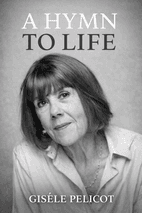
Welcome to a collection of lines from Gisèle Pelicot's memoir A Hymn to Life. Here you will find moments of profound honesty, quiet strength, and a voice that refuses to be silenced. These quotes capture the raw edges of betrayal, the weight of memory, and the slow return to hope. What makes this book so quotable is the way it balances devastating truth with a stubborn will to live. Every line feels earned, shaped by experience rather than borrowed from convention.
These are not polished platitudes. They are fragments of a life rebuilt from rubble. Readers will recognize the ache of loss, the shock of discovery, and the fragile beauty of moving forward. Whether you are seeking courage, understanding, or simply a witness to resilience, these words offer a hand across the silence.
Top Quotes from A Hymn to Life
“That's you in the photograph.’ ‘No, that's not me.”
The police officer shows the narrator a photograph of her being raped while drugged.
The brief denial captures the moment of shattering truth; she cannot recognize her own drugged body, highlighting the horror of the violation.
“The officer says a number. He tells me fifty-three men had come to my house to rape me.”
After showing photographs, the officer reveals the scale of the crimes committed against her.
The stark, cold number amplifies the magnitude of the betrayal and the systematic abuse, leaving readers stunned by the cold precision of the revelation.
“We were lovers and we were twins. We would always be together; our suffering behind us, we would escape from our damaged families. I would be his cure and he would be mine.”
The narrator recalls the night she and Dominique first made love.
This intimate declaration captures the youthful hope of love as a mutual salvation, resonating with anyone who has believed in a partnership that heals past wounds.
“Nothing worse could ever happen to me, nothing could hurt me more than losing her, nothing could ever break me now.”
The narrator, now older, reflects on her mother's death and its lasting impact on her strength.
It captures the transformative power of profound grief, turning loss into an unshakeable inner fortress, and speaks to the universal human capacity to endure.
“You don’t get a second chance at life. If I erased everything, it would mean I was dead. And had been for years.”
The narrator concludes that renouncing her past would be a form of self-annihilation.
This raw, defiant statement underscores the human need to preserve one's identity and lived experience, even in the face of unbearable truth.
“It was all a lie, as it turned out.”
After reflecting on how she promised her children a lovely life and security they never had.
This terse, devastating statement encapsulates the collapse of decades of false security and the betrayal at the heart of the story, leaving readers with a haunting sense of irony.
“I could breathe again. I no longer felt so alone.”
After reconnecting with Pascale and talking about the past, Gisèle experiences relief.
It captures the profound solace of being truly heard and understood after years of isolation, a universal longing.
Themes Behind the Quotes
One central theme is the collision between love and deception. The author grapples with a marriage built on trust that turns out to be a carefully constructed lie. This betrayal runs so deep that it questions not only the past but the very foundation of identity. Another theme is survival through memory and ritual. The act of setting a breakfast table each evening or clinging to childhood landscapes becomes a lifeline, a way to anchor oneself when everything else dissolves.
A second major thread is the reclaiming of agency. After being reduced to a body that was used and dismissed, the author insists on her own story, her own grief, and her own happiness. She refuses to let the crime define her. There is also a strong undercurrent of intergenerational pain, from her father's hidden smile to the loss of her mother. Healing, the book suggests, is not about erasing the past but learning to carry it without being crushed.
Quotes by Chapter
Chapter One
“Almost as a way of reaching across the hours of darkness that I fear, of proclaiming the harmony of the day to come.”
The narrator describes her nightly ritual of setting the breakfast table.
It reveals her deep-seated fear of darkness and her hopeful, almost ritualistic attempt to control the future, foreshadowing the betrayal to come.
“My answer resounded inside me like a quiet victory: transparency and trust were at the heart of our long marriage.”
The narrator speaks to Deputy Sergeant Perret on the phone, believing her husband had confessed his earlier misconduct.
The irony is devastating—her trust is tragically misplaced, making this line a poignant symbol of her shattered illusions.
Chapter Two
“I had come back to the countryside of my childhood, to the turbid source of my melancholy and my joy.”
The narrator reflects on returning to her aunt's house in 1971.
This line encapsulates the deep emotional duality of revisiting a place filled with both painful and happy memories, making it universally relatable.
“I think it is the memory of that table that I am holding on to as I set the breakfast table every evening; it is nestled inside me, like those extensions tucked underneath old wooden tables, ready to be pulled out to their full length for family celebrations.”
The narrator remembers her grandmother's kitchen table from childhood.
This vivid image of an extendable table becomes a powerful symbol of family, continuity, and the longing to preserve the warmth of shared meals.
“And all around us, the trees, fields and chateaux would bear witness to how we knew to hold our tears in.”
After the death of the narrator's cousin Micheline, the family maintains stoicism.
It poetically conveys the quiet resilience and unspoken grief of a rural community, where the landscape itself becomes a keeper of their sorrow.
Chapter Three
“I wanted to forget that I had just come home from the police station, alone. Impossible.”
The narrator returns home after reporting the rape at the police station.
This simple, stark sentence captures the overwhelming desire to escape reality and the cruel impossibility of doing so, a universal feeling in the face of trauma.
“I was like a robot, clinging to the next task, the next hour.”
The narrator describes her mechanical state after the revelations.
This metaphor powerfully illustrates how shock and pain can reduce a person to automatic survival mode, a relatable experience for anyone who has endured overwhelming events.
“He was my ally. I had become convinced I was going to die like my mother.”
The narrator reflects on how her husband's support reinforced her fear of a brain tumor.
The bitter irony that her trusted ally was the source of her symptoms resonates deeply, highlighting the cruelty of betrayal and the fragility of self-perception.
“I clung to my memories, I wanted to hold on to those pictures of a father, a husband, a family built by two messed-up kids from the Indre who got married in the shadow of a beautiful chateau.”
While her children destroy photo albums, the narrator tries to preserve her version of the past.
This line captures the heartbreaking conflict between needing to keep a beloved history alive and facing the truth that those memories are now poisoned, a poignant struggle between love and loss.
Chapter Four
“That smile is my inheritance. And, I think, my father's shield.”
The narrator reflects on a photograph of her mother smiling in Paris.
This line distills the duality of legacy—love as both a gift and a protective armor—and resonates with anyone who has inherited a symbol of resilience from a parent.
“I still carried her spirit within me. She was my strength as much as my sorrow.”
The narrator describes how her mother's memory sustains her through hardship.
This line elegantly acknowledges that love and loss coexist, and that the departed can be both a source of pain and of resilience.
“And I wanted to be happy. Not just brave, not just courageous, but happy, to make others happy too, to forge ahead, tirelessly, joyfully.”
The narrator declares her determination to live fully after her mother's death and her stepmother's cruelty.
It redefines strength as the deliberate choice of joy over mere endurance, inspiring readers to pursue happiness as an act of defiance and love.
Chapter Five
“I could not erase everything in a single stroke. The last fifty years were so much more than a lie.”
The narrator struggles to reconcile her fifty-year marriage with the recent revelations about her husband.
This line captures the painful conflict between a lifetime of cherished memories and the shattering truth, resonating with anyone who has faced a betrayal that threatens to rewrite their entire history.
“Happiness had found me at last. Had found us.”
She recalls the joy of meeting Dominique and their early life together.
The simple, hopeful phrasing evokes the universal longing for love and belonging, making the subsequent tragedy all the more devastating.
“The leaking body of an ageing woman was suspect, and therefore the woman herself was suspect.”
She reflects on how her health concerns were dismissed and how she became suspicious.
This line exposes the dehumanizing dismissal of older women's suffering, resonating with readers who have felt invalidated or silenced by systems and loved ones.
Chapter Six
“My body did not remember anything; it was my body, but it was also not quite mine, the way you have no memory of the scalpel cutting into flesh when you come out of the operating theatre.”
The narrator describes her detached feeling after a blood test for STDs following the discovery of her husband's crimes.
This line powerfully captures the dissociation and trauma of living in a body that has been violated without conscious memory, using a surgical metaphor that makes the experience visceral and relatable.
“I did what I always did, what people try to do when they have lost everything, stay strong, not fall apart, while she felt the ground swaying beneath her feet.”
The narrator recalls her daughter's terror during a childhood bailiff seizure and her own forced stoicism.
It contrasts the painful burden of appearing strong with the child's raw vulnerability, speaking to the universal struggle of maintaining composure in the face of devastating loss.
“I kept these to myself, to wrap myself in like a blanket to ward off the cold.”
The narrator explains why she does not share good memories with the magistrate or her children.
The metaphor of wrapping oneself in good memories as a blanket against emotional coldness is both tender and tragic, illustrating how she clings to the past for survival.
Chapter Seven
“Of all the dangers that threatened Dominique, the most fearsome was his father.”
Narrator reflecting on Dominique's childhood at the Chateau d'Oublaise.
This line encapsulates the central terror of Dominique's early life and the source of his trauma.
“He must have sensed that there were vulnerable people and a domain over which he could rule.”
Narrator speculating why Denis Pelicot took the warden job at the chateau.
It reveals the predatory, controlling nature of the father figure that looms over the entire chapter.
“It does you no end of good to have a young thing in your bed,’ he said.”
Denis Pelicot after his wife's death, justifying his relationship with the vulnerable Nicole.
This shocking statement lays bare the callous objectification and abuse that define the family's dysfunction.
“For him, he writes, meeting me signalled the end of the nightmare.”
The final line describing Dominique's written account of his childhood.
It offers a bittersweet note of hope amid the darkness, emphasizing the redemptive power of their love.
Chapter Eight
“I preferred to lose a dear friend than to understand.”
Gisèle Pelicot recalls ending her friendship with Pascale after Pascale tried to warn her about Dominique.
This line encapsulates the painful self-awareness of choosing willful ignorance to protect a cherished illusion, a moment that later haunts her.