As an Amazon Associate, we earn from qualifying purchases.
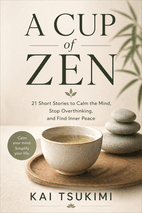
Kai Tsukimi's A Cup of Zen presents 21 parable-like stories that teach Zen philosophy through lived experience rather than abstract concepts, with each tale followed by a brief reflection and an embodied practice. Written for beginners to mindfulness who are caught in overthinking or anxiety, it offers simple, repeatable practices for finding stillness in everyday moments.
On Insta.page you also get an Apply This Book tool that lets you combine insights from up to 3 books to solve your specific situation.
Chapter mindmaps
Free preview: chapters 1–4 are fully interactive. Click any node to expand or collapse. Subscribe to unlock the rest.
Chapter 1: 1
Key concepts: 1
1
The Burden of Maybes
Traveler carries absurdly large bundle up mountain
Old man asks: 'Why carry all this?'
Weight becomes unbearable, items dropped one by one
Letting go reveals wisdom, not reaching the peak
The Twist at the Peak
Old man already at monastery, traveler shocked
Old man walks toward a hidden higher path
Traveler sees another figure struggling below
Cycle of carrying and shedding continues
Reflection and Practice
Ask: What are you carrying that no longer serves?
Hold a stone, drop it—feel the difference
Let go of a past event; was it ever there?
Walk in silence; notice what falls away
Key Takeaways
Wisdom is in the shedding, not the destination
Maybes are security theater, not necessity
Mountain doesn't confirm journey—you do
Letting go is an active choice, not passive
Chapter 2: 2
Key concepts: 2
2
The Overflowing Cup
Scholar arrives full of knowledge but empty of understanding
Tea master pours until tea spills over scrolls
Silence teaches louder than words or explanations
Fullness prevents receiving anything new
The Spill We Ignore
Overflow signals missed moment to stop and drink
Clinging to learning that no longer serves us
Wisdom is recognizing when vessel is full
Real lesson comes in quiet after the spill
The Stillness Between Drops
Direct experience bypasses analytical mind
Pour water until it spills to feel fullness
Hold breath then release to feel emptiness
Separate drops become a single whole in rain
Empty Cup as Space for Wisdom
Empty cup is not lack but space for insight
Pausing matters more than adding more
Wisdom comes from stopping accumulation
Letting go creates room for real understanding
Key Takeaways
Fullness is not the same as readiness
Silence teaches louder than explanation
Overflow signals need to drink what you have
Empty cup is space for something real to arrive
Chapter 3: 3
Key concepts: 3
3
The Parable of the Fisherman
Boy's anxious questions met with silence
Fisherman trusts the process, not guarantees
Action carries wisdom beyond explanation
The Weight of Not Knowing
Fear of failure drives need for certainty
Needing to know is heavier than not knowing
Not knowing is the natural state of things
What You Pull Back
Three possibilities: truth, illusion, or movement
Movement shows evidence of participation
The attempt itself is enough
Practice of Letting Go
Drop a pebble and watch ripples fade
Write a question in sand, let wind erase it
Stand in the wind and try to catch it
Key Takeaways
Certainty is not a prerequisite for action
The doing teaches more than the waiting
What you pull back may not be a clear answer
Chapter 4: 4
Key concepts: 4
4
The Encounter
Governor invites two Zen masters
Renji flatters; Kaito insults
Governor feels pleased then stung
The Pivotal Response
Governor pauses and breathes instead of reacting
He thanks Kaito for the harsh truth
This choice marks the start of real learning
The Lesson Learned
Truth often arrives wrapped in discomfort
Flattery feels good but teaches little
Uncomfortable people may be your best teachers
You've reached the end of the free mindmaps
Read less, remember more
See every chapter of A Cup of Zen as an interactive mindmap — and unlock all 800+ book summaries with audio and AI Q&A.
$0.00 due today · 7 days free, then $89.99/year ($7.49/mo) · Cancel anytime before day 7