The Truth About Statins Key Takeaways
by Barbara H. Roberts
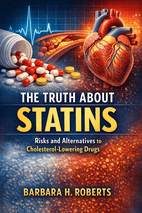
5 Main Takeaways from The Truth About Statins
Statins Offer Minimal Benefit for Healthy People Without Heart Disease
The book reveals that for primary prevention, statins reduce absolute risk by only 1-2%, with no proven mortality benefit for women. Clinical trials often exaggerate benefits using relative risk reduction, masking the small actual impact for low-risk individuals.
Statin Side Effects Are Common, Serious, and Often Underestimated
Side effects include muscle damage, cognitive impairment, diabetes risk, and even cancer, with risks increasing with dose and duration. These are not always detected by standard blood tests, and their severity is frequently downplayed in industry-funded research.
Women Benefit Less from Statins and Face Higher Risks Than Men
Women have a different cholesterol risk profile, and statins show no proven benefit for healthy women under 65 without heart disease. They also experience more side effects like tendon rupture and diabetes, making the risk-benefit ratio unfavorable.
Lifestyle Changes Are More Effective and Safer Than Statins for Prevention
The Mediterranean diet outperforms low-fat diets for heart health, reducing inflammation and improving metabolic factors. Combined with exercise and smoking cessation, it offers a powerful, drug-free approach to cardiovascular prevention without side effects.
Patients Must Question Statin Prescriptions and Seek Individualized Risk Assessments
A statin prescription should follow a detailed risk assessment, not just a cholesterol number. Patients should ask about absolute risk reduction, side effects, and non-drug alternatives to ensure the treatment is truly necessary for their situation.
Executive Analysis
The Truth About Statins" argues that the widespread prescription of statins is often not justified by evidence, particularly for primary prevention in individuals without existing heart disease. Dr. Roberts connects the dots by showing how pharmaceutical marketing, misleading statistical reporting (like relative risk reduction), and gender biases have led to overprescription. The book highlights that statins' benefits are modest at best for many, while their side effects—from muscle damage to cognitive decline—are common and severe, especially for women.
This book matters because it empowers patients to challenge automatic statin prescriptions and seek personalized care. By providing a robust critique of industry-influenced science and offering practical lifestyle solutions like the Mediterranean diet, it serves as an essential guide for anyone navigating heart health decisions. In the genre of medical exposés, it stands out for its focus on women's health and actionable alternatives, bridging the gap between criticism and constructive advice.
Chapter-by-Chapter Key Takeaways
— Chapter 1 — My Doctor Wants Me to Take a Statin — What Questions Do I Need to Ask ? (Chapter 1)
A statin prescription should follow a detailed risk assessment, not just a single cholesterol number.
Healthy women with no existing heart disease derive little to no proven benefit from statins for primary prevention.
Statin side effects are real and common, even with "normal" blood tests for muscle damage.
Therapeutic lifestyle changes are the recommended first line of treatment for everyone.
Patients must be proactive, asking their doctor specific questions to ensure a statin is truly necessary for their individual situation.
Try this: Before accepting a statin prescription, prepare a list of questions for your doctor about your individual cardiovascular risk, the absolute benefit you can expect, and potential side effects.
— Chapter 2 — When Statins Help Most , and When They May Not Help at All (Chapter 2)
Statins provide a clear, though modest, benefit for secondary prevention—helping prevent future events in people who already have heart disease.
For primary prevention in people without heart disease, the benefit is very small (1-2% absolute risk reduction for men) and statistically nonexistent for women.
Clinical trial results are often reported using misleading relative risk reduction percentages, making benefits appear far more significant than the absolute risk reduction.
Clinical trials have significant limitations; they often exclude complex patients and are too short to detect all long-term side effects, as tragically demonstrated by the Baycol case.
The decision to use a statin, especially for primary prevention, requires a careful, individualized risk-benefit analysis, considering that diet and lifestyle changes can be highly effective for many.
Try this: Distinguish whether you need statins for primary or secondary prevention, and request your doctor explain the absolute risk reduction to realistically assess the drug's small benefit for prevention.
— Chapter 3 — Common Side Effects of Statins : Cautionary Tales (Chapter 3)
Common foods like grapefruit and pomegranate juice can dangerously increase statin blood levels by inhibiting their metabolism.
Statins can cause significant musculoskeletal damage, including tendonitis, tendon rupture (especially in women), joint pain, and may accelerate osteoarthritis.
Liver enzyme abnormalities are a known risk, with rare instances of irreversible liver failure.
Neurological effects are a serious concern, encompassing cognitive impairment ("brain fog"), a substantially increased risk of peripheral neuropathy, and a possible link to ALS.
Long-term use may be associated with an elevated risk of developing diabetes and, in some studies, cancer.
The likelihood and severity of many side effects appear to increase with higher doses, longer duration of use, and female sex.
Statin effects on cancer risk vary dramatically by drug type, with some increasing and others decreasing risk for specific cancers.
The drugs carry documented increased risks for liver dysfunction, kidney failure, severe myopathy, and cataracts.
Statins increase the risk of a second hemorrhagic stroke, revealing a critical trade-off in stroke prevention.
Statins are teratogens (cause birth defects) and their use in pregnancy can lead to severe fetal abnormalities.
Expanding statin prescriptions to children is presented as an unethical practice when lifestyle interventions are safer and equally effective.
The influence of pharmaceutical funding and profits potentially biases research, leading to minimized reporting of side effects.
Try this: Monitor your body for side effects such as joint pain, memory issues, or fatigue while on statins, and insist on further evaluation if symptoms arise despite normal lab results.
— Chapter 4 — Why Can’t a Woman Be More Like a Man ? Gender Differences and Statin Use (Chapter 4)
Women derive less benefit from statins than men, with a higher number needed to treat and increased diabetes risk.
The JUPITER trial’s early termination, data inconsistencies, and authors’ financial conflicts undermine its reliability.
Cholesterol risk profiles differ by gender; elevated LDL is less harmful to women, explaining statins’ reduced efficacy.
For healthy women under 65 without vascular disease, statins lack proven benefit and carry unnecessary risks.
Non-drug approaches to heart disease prevention offer safer, effective alternatives, as explored in the next chapter.
Try this: As a woman, critically evaluate the evidence for statin use in your case, knowing that for primary prevention, the benefits are minimal and risks are higher, so prioritize diet and exercise.
Next chapter: “— Chapter 5 — So What Am I to Do ? Practical Lifestyle Approaches to Heart Health” is locked
Keep learning from The Truth About Statins — and unlock all 600+ book summaries with audio, mindmaps and AI Q&A.
$0.00 due today · 7 days free, then $89.99/year ($7.49/mo) · Cancel anytime before day 7
plus sales tax where applicable