The Comfort Crisis Key Takeaways
by Michael Easter
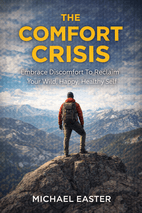
5 Main Takeaways from The Comfort Crisis
Embrace intentional discomfort to build resilience and mental toughness.
The book argues that modern life's constant comfort weakens us, but by voluntarily seeking challenges like cold exposure, hunger, or physical exertion—as seen in the Arctic journey—we can rebuild the resilience our ancestors had, leading to improved health and mental clarity.
Modern comfort is a historical anomaly that harms our health.
Humans evolved in harsh conditions over millions of years, and our bodies are adapted to struggle. The book links 'diseases of comfort' like obesity and depression to our sedentary lifestyles, suggesting that reincorporating productive discomfort is essential for well-being.
Disconnect from digital distractions to foster creativity and presence.
Constant screen use and boredom avoidance are shown to reduce creativity and increase stress. The book advocates for periods of digital detox and embracing boredom, as seen in nature immersions, to enhance mindfulness and innovative thinking.
Reconnect with natural movements and primal challenges for physical health.
Our bodies are designed for varied, endurance-based activities like carrying weight over distance. The book highlights rucking and functional fitness as ways to combat back pain and build strength, echoing ancestral patterns of movement.
Use mindfulness and mortality awareness to find deeper contentment.
Drawing on Buddhist principles, the book shows that contemplating impermanence and practicing mindfulness can break the cycle of endless desire, leading to greater gratitude and a more meaningful life, as illustrated by the hunt's emotional aftermath.
Executive Analysis
The book's central thesis, 'the comfort crisis,' posits that humanity's unprecedented safety and ease have created a mismatch with our evolutionary design, leading to widespread physical and mental decline. The five key takeaways interconnect to argue that by intentionally reintroducing discomfort—through challenges like fasting, rucking, digital detox, and mindfulness—we can rebuild resilience, enhance health, and find deeper fulfillment.
'The Comfort Crisis' matters because it translates anthropological and scientific insights into actionable steps for modern readers, offering a proven antidote to the malaise of contemporary life. It bridges genres by combining adventure narrative, health science, and philosophical inquiry, positioning itself as essential reading for anyone seeking to thrive in a world of convenience.
Chapter-by-Chapter Key Takeaways
33 Days (Chapter 1)
Modern life is characterized by unprecedented levels of safety and comfort, which may be limiting human resilience and fulfillment.
Scientific research is increasingly linking intentional exposure to hardship and discomfort with improved physical health, mental toughness, and spiritual well-being.
The Alaskan Arctic represents an extreme environment where the comforts and safety nets of civilization are completely absent, forcing a direct confrontation with primal challenges.
The journey is framed as an active experiment in “rewilding” oneself to counteract the negative effects of the modern “comfort crisis.”
Try this: Plan a challenging outdoor adventure to force yourself out of your comfort zone and reconnect with primal resilience.
35, 55, or 75 (Chapter 2)
Discomfort is a catalyst: Growth and clarity often emerge not from comfort, but from the willing embrace of acute, painful change, as exemplified by the decision to get sober.
Comfort can be a trap: While some comforts are destructive and obvious (like alcoholism), others are quiet, pervasive, and can insulate us from the raw, engaging experience of being alive.
Awareness precedes change: The journey begins with a moment of honest self-assessment, seeing life "as it was and not as I believed it to be," which creates the possibility for a different path.
Sobriety is a rewiring: Early sobriety involves not just physical withdrawal, but a fundamental relearning of how to exist in the world without a primary coping mechanism.
The question of modern life: The chapter implicitly challenges the reader to audit their own insulated existence and ask what they might be numbing or avoiding through the myriad comforts of contemporary living.
Try this: Conduct an honest audit of your life to identify what comforts you're using to numb yourself, and commit to removing one for a week.
0.004 Percent (Chapter 3)
The human drive for comfort is an ancient survival mechanism that is now mismatched with our modern, comfort-saturated environment.
Constant comfort is a historical anomaly; humans evolved over 2.5 million years in conditions of persistent physical discomfort and acute survival stress.
The removal of evolutionary challenges has led to a rise in "diseases of comfort": obesity, diabetes, heart disease, and "diseases of despair" like depression and addiction.
Modern, psychological "first-world stress" has replaced the acute physical stresses our biology was designed to manage, often with negative health consequences.
The chapter suggests that re-incorporating certain forms of productive discomfort and struggle may be essential for our physical and mental well-being.
Try this: Introduce daily periods of physical discomfort, like cold showers or fasting, to mimic the evolutionary stresses your body expects.
800 Faces (Chapter 4)
Humans have a psychological tendency called "prevalence-induced concept change," where we perceive problems even as they become rare, leading to "problem creep."
This phenomenon stems from evolutionary adaptations for efficient decision-making but now contributes to perpetual dissatisfaction in modern life.
"Comfort creep" results from this, where advancements in comfort raise our standards, shrinking our tolerance for discomfort and hindering contentment.
The process is largely unconscious, highlighting the need for mindfulness to recognize and mitigate its impact on our happiness and perspectives.
Try this: Practice mindfulness to notice when your standards for comfort are rising unnecessarily, and consciously accept minor annoyances.
20 Yards (Chapter 5)
Hunting as Process: For practitioners like Donnie, the true reward is the demanding, immersive process of the hunt—the endurance, the skill, and the deep connection to landscape—not merely the kill.
Conscious Predation: A ethical, conscious hunting philosophy can view the act as participating in a natural cycle, with strict self-imposed rules to ensure respect for the animal and the health of the ecosystem.
The Cost of Convenience: Our industrial food system creates a barrier between consumers and the origins of their meat, sanitizing the reality of death and disconnecting us from the fundamental predator-prey relationship that still underpins our survival.
Discomfort as Awakening: Voluntarily submitting to physical hardship, boredom, and primal conditions can strip away the numbness of modern comfort, leading to a sharper, more present, and more vital state of being.
Try this: Engage in a demanding physical activity that requires full immersion, such as hiking or foraging, to experience the vitality of earned rewards.
50/50 (Chapter 6)
Rites of passage are a human universal with a clear structure (separation, transition, incorporation) designed to build capability and resilience, a need that persists in the modern psyche.
Modern parenting trends have created a void by over-protecting children, which correlates with rising rates of anxiety and depression.
A misogi is a engineered, safe modern rite whose power is amplified by making it personal (quirky, incomparable) and private (done without an audience for validation).
Science supports the "toughening" effect: Facing moderate, manageable stress—whether from life events or a deliberate challenge—builds psychological and physical resilience, better preparing us for future adversity.
The benefits are transferable: The internal capacity and resilience built through one significant challenge create a broader robustness applicable to many areas of life.
Try this: Design a personal 'misogi'—a private, difficult challenge that pushes your limits—to build resilience without seeking external validation.
50. 70. Or 90. (Chapter 7)
Extreme challenges require extreme, multi-dimensional preparation. Success is not just about physical grit but also logistical planning, technical knowledge, and the right equipment.
Stepping far outside your comfort zone forces a valuable state of presence. Learning demanding new skills breaks the brain's "autopilot" mode, slows the perception of time, and quiets mental clutter.
The preparation path itself is transformative. The process of "rewilding"—training the body, studying the environment, confronting fears—delivers significant cognitive and psychological benefits independent of the ultimate goal.
Functional fitness is fundamentally different from aesthetic fitness. Training should mimic real-world demands (like carrying weight over distance) to build resilience for specific challenges.
Acknowledging fear and incompetence is the first step to growth. Embracing the fact that "we all suck at new things" allows for a humble, bumbling, but ultimately effective learning process.
Try this: Train for a specific, real-world challenge using functional movements that build both strength and endurance, rather than just aesthetic gym workouts.
101 Miles (Chapter 8)
Chosen solitude is a critical skill that allows for self-discovery and can enrich social relationships by ensuring one brings an authentic self to interactions.
The stress of a controlled, physical challenge in nature can be exhilarating and liberating, offering a stark contrast to the chronic, draining stress of everyday life.
Profound personal insight and intense physical experience can exist side-by-side, each offering a different form of clarity and engagement with the world.
Try this: Schedule regular solo time in nature, without distractions, to foster self-discovery and reduce chronic stress.
<70 Miles an Hour (Chapter 9)
The fundamental rule of wilderness survival prioritizes shelter, then water, then food, a hierarchy immediately tested by the environment.
Every campsite is a complex trade-off between strategic advantage (safety, visibility) and critical resources (protection, water access).
In the pristine Arctic, water from untamed sources can be safer than municipal supplies, filtered through perpetual freeze-thaw cycles in untouched land.
Human vulnerability is most acutely exposed by weather, not predators. A sudden storm presents a far more immediate and lethal threat than the feared grizzly bear.
Enduring extreme adversity can recalibrate perception, making subsequent challenges feel more manageable and enriching the overall experience with greater color and meaning.
Try this: Learn basic survival skills, like building shelter and finding water, to appreciate your dependence on nature and build confidence in adversity.
11 Hours, 6 Minutes (Chapter 10)
Free digital services are designed to addictively capture attention for advertising revenue, leveraging dopamine-driven feedback loops similar to gambling.
Boredom, when not immediately alleviated by screens, can build psychological resilience and serve as a catalyst for creativity, as shown by historical studies and personal anecdotes.
Creativity, measured by tests like the Torrance Test, is a stronger predictor of life success than IQ, but it's declining due to overuse of electronic devices and hurried lifestyles.
Immersive experiences in nature, away from digital distractions, demonstrate the benefits of boredom: reduced stress, enhanced mindfulness, and spontaneous creative thinking.
Intentionally incorporating boredom into daily life—by disconnecting from screens and allowing the mind to wander—can improve mental health and foster original ideas.
Try this: Designate daily 'boredom breaks' where you disconnect from all screens and allow your mind to wander, sparking creativity.
20 Minutes, 5 Hours, 3 Days (Chapter 11)
True, physiological hunger is an unfamiliar experience for many, overshadowed by constant, mindless eating driven by emotion and environment.
The field of nutrition is plagued by contradiction, industry influence, and a disconnect between research and practical, sustainable human application.
All diets work on a metabolic level, but most fail because the body biochemically fights weight loss by increasing hunger; long-term success requires tolerating discomfort.
Trevor Kashey represents a pragmatic, data-driven alternative, emphasizing precise measurement to reveal the often-shocking reality of calorie intake.
The critical distinction is between real hunger (a physiological need) and reward hunger (a psychological drive rooted in evolution), with the modern food environment excessively and dangerously triggering the latter.
Stress is a primary trigger for non-hunger eating, and building resilience to handle discomfort without food is critical.
Banning foods is counterproductive; it leads to the disinhibition effect and binge cycles. A better strategy is to allow all foods while tracking intake, letting natural consequences guide smarter choices.
Energy density (calories per pound) is a key driver of satiety. Eating predominantly lower-energy-density foods (like vegetables, fruits, tubers, and lean proteins) allows you to feel full while consuming fewer calories.
The optimal diet is balanced, not extremist. A template of lean protein, whole grains/tubers, and plenty of vegetables provides lasting fullness and energy, aligning with the eating patterns of the world's healthiest populations.
Hunger is manageable and often psychological. Expanding your comfort zone to tolerate mild hunger is a skill that, combined with smart food choices, leads to sustainable weight management.
Hunger is a Feature, Not a Bug: Our bodies evolved to use periods without food for cellular cleanup (autophagy) and sharpened mental focus. Avoiding hunger entirely may harm our long-term health.
Break the Constant Eating Window: Compressing daily eating to an 8-10 hour window (e.g., by skipping breakfast) is a practical way to trigger autophagy and recalibrate our relationship with food.
Discipline Overrides Excuses: While genetics may play a role, they are not destiny. Effective change comes from data-driven action and consistent effort, not from seeking reasons for failure.
Embrace Productive Discomfort: The hunting story illustrates how enduring physical and mental discomfort—cold, hunger, patience, failure—can lead to deeper satisfaction, awareness, and resilience. The "charm" is in the hard work itself.
The Western "checklist" mentality of endless achievement and acquisition is identified by Bhutanese Buddhists as a primary source of unhappiness, creating a cycle of unfulfilled desire.
Mindfulness—non-judgmental awareness of the present—is presented as the antidote to this cycle, fostering contentment irrespective of external circumstances.
Conscious contemplation of death is not morbid but essential. The analogy of walking toward a cliff makes us value the journey, prioritize relationships, and live more authentically.
The core Buddhist concept of mitakpa (impermanence) teaches that all things, including life itself, are transient. Embracing this truth reduces suffering caused by clinging and fosters compassion, gratitude, and a calmer mind.
Empirical research supports that thinking about death can increase prosocial behavior, gratitude, and quality of life for the dying, validating these ancient practices.
A practical application is to consciously remember one's mortality at least three times a day, using it as a tool to focus on what is truly meaningful.
A successful hunt brings a complex, burdensome emotional wave—grief, gratitude, and a profound sense of participation in a natural cycle.
The intimate process of butchering an animal transforms it conceptually from an individual into a vital source of sustenance, highlighting a disconnect with our everyday, anonymous consumption of meat.
Nature’s reality is often brutal and unforgiving; a hunter’s quick kill can be more merciful than the drawn-out deaths nature typically provides.
The physical ordeal of packing out the meat is an inescapable, transformative trial of endurance, merging intense physical suffering with deep mental resolve.
Perceived physical limits are often psychological brakes applied by the brain's emotional center, not true physiological exhaustion.
Compared to our hunter-gatherer ancestors, even active modern humans are dramatically sedentary, lacking the constant, varied, and cognitively engaging movement that shaped our biology.
Technological progress has created a comfort trap, engineering physical activity out of daily life and relegating it to short, often overly simplified gym sessions.
The ability to carry heavy loads over long distances is a uniquely human, evolutionarily fundamental feat that combines strength and endurance—a capability our bodies retain but our lifestyles neglect.
Humans are evolutionarily adapted for endurance carrying, not pure strength, a trait that was crucial for survival.
Rucking (walking with weight) modernizes this ancient practice, building a uniquely balanced, resilient physique and extreme endurance.
Embracing physically hard tasks like rucking builds critical mental fortitude that buffers stress and enhances perseverance in all areas of life.
The medical science is clear: increasing physical activity and cardio fitness is one of the most powerful ways to reduce the risk of modern society's leading causes of death.
Physical fitness is a supremely powerful form of medicine, drastically reducing the risk and severity of numerous diseases with no upper limit to its benefits.
For certain conditions like claudication and pre-diabetes, structured exercise can be as effective or more effective than drugs or surgery, without the risks or side effects.
Optimal health requires both cardiovascular endurance and muscular strength; you cannot have one without the other.
Rucking is highlighted as an efficient, low-injury, and socially adaptable activity that builds both strength and cardio, echoing ancestral patterns of load-bearing.
Modern chronic pain, especially back pain, is largely a result of lost "movement generalism"—too little varied activity—and can be addressed by reintroducing diverse, natural movements into daily life.
The Inactivity Mismatch Hypothesis
Our comfortable chairs and couches take over the work our muscles are designed to do, leading to weakened core and back muscles. This "inactivity mismatch hypothesis" suggests that our bodies evolved with more active sedentary postures, like squatting or kneeling, which are still practiced in some cultures with minimal hip and back issues. In contrast, modern sitting disengages muscles, making them brittle and prone to injury when we move.
Ineffective Back Pain Treatments
When back pain arises, common responses like rest, opioids, and surgery often fall short. Opioids may temporarily mute pain but risk addiction, while surgery can lead to complications without improving long-term outcomes. Research indicates that these approaches fail to reduce disability, highlighting a need for alternative strategies.
The Pitfall of Intense Gym Workouts
For desk-bound individuals, intense gym sessions after hours of sitting can backfire, increasing back dysfunction. Instead, spreading gentle exercise throughout the day—through movements like squatting, lunging, and planking—proves more healthful. This approach avoids crossing a biological tipping point that intense workouts might trigger.
The Power of Natural Movements and Carrying
Incorporating natural postures, such as squatting or kneeling during rest, and activities like rucking (carrying weight) can prevent back pain. Carrying engages core and glute muscles, pulling the body out of slumped positions and reinforcing spinal stability. Exercises like the suitcase carry have even rehabilitated elite athletes, underscoring their effectiveness in daily life.
A Reflection on Real-World Physicality
The narrative transitions to a personal moment after a hunt, where the characters reflect on the demands of wilderness activities. They note that gym training alone cannot replicate the holistic challenges of tasks like packing out game, which test true resilience and reveal how our bodies are built for varied, real-world movement.
The inactivity mismatch hypothesis explains how modern sitting weakens muscles, contributing to common back pain, while active rest postures like squatting offer protection.
Conventional back pain treatments, such as opioids and surgery, often provide limited relief and can introduce new risks like addiction or complications.
Balancing sedentary days with intense gym workouts may harm the back; integrating gentle, frequent movement throughout the day is a safer alternative.
Natural movements and weight-bearing activities, such as rucking or carrying, strengthen core and glute muscles, serving as effective defenses against back pain.
Real-world physical challenges, beyond controlled gym environments, offer unique insights into our inherent resilience and the importance of adaptable movement patterns.
Try this: Practice intermittent fasting by compressing your eating window to 8-10 hours, and focus on whole, low-energy-density foods to manage hunger and health.
81.2 Years (Epilogue)
Discomfort as an Evolutionary Filter: Prolonged environmental hardship, as seen in Iceland's history, may act as a crucible for natural selection, potentially cultivating genetic traits that enhance longevity and resilience across generations.
The Memory and Time Effect: Challenging, novel experiences create deep "impressions in your scrapbook," forming vivid, lasting memories that can make life feel richer and longer, decelerating our subjective perception of time.
Temporary Transformation: The profound personal clarity and calm following a major discomfort challenge is often temporary (a "pink cloud"). Sustaining the benefits requires conscious effort and a commitment to recurrent challenges to stave off the steady creep of comfort.
Collective Discomfort as a Reset: Large-scale, involuntary discomforts, like a pandemic, can force a societal "rewilding," breaking predictable routines and creating a rare opportunity for collective reflection and re-prioritization of what matters.
Try this: Regularly seek out novel, challenging experiences to create vivid memories and slow your subjective perception of time, making life feel longer.
Continue Exploring
- Read the full chapter-by-chapter summary →
- Best quotes from The Comfort Crisis → (coming soon)
- Explore more book summaries →