The Body Keeps the Score — Interactive Mindmaps

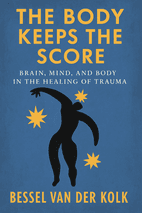
The Body Keeps the Score by  Bessel van der Kolk Book Cover

by Bessel van der Kolk

Bessel van der Kolk's The Body Keeps the Score explores how trauma reshapes the body and brain, synthesizing neuroscience with treatments like EMDR and yoga. It is an essential resource for trauma survivors and clinicians seeking a holistic path to recovery.

On Insta.page you also get an Apply This Book tool that lets you combine insights from up to 3 books to solve your specific situation.

Chapter mindmaps

Free preview: chapters 1–4 are fully interactive. Click any node to expand or collapse. Subscribe to unlock the rest.

Chapter 1: Praise for THE BODY KEEPS THE SCORE

Key concepts: Praise for THE BODY KEEPS THE SCORE

1. Praise for THE BODY KEEPS THE SCORE

Groundbreaking Trauma Research

  • Trauma's physical and psychological imprint is central to the book's thesis
  • Decades of research position trauma as a public health crisis
  • Bridges neuroscience, clinical studies, and holistic healing

Critique of Conventional Approaches

  • Challenges reliance on medication or talk therapy alone
  • Highlights limitations of viewing trauma as purely 'mental'
  • Advocates for integrative mind-body treatments

Innovative Healing Methods

  • EMDR, neurofeedback, and yoga as effective therapies
  • Mindfulness and theater help rewire traumatic imprints
  • Focus on reclaiming agency through body-based practices

Narrative and Scientific Blend

  • Merges cutting-edge science with survivor stories
  • Humanizes trauma through diverse case studies (veterans, abuse survivors)
  • Makes complex concepts accessible to broad audiences

Societal Call to Action

  • Urges systemic change in trauma treatment
  • Demands holistic approaches in healthcare and education
  • Frames trauma as a collective responsibility

Chapter 2: PROLOGUE: FACING TRAUMA

Key concepts: PROLOGUE: FACING TRAUMA

2. PROLOGUE: FACING TRAUMA

The Pervasiveness of Trauma

  • Trauma is not limited to extreme events—it permeates everyday life through abuse, violence, and dysfunction.
  • Millions are affected, with impacts spanning biology, relationships, and societal structures.
  • Survivors often endure cycles of hypervigilance, shame, and isolation.
  • The author’s journey frames a critical question: How can we heal the mind with the same precision as other organs?

The Biological Imprint of Trauma

  • Trauma rewires the brain’s alarm system, causing visceral reactions like stress hormones and intrusive memories.
  • Neural circuits are recalibrated, blurring the line between past threats and present safety.
  • Survival mechanisms become prisons, trapping individuals in fear and helplessness.

The Science of Trauma

  • Neuroscience and psychopathology revealed trauma’s disruption of brain regions (e.g., hippocampus, amygdala).
  • Trauma was historically misunderstood as a 'character flaw' but is now measurable biologically.
  • Fields like interpersonal neurobiology transformed trauma from a mystery into a diagnosable condition.

Pathways to Healing

  • Top-down: Therapy and social connection reprocess traumatic memories.
  • Medication/technology: SSRIs and neurofeedback regulate stress responses.
  • Bottom-up: Somatic practices (yoga, EMDR) reset the body’s trauma imprint.
  • Personalized, multidimensional approaches are key to recovery.

Core Insights on Trauma and Recovery

  • Trauma’s reach is biological, emotional, and societal, perpetuating cycles of fear.
  • Healing requires integrating mind and body, leveraging neuroplasticity.
  • Effective treatments combine talk therapy, medication, and somatic practices.
  • The author’s mission: Make trauma preventable and treatable, not inevitable.

Chapter 3: 1. LESSONS FROM VIETNAM VETERANS

Key concepts: 1. LESSONS FROM VIETNAM VETERANS

3. 1. LESSONS FROM VIETNAM VETERANS

Tom's Trauma and Loyalty to the Dead

  • Tom's suffering serves as a 'living memorial' to fallen comrades, entwining grief with self-destruction.
  • His nightmares and rage attacks stem from an ambush that killed his platoon, including his closest friend.
  • Tom's refusal to medicate reflects his loyalty to the past, blurring the line between honor and self-annihilation.
  • His behavior mirrors his father's unresolved grief from World War II, showing intergenerational trauma.

The Author's Personal Connection to Trauma

  • The author's childhood was marked by his father's wartime rages and his uncle's trauma from imprisonment.
  • Silent anguish from past generations manifested as nightmares and emotional detachment.
  • His mother's fainting spells when recalling her traumatic childhood highlight unresolved trauma's generational impact.
  • These personal experiences drive the author's quest to understand trauma's grip on survivors.

The Void in Psychiatric Knowledge

  • The author discovers Abram Kardiner's 1941 work on 'physioneurosis,' linking trauma to bodily responses.
  • Kardiner's observations of World War I veterans mirror Tom's symptoms but offer no practical treatment.
  • The lack of psychiatric frameworks forces the author to rely on patients as primary guides.
  • Trauma's physical and psychological duality remains poorly addressed in traditional psychiatry.

Trauma's Impact on Identity and Relationships

  • Tom's shame over wartime atrocities isolates him from family, making intimacy feel dangerous.
  • Survivors often despise themselves for behaviors enacted under extreme stress, whether in war or abuse.
  • Trauma corrodes identity, leaving individuals unable to reconcile past actions with present roles.
  • Emotional withdrawal and numbness create a 'glass wall' between survivors and the world.

Numbing and Emotional Withdrawal

  • Tom describes feeling like a 'living behind a glass wall,' detached from his own life.
  • Only high-stakes situations briefly reignite his sense of purpose, mimicking combat adrenaline.
  • These moments collapse into self-loathing, driving him back to isolation and reckless behavior.
  • Emotional shutdown is a hallmark of trauma, erasing the ability to feel joy or connection.

Reorganizing Perception: Bill's Case

  • Bill, a former medic, hallucinates dying Vietnamese children while caring for his newborn.
  • A Rorschach test triggers a visceral flashback, making him relive the event's sights and smells.
  • This reveals trauma's ability to hijack the present, blurring past and current reality.
  • Flashbacks underscore the need for treatments addressing the body's memory, not just the mind's.

Trauma's Theft of Imagination

  • Veterans in group therapy fixate on retelling war stories, revealing a void in creativity and hope.
  • Trauma strips survivors of the ability to imagine a future, trapping them in relived horror.
  • The 1980 recognition of PTSD validates survivors but clashes with institutional resistance.
  • Civilian cases (abused children, violence survivors) mirror veterans' symptoms, proving trauma's universality.

Neuroscience and the Body's Role in Trauma

  • Trauma rewires the brain and nervous system, locking the body in hypervigilance.
  • Traditional talk therapy falls short; healing requires somatic (body-based) approaches.
  • Survivors need to anchor themselves in safety to break free from trauma's physiological grip.
  • New frameworks bridge mind-body divides, honoring the past without being imprisoned by it.

The Rorschach Test Insights

  • Traumatized veterans interpreted Rorschach cards with graphic wartime imagery or complete shutdown.
  • Trauma stripped veterans of mental flexibility, leaving them unable to envision hope or a future.
  • Loss of imagination trapped them in cycles of reliving horrors or emotional numbness.

Struggles in Group Therapy

  • Veterans fixated on war stories in therapy, struggling to discuss civilian life.
  • Trauma narratives sparked bonding but hindered progress in addressing present challenges.
  • Veterans found meaning only in retelling trauma, unable to bridge past and present.

The Birth of PTSD Diagnosis

  • Early misdiagnoses (e.g., schizophrenia) and ineffective treatments worsened veterans' conditions.
  • PTSD's official recognition in 1980 validated suffering and spurred research.
  • Institutional resistance persisted, delaying progress in trauma-focused care.

Trauma Beyond the Battlefield

  • Civilian trauma (e.g., childhood abuse, domestic violence) mirrored veterans' symptoms.
  • Incest and abuse were widespread but historically downplayed in medical literature.
  • Trauma's roots in powerlessness and betrayal transcend combat, affecting diverse populations.

Neuroscience and Healing Innovations

  • Brain imaging revealed trauma's physiological imprint on perception and bodily responses.
  • Trauma keeps the body in hypervigilance, requiring somatic and psychological integration.
  • Healing demands relearning safety in the present, not just revisiting the past.

Key Takeaways

  • Trauma disrupts identity, relationships, and imagination, freezing survivors in the past.
  • PTSD's recognition was a milestone, but institutional resistance slowed progress.
  • Trauma is universal, rooted in powerlessness, and extends beyond combat to abuse and neglect.
  • Effective treatment must address both mind and body to restore safety and presence.

Chapter 4: 2. REVOLUTIONS IN UNDERSTANDING MIND AND BRAIN

Key concepts: 2. REVOLUTIONS IN UNDERSTANDING MIND AND BRAIN

4. 2. REVOLUTIONS IN UNDERSTANDING MIND AND BRAIN

Clash Between Trauma Narratives and Clinical Detachment

  • Midnight confessions of abuse contrasted with daytime symptom-focused diagnoses
  • Eugen Bleuler's link between hallucinations and sexual trauma (1911)
  • Physical symptoms (e.g., clumsiness, rigidity) as trauma's bodily imprint
  • Elvin Semrad's humanistic emphasis on love/loss over biomedical labels

Trauma's Biological and Psychological Impact

  • Learned helplessness studies: stress hormones lock survivors in paralysis
  • PTSD disrupts cortisol signaling, preventing safety recognition
  • Addiction to trauma reenactment (e.g., veterans 'coming alive' recounting war)
  • Body stores trauma (evidenced by coordination/social dysregulation)

Pharmacology's Rise and Limitations

  • Drugs like lithium/Clozaril stabilized crises but failed combat veterans
  • Prozac's uneven benefits: emotional regulation vs. overprescription risks
  • 1968 MMHC study prioritized drugs over psychotherapy
  • Community care gaps after asylum closures

Critique of Psychiatry's Narrow Lens

  • DSM-III's misuse for insurance/legal purposes despite creator warnings
  • Overreliance on chemical fixes obscures need for agency/trust
  • Healing requires body-mind-community integration
  • Systemic failure to listen to trauma's physical/emotional whispers

Paths to Healing Beyond Medication

  • Semrad's model: 'Acknowledge, experience, and bear' reality
  • Somatic therapies (e.g., Peter Levine) address bodily trauma storage
  • Safe relationships and restored autonomy as core to recovery
  • Confronting societal failures alongside individual treatment

Serotonin's Influence on Trauma and Social Behavior

  • Low serotonin levels correlate with hyperreactivity to stress, mirroring PTSD symptoms.
  • Dominant monkeys exhibit higher serotonin levels, while subordinates' status can improve with serotonin supplements.
  • Serotonin modulation suggests potential benefits for trauma treatment by regulating emotional responses.

Prozac and the SSRI Breakthrough

  • Prozac (an SSRI) showed dramatic improvements in trauma survivors, reducing emotional reactivity and preoccupation with the past.
  • Initial success in nonveteran PTSD patients contrasted with its ineffectiveness for combat veterans, highlighting trauma's complexity.
  • SSRIs like Prozac offered symptom relief but didn't address underlying causes of trauma.

The Pharmaceutical Revolution and Its Consequences

  • The 1990s saw psychiatry shift toward drug-based treatments, with Prozac leading pharmaceutical investment.
  • Overprescription of antipsychotics to vulnerable groups (e.g., foster children) risked long-term health issues like obesity and diabetes.
  • The 'brain-disease model' prioritized chemical fixes over holistic healing, neglecting relationships and self-regulation.

Critique of Pharmacology in Trauma Treatment

  • Drugs like Prozac often alienated patients from their agency, focusing on symptoms rather than root causes.
  • A 2013 lawsuit against Johnson & Johnson exposed systemic corruption in antipsychotic marketing.
  • The medical system lacked accountability for overprescribing, particularly in marginalized populations.

Beyond Drugs: Essential Elements of Trauma Recovery

  • Human connection, language, and self-regulation (breath, movement, touch) are critical for healing.
  • Social conditions that foster safety must be integrated into trauma treatment.
  • Holistic approaches combining physiology, community, and autonomy are necessary for lasting recovery.

Key Insights on Trauma and Treatment

  • Stress-induced endorphin release explains why some retraumatize themselves to numb pain.
  • SSRIs work unevenly across trauma populations, with limited efficacy for combat veterans.
  • Overreliance on drugs risks ignoring trauma's social and psychological dimensions.
  • Effective treatment requires integrating biology, self-regulation, and community support.

Continue exploring The Body Keeps the Score