The Algorithm Quotes
by Jon McNeill
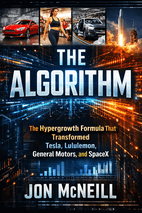
This page collects the most memorable lines from Jon McNeill's book on innovation and speed. You will find quotes that challenge rules, celebrate failure, and push for constant improvement. Each one comes from real experience building companies that move fast and break things the right way.
The book is quotable because McNeill packs big ideas into small packages. He has a knack for turning complex lessons into simple, sharp statements that stick. Whether he is talking about automation, customer focus, or the power of a good deadline, his words feel both practical and daring. These are the kind of lines you will want to share.
Top Quotes from The Algorithm
“Rules and regulations can be changed or, in some cases, defied.”
The author describes Elon Musk's approach to the Chinese ownership requirement.
This line captures the core ethos of the Algorithm—that constraints are not absolute. It empowers readers to challenge norms rather than accept them blindly.
“Only by failing can we be sure that we're pushing far enough into the realm of the possible.”
The author explains the culture of experimentation at Tesla after the casting breakthrough.
It provides a powerful justification for risk-taking and reframes failure as a necessary sign of progress.
“Be so great that they'll talk about you at dinner.”
This is the aspirational goal that Tesla set for its customer service representatives, replacing a month-long training program.
It is a memorable, actionable mantra that shifts focus from compliance to creating memorable experiences, and it directly inspired extraordinary customer service stories.
“When you have stretch goals, this is common. I call it innovation by subtraction.”
The author reflects on how the stretch goal to reduce training time led to a radical shift in approach.
It coins a powerful concept—innovation through removal—and encapsulates the idea that eliminating things can lead to breakthroughs.
“I've found that innovators have a relentless pursuit of better. Not best, but better.”
The author shares this observation after describing the radical simplification at Tesla.
It redefines innovation as continuous improvement rather than perfection, inspiring readers to pursue better relentlessly.
“Just asking the question ‘why?’ is a big deal.”
Josh Tavel, the engineer leading GM's electric Hummer project, explains how he questioned traditions and best practices.
The line distills the essence of the Algorithm's first step into a memorable, universal practice that empowers anyone to challenge assumptions and drive innovation.
“The gap between promise and reality is rife with opportunity.”
McNeill concludes his analysis of the ETF discovery after assuming something already existed.
It's a concise, aphoristic call to challenge assumptions and find hidden opportunities, resonating with entrepreneurs and innovators.
Themes Behind the Quotes
One major theme is the willingness to challenge constraints. The quotes repeatedly urge readers to question rules, regulations, and even physical limits. They celebrate failure as proof of pushing boundaries and treat every no as a possible yes. Speed is another core idea, not just as a goal but as a tool to expose problems and drive improvement. The concept of innovation by subtraction shows how removing steps can lead to breakthroughs.
Another theme is the human side of progress. The quotes highlight the importance of simplifiers, small teams with top level support, and the power of direct CEO involvement. They also focus on the customer journey and turning pain points into opportunities. Automation appears as a final step, not a starting point. Overall, the themes encourage relentless pursuit of better, not best, with a strong bias toward action and learning from reality.
Quotes by Chapter
Chapter One. Step 1: Question Every Requirement
“A corporate culture expands its possibilities if it looks at every “no” as a potential “yes.””
The author reflects on the mindset needed to question requirements.
The inversion is memorable and actionable, reframing rejection as a starting point for innovation. It encourages a proactive, optimistic culture.
“The laws of physics, he'll admit, are a lot less flexible. Yet at the same time, even seemingly physical constraints can be challenged.”
After the China success, the author discusses the limits of questioning.
This balances realism with ambition, acknowledging inviolable laws while inspiring readers to push against perceived impossibilities.
Chapter Two. Step 2: Delete Every Possible Step in a Process
“The magical aspect of this problem-solving is that it can lead to dramatic innovation, even reinventing an entire process.”
The author is describing how removing steps from a process overlaps with other steps of the Algorithm.
This line captures the transformative potential of simplifying operations, showing that reduction can spark entirely new ways of doing things. It inspires readers to see efficiency efforts as a path to breakthrough innovation.
“We discovered that the supermajority of the documents were created by bank lawyers taking every precaution to protect the bank's interests, not by regulators.”
The author and Elon Musk challenged their team to verify which loan document requirements were legally mandated versus industry habit.
It reveals how many complex procedures are self-imposed rather than necessary, encouraging readers to question the true source of rules. This insight empowers people to cut through red tape.
“It's easy to praise people who blast by the usual requirements during a crisis and make smart and timely moves.”
After describing Karim Bousta's risky decision to give free battery range during Hurricane Irma, the author reflects on the aftermath.
This statement acknowledges that decisive action under pressure is often celebrated but also highlights the courage needed to bypass norms. It reminds readers that real leadership involves calculated risk-taking.
“Occasional flubs are inevitable in a corporate culture that embraces risk. They're proof that people are ready and willing to take initiative.”
The author concludes the Hurricane Irma story by discussing the importance of backing employees who make bold decisions.
This normalizes failure as a sign of a healthy, proactive culture rather than a setback. It reassures leaders that mistakes are a necessary byproduct of innovation and initiative.
Chapter Three. Step 3: Simplify and Optimize
“The key ingredient for that scenario was a certain type of employee: a simplifier, the type of person who can solve a pressing problem by seeing the one or two key elements that need to be addressed.”
The author describes the ideal employee for a customer-centric, simplified approach at Tesla.
It provides a clear, aspirational definition of a problem-solver who cuts through complexity, a valuable trait in any organization.
Chapter Four. Step 4: Accelerate Cycle Time
“Going fast is a simple hack for growth. Speeding up a process also exposes quality and process issues. Addressing them often enables an organization to move even faster.”
The author explains the core rationale for accelerating cycle time as the fourth step of the Algorithm.
It encapsulates the counterintuitive insight that speed not only drives growth but also reveals hidden flaws, creating a virtuous cycle of continuous improvement.
“The difference between cycle time and touch time represents your opportunity to improve.”
The author reflects on discovering that his wife's car sat in a body shop for weeks but was only worked on for eight hours.
This simple, actionable distinction clarifies where waste hides and gives leaders a clear metric to target for dramatic efficiency gains.
“I have not seen a successful initiative to innovate at speed without a small team reporting to a top executive who will clear roadblocks.”
The author summarizes a key lesson from GM's Hummer EV project under CEO Mary Barra.
It offers a practical, repeatable organizational principle—autonomy plus executive sponsorship—that resonates with leaders seeking to accelerate change in established companies.
Chapter Five. Step 5: Automate Last
“Don’t automate until you know exactly what you're doing—every motion, every turn, the pathway of every component.”
The author summarizes the lesson learned from the failure of the Alien Dreadnought and the success of manual assembly in the tent.
This line encapsulates the core principle of the chapter: learn and optimize manually before introducing automation. It resonates because it challenges the common instinct to automate first.
“The robots crashed into each other. Model 3s fell off their trays. There were jam-ups, delays, quality issues. It was a disaster.”
Describing the catastrophic failure of the automated Alien Dreadnought production line at the Fremont plant.
The vivid, staccato sentences create a powerful image of mechanical chaos. Readers feel the desperation and the folly of premature automation.
“Automation, whether robots or software, is the final step of the Algorithm.”
The author states the key takeaway of Step 5 of the Algorithm, emphasizing that automation should come after manual learning and optimization.
This succinctly summarizes the chapter's central thesis. It resonates as a counter-intuitive but wise business principle that many entrepreneurs overlook.
“The principle of automate last is counterintuitive.”
The author introduces the key guidance for building business processes.
This line captures the surprising and challenging nature of a core idea, making readers pause and reconsider their instincts.
Chapter Six. Radical Rethinking
“We could have improved our service performance by focusing on bottlenecks. But the situation in the maxed-out centers was dire. The challenge required us not just to speed up the flow but to transform the entire process as well.”
Jon McNeill describes the need to go beyond incremental improvements at Tesla's service centers.
This passage captures the core tension between tweaking a system and fundamentally rethinking it, a central theme of the chapter.
“The interesting thing about radical solutions is that they tend to open the door to more creative thinking that leads to further breakthroughs.”
McNeill reflects on the cascade of innovations that followed Chris Sullivan's triage idea.
It succinctly explains how one breakthrough can spark a chain of further innovations, reinforcing the value of radical rethinking.
“We turned a festering problem into a solution that delighted customers.”
After implementing home service and espresso machines, McNeill sums up the outcome.
This sentence is a powerful, memorable summary of transforming a crisis into a competitive advantage and customer delight.
Chapter Seven. Expand the Definition of Your Product to the Customer’s Entire Experience
“If you focus on what's unpleasant in a process, you'll likely come face-to-face with an opportunity.”
The author describes how focusing on unpleasant aspects of a process reveals opportunities.
It reframes pain points as gateways to innovation, encouraging a proactive, opportunity-focused mindset.
“For me, pain is an indispensable idea generator.”
The author states his personal philosophy on using pain as a creative driver.
This concise, memorable line encapsulates the entrepreneurial approach of turning customer frustration into new products.
“Expanding the view of the customer is essential to winning. The competitor who best serves the customer (with the best economics) typically wins.”
The author summarizes the chapter's core lesson near the end of the insurance case study.
It powerfully ties customer-centric expansion to competitive advantage, making a compelling case for the strategy.
“Broaden the scope of the core product and ask about the much longer and wider customer journey.”
The author provides guidance on implementing the principle of expanding the product view.
This direct, actionable advice serves as a memorable mantra for executives and product teams.
Chapter Eight. Inject Urgency and Accountability into Your Organization
“I cannot think of a better way to light a fire under a team than to set a firm goal with a deadline and make the team report on progress directly to the CEO.”
The author reflects on Elon Musk's weekly Tuesday meetings where teams reported progress to the CEO.
This encapsulates the core mechanism of injecting urgency and accountability, making it clear why direct CEO oversight drives performance.
“When team members see the CEO and the president of the company working eighteen-hour days on a problem and sleeping at the factory, they put their all into it.”
Describing the all-hands-on-deck effort during Tesla's Model X production crisis.
It vividly illustrates how leadership by example creates an atmosphere of urgent problem-solving that resonates with readers facing their own organizational challenges.