Start with Why 15th Anniversary Edition Quotes
by Simon Sinek
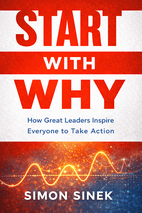
This page collects some of the most powerful lines from Simon Sinek's classic book, now in its 15th anniversary edition. You'll find ideas that cut through business jargon to get at why some people and organizations inspire while others just manage. The quotes here range from simple observations about human nature to sharp critiques of how we sell, lead, and follow. What makes this book so quotable is its knack for turning complex ideas into memorable, almost obvious truths that stick with you long after you put it down. These aren't just motivational phrases; they're lenses for seeing the world differently.
Top Quotes from Start with Why 15th Anniversary Edition
“There are leaders and there are those who lead. Leaders hold a position of power or influence. Those who lead inspire us.”
Opening of the introduction, distinguishing between leaders and those who lead.
This line sets the foundational distinction of the book, immediately clarifying that true leadership is about inspiration, not authority.
“Whether individuals or organizations, we follow those who lead not because we have to, but because we want to. We follow those who lead not for them, but for ourselves.”
Continuing the opening thought about the nature of following inspired leaders.
It captures the essence of voluntary, self-interested followership, which is a core theme of the book and resonates with anyone who has felt genuinely inspired.
“There are only two ways to influence human behavior: you can manipulate it or you can inspire it.”
The author introduces the core concept of manipulation vs inspiration.
This foundational dichotomy frames the entire book and forces readers to reconsider how they influence others.
“People don’t buy WHAT you do, they buy WHY you do it.”
Simon Sinek explains the central insight after using Apple as an example of inside-out communication.
This line is the book's most famous mantra, succinctly capturing why purpose-driven organizations inspire loyalty while others struggle to differentiate.
“If I had asked people what they wanted, they would have said a faster horse.”
Henry Ford's quote is used by Sinek to illustrate that great leaders see beyond what customers ask for.
The quote is timeless and strikes a chord because it validates the necessity of visionary thinking over reactive market research.
“If you don't know WHY you do WHAT you do, how will anyone else?”
Sinek asks a rhetorical question about the necessity of clarity for leaders.
It underscores that purpose must be understood internally before it can inspire others, making it a call for self-reflection.
“Men wanted for Hazardous journey. Small wages, bitter cold, long months of complete darkness, constant danger, safe return doubtful. Honour and recognition in case of success.”
Ernest Shackleton's famous want ad for his Antarctic expedition, as recounted in the chapter.
This ad exemplifies hiring for shared beliefs rather than skills, attracting only those who are viscerally drawn to the challenge and fit the culture.
Themes Behind the Quotes
A central theme threading through these quotes is the distinction between leadership that compels and leadership that inspires. Real influence doesn't come from authority or manipulation, but from a clear sense of purpose that others can connect with. Another thread is the idea that people are drawn to beliefs, not products or features. What you do matters less than why you do it, and trust is built through consistent actions that prove your intentions. The book also challenges conventional selling and hiring practices, arguing that manipulation like price cuts or fear wears thin, while genuine loyalty comes from finding those who share your cause. Ultimately, the message is that lasting success requires starting with your own core motivation and letting that guide everything else.
Quotes by Chapter
Introduction: Why Start with Why?
“Only the Wright brothers started with Why.”
After comparing the Wright brothers' success with Samuel Pierpont Langley's failure.
This concise, powerful sentence encapsulates the central thesis of the chapter and the entire book, making it highly memorable.
“For those who have an open mind for new ideas, who seek to create long-lasting success and who believe that success requires others, I offer you a challenge. From now on, start with Why.”
Closing of the introduction, directly addressing the reader.
It serves as a direct call to action, inviting the reader to apply the book's principle immediately, which is both motivating and actionable.
Chapter 1: We Assume We Know
“We make assumptions about the world around us based on sometimes incomplete or false information.”
The author presents the Hitler/Kennedy anecdote to show how easily we jump to conclusions.
This line directly states the book's core premise and challenges readers to question what they think they know.
“The correction of a simple false assumption completely changed the course of nearly every single society on the planet.”
The author describes how the shift from believing the world is flat to round triggered globalization and innovation.
It illustrates the enormous power of correcting a single mistaken belief, inspiring readers to seek deeper truths.
“What the American automakers did with their rubber mallets is a metaphor for how so many people and organizations lead.”
After the Japanese assembly line story where doors are designed to fit instead of hammered into place.
The vivid imagery of hammering doors perfectly captures the reactive, short-term thinking that the book argues against.
“The one that understands why the doors need to fit by design and not by default.”
The concluding sentence of the chapter, contrasting two approaches to achieving results.
This memorable phrase sums up the key lesson: lasting success comes from intentional design, not makeshift fixes.
Chapter 2: Carrots and Sticks
“For the seller, selling based on price is like heroin. The short-term gain is fantastic, but the more you do it, the harder it becomes to kick the habit.”
The author discusses the dangers of price manipulation.
The vivid metaphor compares price addiction to heroin, illustrating the downward spiral businesses face when they rely on price cuts.
“Fear, real or perceived, is arguably the most powerful manipulation of the lot.”
Discussion of fear as a manipulation tactic.
This concise statement highlights the universal potency of fear, a timeless insight for leaders and marketers.
“Aspirational messages can spur behavior, but for most, it won't last.”
On the limitations of aspirational manipulation.
It emphasizes that external motivation without internal inspiration leads to short-term results, a key lesson for sustainable change.
Chapter 3: The Golden Circle
“Very few people or companies can clearly articulate WHY they do WHAT they do.”
Sinek defines the outermost ring of The Golden Circle, contrasting it with the ease of describing WHAT and HOW.
It highlights the rare but crucial skill of articulating purpose, challenging readers to examine their own clarity of intention.
“The Golden Circle is an alternative perspective to existing assumptions about why some leaders and organizations have achieved such a disproportionate degree of influence.”
Sinek introduces the framework as a new way to understand why certain leaders and companies stand out.
This sets the stage for the entire model, promising a fresh lens that explains success beyond conventional factors like product or market conditions.
“Knowing your WHY is not the only way to be successful, but it is the only way to maintain lasting success and have a greater blend of innovation and flexibility.”
The author explains the central thesis of the Golden Circle.
This line distills the core argument of the chapter—that purpose is the key to durable success—and challenges readers to rethink what truly drives long-term performance.
Chapter 4: This Is Not Opinion, This Is Biology
“The power of WHY is not opinion, it’s biology.”
Sinek explains that the Golden Circle corresponds to the structure of the human brain.
It grounds the abstract concept of 'WHY' in neuroscience, making the argument feel authoritative and scientific rather than merely subjective.
Chapter 5: Clarity, Discipline and Consistency
“The only way people will know what we believe is by the things we say and do, and if we're not consistent in the things we say and do, no one will know what we believe.”
Discussing why consistency of WHAT—the tangible outputs—is essential.
It highlights that authenticity and trust are built through steady, observable actions, not just stated values.
“When we are inspired, the decisions we make have more to do with who we are and less to do with the companies we buy from or the products we're buying.”
The author contrasts manipulation with inspiration in decision-making.
This line captures the transformative power of inspiration, showing that true loyalty comes from alignment with identity rather than transactional benefits.
“People don’t buy WHAT you do, they buy WHY you do it, and WHAT you do serves as the tangible proof of WHY you do it.”
The author explains why rational features alone fail to build trust in personal or business relationships.
This line captures the core philosophy of the book, making it instantly memorable and applicable to marketing, leadership, and communication.
Chapter 6: The Emergence of Trust
“Trust is a feeling, not a rational experience.”
The author discusses the nature of trust in the context of Gordon Bethune's turnaround of Continental Airlines.
This line succinctly captures a core insight that trust is emotional and cannot be achieved through checklists or rational arguments alone.
“Leading, however, means that others willingly follow you—not because they have to, not because they are paid to, but because they want to.”
The author contrasts being a leader (holding a rank) with leading (inspiring voluntary followership), using Frank Lorenzo and Gordon Bethune as examples.
It provides a powerful and memorable definition of true leadership that resonates with anyone who has experienced or aspires to genuine influence.
“Great companies don't hire skilled people and motivate them, they hire already motivated people and inspire them.”
The author discusses Southwest Airlines' approach to hiring and the importance of finding good fits.
This line reframes the hiring process by emphasizing that motivation comes from within, and the company's role is to provide inspiration and purpose.
Chapter 7: How a Tipping Point Tips
“Loyalty is when people are willing to suffer some inconvenience or pay a premium to do business with you, sometimes even turn down a better offer from someone else.”
The author defines loyalty while explaining why the left side of the diffusion curve is more valuable than the majority.
This definition makes loyalty concrete and measurable, helping readers understand that true customer commitment goes beyond rational transactions.
“The goal of business then should not be to try to sell to anyone who might buy our product—the majority —but rather to find people who believe what we believe, the left side of the bell curve.”
The author explains how to apply the Law of Diffusion for mass-market success by starting with early adopters.
This passage challenges conventional sales wisdom by redirecting focus from broad targeting to finding shared beliefs, which drives organic growth.
“But how many people showed up for Dr. King? Zero. They showed up for themselves.”
The author analyzes Martin Luther King Jr.'s ability to inspire a movement, emphasizing that people acted on their own beliefs.
This stark, rhetorical question and answer reveal that great leaders don't attract followers—they attract believers who own the cause, making the insight both profound and actionable.
“Dr. King offered America a place to go, not a plan to follow.”
Simon Sinek describes Martin Luther King Jr.'s leadership approach.
This line captures the essence of visionary leadership—providing a compelling direction rather than a rigid plan, which resonates with anyone seeking to inspire action.