Outlive — Interactive Mindmaps

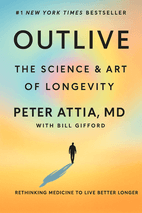
Outlive by Peter Attia Book Cover

by Peter Attia

Peter Attia's Outlive redefines aging by shifting focus from lifespan to healthspan, offering science-backed strategies to combat chronic disease through nutrition, exercise, and preventive medicine. It's for anyone seeking a proactive, evidence-based roadmap to improve their long-term vitality and quality of life.

On Insta.page you also get an Apply This Book tool that lets you combine insights from up to 3 books to solve your specific situation.

Chapter mindmaps

Free preview: chapters 1–4 are fully interactive. Click any node to expand or collapse. Subscribe to unlock the rest.

Chapter 1: Chapter 1: The Long Game: From Fast Death to Slow Death

Key concepts: Chapter 1: The Long Game: From Fast Death to Slow Death

1. Chapter 1: The Long Game: From Fast Death to Slow Death

The Paradox of Modern Healthcare

  • Excels at crisis intervention (e.g., ERs, trauma) but fails at preventing chronic diseases
  • Focuses on 'fast deaths' (acute) over 'slow deaths' (chronic, preventable)
  • System prioritizes late-stage treatment over early root-cause prevention

Redefining Longevity: Lifespan vs. Healthspan

  • Longevity is not immortality but optimizing vitality and delaying chronic disease
  • Myth of Tithonus: Warns against eternal aging without quality of life
  • Healthspan (quality of years) matters as much as lifespan (quantity)

The Four Horsemen of Slow Death

  • Heart disease, cancer, neurodegeneration, and metabolic dysfunction
  • Damage accumulates silently for decades before symptoms appear
  • Example: Atherosclerosis progresses 20+ years before a heart attack

Flaws in Reactive Medicine

  • Treats diseases (e.g., HbA1c ≥6.5%) only after thresholds are crossed
  • Metaphor: 'Catching falling eggs' instead of fixing the rooftop (root causes)
  • Billions spent on late-stage interventions with marginal gains

Proactive Medicine as a Solution

  • Leveraging biomarkers (e.g., insulin resistance) for early intervention
  • Tools: Exercise, personalized nutrition, and continuous self-monitoring
  • Catalina swim analogy: Healthspan requires constant course correction

Personal Catalyst for Change

  • Author's 'dad bod' masked metabolic dysfunction despite elite fitness
  • Family history of early heart disease deaths fueled urgency
  • Fatherhood intensified focus on breaking generational health cycles

A Call to Collaborative Rebellion

  • Rejecting societal complacency about declining health as 'normal'
  • Demanding healthcare frameworks that prioritize prevention
  • Goal: Not just saving lives, but enabling people to truly live longer

Bridging Science and Practicality

  • Critiques fad diets and speculative anti-aging hype in favor of evidence-based, personalized strategies.
  • Redefines 'normal' health metrics (e.g., HbA1c) to better reflect metabolic health.
  • Identifies shared drivers of chronic diseases (the 'Horsemen') like metabolic dysfunction.
  • Advocates for exercise as a foundational pillar of longevity.
  • Aims to equip readers with actionable strategies to 'bend the curve' of their health trajectory.

A New Vision for Medicine

  • Challenges traditional preventive care by advocating for proactive medicine—addressing risks before symptoms appear.
  • Prioritizes maintaining optimal biomarkers (e.g., HbA1c) over reactive disease treatment.
  • Emphasizes that delaying action until cognitive decline or chronic illness limits potential outcomes.

Shifting Responsibility to Patients and Practitioners

  • Argues that systemic change must come from individuals demanding better health frameworks, not institutions.
  • Calls for physicians to move beyond reactive treatments to proactive optimization.
  • Uses the metaphor of 'catching falling eggs' to illustrate the futility of treating diseases without addressing root causes.

The Catalina Catalyst

  • Uses the author's Catalina swim as a metaphor for the sustained effort required in longevity practices.
  • Highlights that proactive health demands persistent, incremental effort, not quick fixes.
  • Underscores that achieving extra decades of healthspan requires lifelong commitment.

Key Takeaways

  • Proactive medicine focuses on pre-emptive optimization of health metrics, not just disease prevention.
  • Patients and doctors must collaborate to drive a paradigm shift toward early, sustained intervention.
  • Longevity requires a marathon mindset—small, consistent actions compound over time to delay decline.
  • Systemic healthcare change depends on individual demands for better frameworks, not institutional reform alone.

Chapter 2: Chapter 2: Medicine 3.0: Rethinking Medicine for the Age of Chronic Disease

Key concepts: Chapter 2: Medicine 3.0: Rethinking Medicine for the Age of Chronic Disease

2. Chapter 2: Medicine 3.0: Rethinking Medicine for the Age of Chronic Disease

The Crisis of Institutional Rigidity in Medicine

  • Hierarchical protocols often prioritize tradition over evidence-based care
  • Example: Gentamicin dosing conflict reveals resistance to innovation
  • Systemic rigidity fuels disillusionment with healthcare systems

Parallels Between Medicine and Financial Risk Modeling

  • Decision-making under uncertainty is universal across fields
  • Financial crisis risk models mirror high-stakes medical decisions
  • Risk should be treated as a calculable variable, not an abstract threat

Reevaluating Medical Dogma: The Flaws of 'Do No Harm'

  • Risk aversion can be as deadly as recklessness in medicine
  • Case study: Emergency chest surgery saves stabbing victim despite risks
  • Chronic disease management requires balancing short-term risks against long-term outcomes

Historical Evolution of Medical Practice

  • Medicine 1.0: Based on observation and flawed theories like humors
  • Medicine 2.0: Revolutionized by germ theory but adopted slowly
  • Current tools remain inadequate for chronic disease management

The Need for Medicine 3.0

  • Modern medicine struggles with chronic diseases like heart disease and cancer
  • Shift needed from reactive treatment to proactive prevention
  • Examples like continuous glucose monitors show promise for personalized health
  • Requires rethinking systems to prioritize healthspan over lifespan

Systemic Barriers to Change

  • Insurance models favor crisis management over prevention
  • Lack of data literacy among patients hinders empowerment
  • Inertia in healthcare systems resists long-term health investments

Core Principles of Medicine 3.0

  • Personalized risk assessment over one-size-fits-all approaches
  • Patient empowerment through data and education
  • New relationships with risk, time, and power in healthcare

Nuanced Risk Assessment in Clinical Decisions

  • Medicine 3.0 critiques simplistic risk calculations (e.g., WHI study on HRT) by emphasizing absolute vs. relative risk differences.
  • Context matters: Individual patient factors (e.g., age, symptoms) determine whether population-level risks apply.
  • Later analysis revealed synthetic progesterone, not estrogen, may have driven the slight breast cancer risk increase in WHI.
  • Rejects blanket policies in favor of data interrogation tailored to the individual.

Prioritizing Healthspan Through Prevention

  • Medicine 3.0 shifts focus from lifespan to healthspan—quality of life in aging.
  • Current systems incentivize treating disease (e.g., insulin) over prevention (e.g., dietary counseling).
  • Advocates for long-term risk detection tools beyond 10-year models to prevent chronic diseases.
  • Early interventions (exercise, metabolic monitoring) are key to avoiding 'icebergs' like cardiovascular disease.

The Patient as Captain, Not Passenger

  • Patients must actively engage in care, requiring medical literacy and habit change.
  • Collaboration with providers is essential to tailor risks/benefits to individual circumstances.
  • Ownership of health decisions leads to better outcomes than passive reliance on crisis-driven systems.

Key Takeaways

  • Risk is contextual: Medicine 3.0 prioritizes individualized analysis over population-wide generalizations.
  • Prevention is undervalued: Systemic support for proactive healthspan interventions is lacking.
  • Patient agency is critical: Active participation, not compliance, drives long-term health success.

Chapter 3: Chapter 3: Objective, Strategy, Tactics: A Road Map for Reading This Book

Key concepts: Chapter 3: Objective, Strategy, Tactics: A Road Map for Reading This Book

3. Chapter 3: Objective, Strategy, Tactics: A Road Map for Reading This Book

The Marginal Decade and Healthspan

  • Sophie's story illustrates the 'Marginal Decade'—a period of decline that can be reimagined
  • Lifespan vs. Healthspan: Medicine 3.0 aims to 'square the curve' for quality late-life years
  • Traditional medicine extends lifespan but often prolongs frailty; Healthspan prioritizes vitality

Strategy Over Tactics

  • Muhammad Ali's comeback as a metaphor: strategy (exhausting Foreman) over brute tactics
  • Longevity requires understanding aging's root causes, not just isolated fixes
  • Skipping strategy leads to Medicine 2.0 failures—treating symptoms, not systems

Three Vectors of Decline

  • Cognitive Decline: Memory loss, slowed processing speed, and eroded independence
  • Physical Decline: Muscle loss, frailty, and diminished stamina
  • Emotional Decline: Mental health struggles that accelerate physical/cognitive deterioration
  • Interconnectedness: Each vector amplifies the others (e.g., falls → depression → dementia)

Medicine 3.0's Five Tactical Domains

  • Exercise: Tailored regimens for strength, endurance, and balance
  • Nutrition: Personalized eating to fuel healthspan
  • Sleep: Foundational for cognitive/physical repair
  • Emotional Health: Mental well-being as a longevity pillar
  • Exogenous Molecules: Judicious use of drugs/supplements (e.g., statins)

Evidence-Informed Longevity

  • Critique of rigid randomized trials: Embrace centenarian insights, animal studies, and cellular research
  • Longevity Alpha: Optimizing choices to tilt odds (e.g., exercise as top predictor)
  • Aging as probabilities—adapt tactics to new science and life’s surprises

Rethinking Possibility

  • Emotional health fuels the desire for a longer life
  • Sleep is non-negotiable repair work, not optional
  • Death is inevitable; prolonged decline is not

From Evidence Based to Evidence Informed

  • Challenges reliance on RCTs for longevity due to impracticality for lifelong studies.
  • Advocates for an evidence-informed approach combining diverse data sources.
  • Acknowledges complexity of human biology and decades-long aging processes.
  • RCTs are limited for nuanced, lifelong strategies like exercise and nutrition.
  • Proposes a framework integrating five complementary data pillars for personalized tactics.

Building a Longevity Strategy: Five Data Sources

  • Centenarian studies offer observational clues but lack causal proof.
  • Animal models provide controlled lifespan insights, with cross-species validation increasing credibility.
  • Focus on 'Four Horsemen' diseases reveals shared mechanisms and prevention strategies.
  • Molecular aging research informs interventions like senolytic drugs and cellular repair.
  • Mendelian randomization bridges gaps by isolating causal relationships in complex systems.

Centenarian Studies

  • Centenarians exemplify delayed age-related diseases and unique protective factors.
  • Lifestyle and genetic data hint at longevity strategies, though causation is unproven.
  • Represent a 'gold standard' for human longevity potential.

Animal Models

  • Provide controlled testing for lifespan interventions across species.
  • Prioritize tactics validated in multiple models (e.g., calorie restriction).
  • Species differences limit direct human applicability but offer mechanistic insights.

The 'Horsemen' Diseases

  • Cardiovascular disease, cancer, neurodegeneration, and metabolic dysfunction drive aging-related deaths.
  • Shared mechanisms (e.g., inflammation) reveal cross-cutting prevention strategies.
  • Example: Lowering LDL cholesterol directly reduces cardiovascular risk.

Molecular Mechanisms of Aging

  • Cellular processes like DNA damage and mitochondrial decline are well-studied.
  • Interventions target senescence or boost repair (e.g., exercise).
  • Goal: Slow molecular aging to delay disease onset.

Mendelian Randomization (MR)

  • Leverages genetic variations to mimic RCTs and infer causality.
  • Debunked myths (e.g., low LDL causing cancer) via genetic links.
  • Bridges gaps left by traditional observational studies.

Embracing Probabilistic Thinking

  • Longevity requires optimizing risk-reward ratios, not chasing certainties.
  • Introduces 'longevity alpha'—gaining an edge by minimizing major health risks.
  • Agility is key: Adapt tactics to new science or personal circumstances.
  • Mike Tyson analogy: Plans must withstand unexpected 'punches.'

Key Takeaways

  • Exercise is the most potent longevity tool, surpassing nutrition.
  • Evidence-informed strategies blend centenarian, animal, disease, molecular, and genetic data.
  • Sleep and emotional health are critical for metabolic/cognitive function and life satisfaction.
  • Rigidity undermines longevity—adapt tactics to new insights and needs.
  • Think probabilistically: Reduce risks, accept uncertainty, avoid absolutes.

Chapter 4: Chapter 4: Centenarians: The Older You Get, the Healthier You Have Been

Key concepts: Chapter 4: Centenarians: The Older You Get, the Healthier You Have Been

4. Chapter 4: Centenarians: The Older You Get, the Healthier You Have Been

Centenarian Paradox

  • Defy conventional health norms (smoking, drinking, minimal exercise) yet outlive peers
  • Genetic lottery (e.g., APOE, FOXO3) enables efficient metabolism and disease delay
  • Survival bias: men at 100 are exceptionally hardy; women more numerous but often disabled

Genetic Foundations of Longevity

  • Key genes: APOE (cholesterol/Alzheimer’s), FOXO3 (cellular repair), CETP, APOC3
  • Siblings of centenarians 8–17x more likely to reach 100
  • No single "magic" gene—protective variants work in combination

Compression of Morbidity

  • Diseases like cancer peak decades later (e.g., 100 vs. 72 in general population)
  • Healthspan closely matches lifespan, with decline compressed into late years
  • Supercentenarians (110+) often maintain cognitive/physical function

Gender and Survival Bias

  • Male centenarians rarer but healthier (heart disease "weeds out" weaker men)
  • Female centenarians more common but face prolonged disability
  • Longevity ≠ vitality; trade-offs exist between lifespan and healthspan

Evolutionary Blind Spots

  • Natural selection ignores post-reproductive genes (e.g., Alzheimer’s risk)
  • Harmful late-life genes persist if they don’t hinder reproduction
  • Centenarians may carry rare protective countermeasures

Gene Expression and Lifestyle

  • FOXO3 activated by exercise/calorie restriction mimics centenarian repair mechanisms
  • Exercise can "rejuvenate" gene expression in older adults
  • Lifestyle may partially replicate genetic advantages

Key Takeaways

  • Genetics explain 20–30% of lifespan; extreme longevity relies on specific variants
  • Centenarians compress morbidity, aligning healthspan with lifespan
  • Evolution neglects late-life health, making longevity genes rare but impactful
  • Lifestyle interventions (e.g., exercise) can alter gene expression favorably

Medicine 2.0’s Shortcomings

  • Modern medicine treats diseases after they develop, ignoring aging as the root cause.
  • Diseases like cancer and Alzheimer’s are siloed despite shared risk factors (e.g., metabolic dysfunction).
  • Aging is the common driver of chronic conditions, yet research funding neglects this interconnectedness.

Shifting the Timeline: Prevention Over Treatment

  • Centenarians exemplify the need to delay chronic diseases, not just manage them.
  • Early prevention (e.g., metabolic health) offers cross-disease benefits (e.g., Alzheimer’s, cancer).
  • Proactive healthcare must prioritize resilience-building long before symptoms appear.

Resilience as the Ultimate Strategy

  • Centenarians’ longevity stems from biological resilience against environmental insults.
  • Lifestyle interventions (e.g., cellular repair, inflammation reduction) can mimic this resilience.
  • Genetics play a role, but sustained behavioral strategies are key to replicating healthspan.

Key Takeaways

  • Centenarians prove delaying disease onset is more critical than lifespan extension.
  • Medicine’s siloed approach fails to address aging as the root of chronic diseases.
  • Early systemic prevention (e.g., metabolic health) benefits multiple conditions.
  • Resilience—biological and behavioral—requires proactive, lifelong strategies.

Continue exploring Outlive