London Falling Key Takeaways

by Patrick Radden Keefe
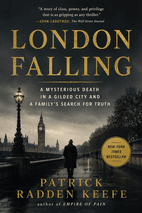
London Falling by Patrick Radden Keefe Book Cover

5 Main Takeaways from London Falling

Cities mask danger with beauty and wealth

London's transformation from industrial port to financial capital created gleaming towers alongside hollowed-out neighborhoods, symbolizing a dual nature. The Thames itself represents both life and death, as dozens of bodies are pulled from it each year, yet the city’s glittering surface often hides systemic failures and human tragedy.

Secrecy among the ultra-wealthy enables fraud

Zac’s elaborate impersonation of a Russian oligarch’s son succeeded because London’s culture of opacity among the rich discourages verification. No one questioned his lack of digital footprint, and luxury apartments were provided rent-free without scrutiny, creating an environment where deception thrives.

Institutional incompetence can derail justice

Police failures—lost devices, untested blood spatters, a balcony partition cleaned, key witnesses never interviewed—turned a suspicious death into an unresolved mystery. The Met’s accidental release of GPS data was the most damning evidence, yet systemic errors left the Brettlers without answers for years.

Desperation can drive fatal miscalculations

Zac’s jump from the balcony was not a simple suicide but a desperate bid for survival from a gangster’s wrath. He preferred the Thames’ cold uncertainty over the certainty of violence, a literal leap of faith that tragically backfired. His lies and con games were survival tactics, not madness.

Grief battles institutional indifference

The Brettlers’ relentless pursuit of truth confronted a coroner who prioritized procedural narrowness and witnesses who protected themselves. The open verdict felt like a chore rather than a search for justice, underscoring how grieving families must fight systems designed to avoid accountability.

Executive Analysis

These five takeaways converge on a central thesis: London’s glittering facade of wealth and sophistication masks a dark underbelly of secrecy, fraud, and institutional failure that can destroy lives. The city’s transformation into a global financial hub enabled a culture where the ultra-wealthy operate beyond scrutiny, allowing con artists and gangsters to thrive while ordinary people and institutions look away. Zac’s death is not an isolated tragedy but a symptom of systemic decay—where police incompetence, legal loopholes, and social indifference combine to bury the truth.

This book matters because it exposes the human cost of opaque power structures, blending true-crime investigation with social critique. Patrick Radden Keefe offers readers a gripping narrative that also serves as a cautionary tale about the dangers of unchecked wealth and institutional neglect. It sits at the intersection of investigative journalism, memoir, and sociological analysis, making it essential for anyone interested in how cities can enable both prosperity and tragedy.

Chapter-by-Chapter Key Takeaways

Prologue (Prologue)

  • The Thames is a symbol of London’s dual nature: source of wealth and danger, of life and death, of industry and reinvention.

  • London’s transformation from a manufacturing port to a financial capital created gleaming new buildings but also hollowed-out neighborhoods, with luxury apartments standing empty as “ghost mansions.”

  • The MI6 building and the Riverwalk complex face each other across the river, a physical and symbolic contrast between the secret state and opaque global capital.

  • The book’s central event—a mysterious death from a Riverwalk balcony—is introduced with chilling brevity, inviting readers to ask who the young man was and why he jumped.

Try this: Question the symbols of wealth and power around you; rivers can be both beautiful and deadly, so don’t let surface allure blind you to hidden dangers.

Missing Persons (Chapter 3)

  • Zac’s double life as Zac Ismailov, son of a Russian oligarch, was elaborate and sustained for months, fooling adults like Akbar and Verinder.

  • The Brettlers’ anxiety, long simmering, finally boiled over when Zac disappeared and a menacing visitor appeared at their door.

  • London’s culture of secrecy among the ultra-wealthy made it easy for Zac to perpetuate his fraud—no one questioned the lack of an online footprint.

  • Akbar, though duped, emerged as a genuine ally, focused on finding Zac rather than nursing his own embarrassment.

  • The terrorist attack on London Bridge delayed police response, but also illustrated the chaotic backdrop against which Zac vanished.

  • Zac’s broken Punkt phone was discovered at the apartment—a device he left behind, deepening the mystery of his disappearance.

  • Verinder’s sudden demand for a lawyer signaled he was no longer willing to cooperate.

  • CCTV conclusively showed Zac entering Riverwalk but never leaving, contradicting any simple exit narrative.

  • Akbar’s solitary, contemplative posture by the river, holding a CCTV still, suggests he knows far more than he’s shared.

Try this: When someone disappears, verify their story against physical evidence (like CCTV) rather than relying on verbal assurances or social status.

River of Death (Chapter 4)

  • The Thames holds many bodies—dozens are pulled from it annually, and many deaths go unsolved or unreported.

  • Baxter Willis’s life intersects twice with river deaths, first as a suspect and later as a witness, highlighting the arbitrary ways tragedy touches ordinary people.

  • The police’s initial assumption of suicide delayed identification, underscoring how assumptions can hinder investigations.

  • Zac’s violent facial injuries suggest a death more complicated than a simple fall or jump, yet no official explanation is given at the funeral, leaving a cloud of uncertainty.

  • The absence of Shamji and Sharma at the funeral hints at unresolved tensions and questions yet to be answered.

Try this: Challenge initial assumptions in any investigation—suicide, accident, or crime—because bias can delay or derail the search for truth.

The Night in Question (Chapter 5)

  • Akbar’s first interview is full of contradictions: he “lost all his money” yet drives a Mercedes, he’s “not decision-making” in his own home, and he claims he left Riverwalk for good—but the footage proves otherwise.

  • Verinder’s refusal to cooperate suggests he either knows something incriminating or is following legal advice to avoid implicating himself.

  • The twenty-minute gap between Akbar’s return and Zac’s death is the chapter’s core enigma. What did Akbar say or do? Was Zac still alive when Akbar left the first time? The chapter raises more questions than it answers, setting up a tense forensic standoff.

Try this: Identify gaps in testimony and timeline; even a twenty-minute window can hold the key to understanding a critical event.

Prodigal Son (Chapter 7)

  • The Shamjis operated a systematic shell-company scam at the Mermaid: create a subsidiary, rack up debts, defraud employees and creditors, liquidate, then restart under a new name.

  • Sinden’s discovery led him to cooperate with a fraud squad that had long been tracking the family, but his whistleblowing cost him his job within a year.

  • Akbar Shamji, the prodigal son, fled the scene—disappearing after his father’s empire of unpaid bills finally caught up with them.

Try this: Expose systematic fraud by documenting patterns rather than isolated incidents; whistleblowers like Sinden can dismantle entire empires of deceit.

Suspicion of Murder (Chapter 8)

  • Akbar’s alibi was ironclad—but only because of the cameras. The Riverwatch security footage proved he couldn’t have pushed Zac: he arrived at the building’s front entrance at the exact minute Zac stepped off the balcony. The tape made him a witness, not a killer.

  • His lies, however, were abundant and inexplicable. He lied about returning to the river. He lied about the hug. He deleted text messages from his phone covering the month before Zac’s death through the day after. When asked why, he mumbled something about good housekeeping and naked photos.

  • The detectives smelled a cover-up, just not of murder. Akbar’s phone revealed stressed texts between Zac and Verinder—Zac had made “commitments,” and Verinder was angry. Akbar’s messages with a third man, “Mervin,” went unexplained. The police suspected Akbar was protecting someone, or something, even if he hadn’t killed Zac.

  • Verinder Sharma, meanwhile, was saying nothing at all. Akbar’s partial cooperation was frustrating enough, but Verinder’s complete stonewalling made the investigators’ job even harder. The picture emerging was one of a gathering crisis, not a clean suicide.

Try this: Distinguish between alibi and honesty: perfect timing may prove innocence of one crime but conceal other secrets, so probe inconsistencies in behavior.

A Jigsaw in the Dark (Chapter 10)

  • Zac’s lies were contradictory: he rejected his parents' world yet craved their admiration through false stories and fabricated wealth.

  • Rachelle described the painful process of uncovering the truth as a “jigsaw in the dark.”

  • He never asked for help, even as his inner world turned into a dangerous place.

Try this: Treat self-creation as a phase of exploration, not deceit; use curiosity to understand someone’s inner world rather than judging their fabrications.

Lights Out (Chapter 11)

  • Rachelle identifies Zac’s body but is denied physical contact, deepening her trauma.

  • Detective Wilkinson promises no unanswered questions, but the investigation is slow and constrained by forensic realities.

  • Matthew’s independent research reveals Verinder’s connection to Nick Gold and raises questions about why a luxury apartment is provided rent-free.

  • The MI6 video proves Zac jumped alone, but the circumstances—a broken jaw, shadows after the fall, and lights turned off—point toward possible coercion or foul play.

  • The chapter leaves a haunting image: Verinder calmly extinguishing the light while Zac lies in the Thames.

Try this: Demand access to physical closure when identifying a loved one’s body; trauma is deepened when institutions deny basic human contact.

The Little Fella (Chapter 12)

  • Verinder Sharma was a short, sharp-dressed gangster who used a security business to cover ext

Try this: Recognize that a polished front (like a security business) can hide criminal activity; always verify the substance behind the title.

The Cipriani Five (Chapter 13)

  • Police timeline contradicted Akbar and Verinder’s story: a 2:12 a.m. call between them preceded Zac’s fall; Verinder called his daughter afterward, using the word “betrayal.”

  • Key witnesses—Carlton the chauffeur, music friend Mervin, business contacts like Oliver Harris—were never interviewed.

  • Zac had only £4 at death, having burned through his real funds to maintain the oligarch’s-son illusion.

  • His internet search for “skin burns” and Akbar’s “heating up knives” text were never properly investigated.

  • British law does not criminalize lying to police, and without evidence of murder, Akbar could not be charged as an accessory.

  • The Brettlers remained convinced Zac was not suicidal—his lies about being suicidal were likely a survival tactic, not a death wish.

Try this: Corroborate timelines with independent records (phone logs, CCTV) rather than relying on suspects’ stories; even small contradictions matter.

Private Investigations (Chapter 14)

  • Uncle Alex's theory: Akbar knew Zac was a fraud, suggesting they were running a con together on Verinder Sharma.

  • Police investigation was riddled with gaps: key witnesses never interviewed, crucial time lost due to Akbar's silence.

  • The Brettlers' conclusion: Zac's jump was not suicide but a desperate bid for survival—a fatal miscalculation.

Try this: Conduct thorough interviews of all potential witnesses, even if they seem peripheral; missing a single person can leave a case incomplete.

Pocket Dial (Chapter 15)

  • The inquest showcased a classic conflict: Rachelle insisted Zac was a bright, non-suicidal teenager undone by dangerous people, while Dominique portrayed him as a depressed addict who confessed suicidal intent.

  • Dominique's testimony was riddled with contradictions—a "pocket dial" that prompted a worried callback, a forgotten text threatening to protect his family, and a convenient inability to recall when she learned of Zac's death.

  • Matthew's theory that Verinder Sharma may have been a police informant gained traction from the official silence surrounding his death, the lack of any public record, and the history of institutional corruption in the Metropolitan Police.

Try this: Watch for contradictions in testimony—like a ‘pocket dial’ that triggers a callback—as they often reveal concealed knowledge.

A Different Light (Chapter 16)

  • The question of a sexual relationship between Zac and either older man remained unresolved, with a single sperm found in autopsy but no DNA or digital proof to confirm its source.

  • Akbar and Peter Land's text messages were sexually charged, but Akbar dismissed them as “playful” banter and insisted they had nothing to do with Zac.

  • Police found no evidence in any communications to suggest Zac was involved sexually with Akbar or Verinder.

  • The iPad search history revealed a young man exploring a wide range of sexual interests, petty crime fantasies, and career possibilities—more confusion than concealment.

  • Matthew's Bob Dylan analogy reframed Zac's deceptions as an experimental phase of self-creation rather than a sinister cover-up.

Try this: Assume digital traces reveal confusion, not concealment; search histories can show exploration rather than guilt, so interpret with nuance.

Hornet’s Nest (Chapter 17)

  • Akbar Shamji’s testimony is a masterclass in evasive talk: he remembers nothing incriminating but offers precise details when it suits him.

  • The inquest reveals glaring police failures—unwiped fingerprints, untested blood spatters, a balcony partition cleaned in the area Zac jumped from.

  • Coroner Mary Hassell repeatedly limits questioning, prioritizing procedural narrowness over the Brettlers’ need for answers.

  • The open verdict leaves the cause of death ambiguous, a deliberate refusal to choose between murder and suicide despite contradictory evidence.

  • The chapter underscores how grief intersects with institutional indifference: the living witnesses protect themselves, and the official process feels like a chore rather than a search for truth.

Try this: Hold official processes accountable when they prioritize procedure over truth; push for comprehensive forensic testing and transparent questioning.

A Chance Encounter (Chapter 18)

  • Mark Foley was not a high-level Chelsea executive but a contractor and “conduit” for deals to Abramovich’s circle.

  • The Chelsea Arts Club encounter was the origin of Zac’s imposture: he invented a Russian oligarch father and a false name, which Foley accepted without verification.

  • Foley never visited One Hyde Park with Zac; the “investment property” was Zac’s own family home in Maida Vale, where Zac had hidden family photos before meetings.

  • Zac’s lies were strategic, not delusional—he knew which fabrications to avoid telling people who could check.

Try this: Verify identity claims independently, especially in high-trust environments; a simple check of a claimed address can expose a con.

The Black Box (Chapter 19)

  • Benny Brettler’s story of survival and quiet return to a vanished past mirrors the Brettlers’ own determination to uncover the truth about their son.

  • The police’s accidental release of Akbar’s GPS data was the most damning evidence: his loitering, panicked call with Verinder, and frantic return just before Zac fell.

  • The Met’s incompetence—losing devices, damaging them, ignoring the black box—shows a systemic failure, not just individual error.

  • Akbar Shamji is revealed as a serial confidence man who preyed on Zac’s invented identity, and his “award” photo with Modi was a complete fabrication.

  • The chapter’s core theme: everyone in that apartment was an impostor, caught in a city that rewards masks over reality.

Try this: Use GPS and digital breadcrumbs to reconstruct events; they often expose behavior that verbal accounts try to hide.

Undertow (Chapter 20)

  • Hugo Gryn’s secret daughter, Ester, and her subsequent suicide, created a pattern of private tragedy that the family carried across generations.

  • Rachelle’s recognition of her own complicity in not asking hard questions—first about her father, then about her son—highlights the emotional cost of willed denial.

  • London’s political and financial systems enable and protect hidden wealth, from non-dom status to legal intimidation, creating an environment where corruption flourishes.

  • Social media algorithms amplify individual preoccupations, blurring reality and fantasy in ways that can turn a teenager’s curiosity about wealth into a destructive obsession.

Try this: Confront your own complicity in denial; asking hard questions early can prevent tragedies from being buried under layers of silence.

The Kid’s Home Safe (Chapter 21)

  • The chapter reframes Zac's story not as madness, but as a desperate con game gone wrong, seen clearly only from a distance.

  • His escape was a literal leap of faith, preferring the river's cold uncertainty over the certainty of the gangster's wrath.

  • The metaphor of the painting underscores how perspective changes everything: up close, his actions seem reckless; from afar, they become a survival tactic.

Try this: Reframe desperate actions not as madness but as survival miscalculations; empathy helps understand the logic behind irrational leaps.

Epilogue (Epilogue)

  • The Metropolitan Police finally acknowledged investigative failures in Zac's case, though without a formal apology, and hinted that Rory Wilkinson remains troubled by the unresolved case

  • Joe has rebuilt his life with meaning and purpose, maintaining deep love for his brother and closeness with his parents

  • The family's most cherished memory of Zac is the simplest: a wave from a balcony, reminding us that what endures is not the mystery of how he died, but the love of who he was

Try this: Cherish simple memories over unresolved mysteries; the love of who someone was endures longer than the circumstances of their death.

Continue Exploring