LLC Essential Guide Quotes
by Nelson Grant
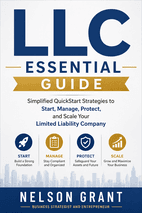
This page brings together some of the most memorable lines from Nelson Grant's guide to forming and running an LLC. You will find a mix of practical warnings, clever metaphors, and timeless advice that applies beyond just business. Each quote captures a key idea from the book in a way that sticks with you.
What makes the book so quotable is how Grant takes complex legal and financial concepts and turns them into simple, relatable images. He writes with clarity and humor, never losing sight of the real world challenges entrepreneurs face. These lines are meant to be shared and remembered, whether you are starting your first business or looking to strengthen an existing one.
Top Quotes from LLC Essential Guide
“The limited liability corporation is the single greatest invention of modern times.”
Opening epigraph attributed to Nicholas Murray Butler.
This bold declaration immediately captures the chapter's core thesis, framing the LLC as a transformative legal innovation. It sets a compelling tone that invites readers to explore why this structure is so highly regarded.
“The secret of getting ahead is getting started.”
Opening epigraph attributed to Mark Twain.
This timeless piece of advice motivates readers to overcome inertia and take the first step toward forming an LLC.
“Think of it like baking a cake—you gather your ingredients and follow the recipe, and before you know it, you're the proud owner of something you created from scratch.”
The author uses this analogy to demystify the LLC formation process.
This relatable comparison reduces anxiety and makes a complex legal procedure feel simple and rewarding.
“A registered agent is one of the business world’s best kept secrets.”
The author introduces the concept of a registered agent.
This line piques curiosity and emphasizes the hidden importance of a critical business requirement.
“As Lee Reams would say, “Maximizing your tax returns is the same as giving yourself a bonus at the end of a year.””
Quoting tax expert Lee Reams in the section on deductions and credits.
The simple, relatable analogy turns tax planning into a tangible reward, inspiring readers to actively seek deductions.
“Because legal protections are the invisible shield that helps safeguard both your entity and hard-earned personal assets from unexpected villains like lawsuits and liabilities.”
From the chapter introduction, explaining the importance of legal protections for an LLC.
This metaphor makes the abstract concept of legal protection tangible and emphasizes its critical role in shielding both business and personal assets from external threats.
“If you want to go fast, go alone. If you want to go far, go together.”
The chapter opens with this African proverb attributed to an unknown author.
It succinctly captures the tension between speed and sustainability, reminding entrepreneurs that collaboration is essential for long-term growth.
Themes Behind the Quotes
A central theme across these quotes is the idea of protection, both legal and financial. Many lines emphasize the need to separate personal and business finances, maintain formalities, and use the LLC structure as a shield against lawsuits and debts. This theme underscores that an LLC is not just a paperwork formality but a strategic tool for safeguarding your future.
Another strong thread is the blend of motivation and practicality. The quotes encourage readers to start, to keep going, and to aim high, but they also ground that inspiration in concrete advice about cash flow, contracts, and registered agents. Grant shows that success comes from coupling a big vision with disciplined daily habits. Finally, many quotes highlight the value of clarity and consistency, whether in branding, financial tracking, or working with others. Together, these themes paint a picture of the LLC as both a protective structure and a launchpad for growth.
Quotes by Chapter
Chapter 1:
“In 1988, the IRS declared a revenue ruling that allowed LLCs to be treated as partnerships for purposes of federal taxation.”
Historical section describing the evolution of LLCs.
This milestone marked the turning point that made LLCs attractive nationwide by eliminating double taxation. Readers appreciate knowing the specific moment that unlocked the structure's widespread adoption.
“Iercing the corporate veil" can occur if legal formalities are not followed (e.g., fraudulent activities, personal guarantees, or commingling personal and business funds)."”
Myth 4 in the common myths and facts about LLCs.
This warning demystifies a common misconception that LLCs offer absolute immunity. It underscores the importance of maintaining proper separation, making the advice practical and cautionary for new business owners.
Chapter 2:
“Those who dare to fail miserably can achieve greatly.”
Opening epigraph of the chapter, attributed to John F. Kennedy.
It inspires readers to embrace risk and boldness when starting a business, setting a motivational tone for the chapter.
“Deciding if an LLC is right for you depends on the nature of your business and its goals, coupled with your personal situation and how much risk you're willing to take.”
Final paragraph of the chapter, summarizing the key decision factors.
It provides a clear, actionable takeaway that guides readers to reflect on their own circumstances, making the chapter's advice practical and personalized.
Chapter 3:
“Wyoming: The birthplace of LLCs, even after all these years, continues to uphold its reputation for the most business-friendly state.”
From the section describing Wyoming as an LLC formation destination.
This line highlights Wyoming's historical significance and ongoing appeal, making it memorable for readers seeking a reliable, pro-business jurisdiction.
Chapter 4:
“If you are not available when a lawsuit is served, you may lose the case by default.”
Explaining the 24/7 availability benefit of a registered agent.
It starkly warns of a serious consequence, motivating readers to take the registered agent requirement seriously.
“Mixing finances could put you at risk of losing the protection that safeguards your personal assets if your business gets into legal or financial trouble.”
Advising against using a personal bank account for business transactions.
This clearly explains the core danger of piercing the corporate veil, reinforcing the fundamental reason to form an LLC.
Chapter 5:
“This is akin to a car engine, where vision meets reality, and the day-to-day operations keep the wheels turning to shape the future of your business.”
Author's metaphor for running an LLC.
It vividly captures the blend of vision and operational discipline, reminding readers that consistent daily work drives long-term success.
“Once customers enter, they must associate their surroundings with your brand.”
Author on the importance of office branding.
This line underscores that physical space is a powerful extension of brand identity, creating an immediate emotional connection with customers.
“Consistency is key, so it’s better to pick fewer platforms and maintain a constant presence with your customers, than to spread yourself thin.”
Advice on social media strategy.
It offers a practical, memorable lesson in focus and quality over quantity, a common challenge for small businesses.
Chapter 6:
“Beyond the liability protection, flexibility in taxation is easily the second biggest benefit of forming an LLC, with a remarkable range of taxation options.”
Introducing the taxation benefits of LLCs at the start of the chapter.
This line succinctly captures a major advantage of LLCs beyond liability, emphasizing tax flexibility as a key motivator for business owners.
“This incentive to deduct company losses alone is a great reason to start an LLC.”
Explaining how pass-through losses can reduce taxable income from other sources.
It delivers a direct, persuasive call to action, highlighting a concrete financial benefit that resonates with side hustlers and investors.
Chapter 7:
“The secret of success is to do the common thing uncommonly well.”
Opening quote of the chapter, attributed to John D. Rockefeller, Jr.
This timeless principle emphasizes that consistent, disciplined execution of basic tasks leads to extraordinary results, resonating with entrepreneurs who seek practical wisdom.
“The financial health of your company is its bedrock.”
Author explaining the importance of financial management for an LLC.
The metaphor of bedrock powerfully conveys that financial stability is the foundational support for all business activities, making it a memorable reminder.
“Improper cash flow management can be similar to this jarring experience.”
Section on cash flow management, comparing poor cash flow to a service provider cutting off during a binge-watching session.
The relatable analogy makes the abstract concept of cash flow management tangible and urgent, helping readers understand the real consequences.
“Every business needs to monitor its financial performance and create a comprehensive budget to ensure financial stability.”
Introduction to budgeting and financial planning section.
This direct statement encapsulates a core necessity for all businesses, encouraging readers to take proactive financial control.
Chapter 8:
“If a court sees that you treat your business like a personal piggy bank, they might decide that your assets are also fair game if the business gets sued or falls into debt.”
From the section on keeping business and personal finances separate.
The vivid piggy bank imagery powerfully illustrates the danger of commingling funds and the risk of losing liability protection.
“Without them, you're simply relying on trust—and as much as we'd like to believe in handshakes and promises, business runs much smoother with things in writing.”
From the section on contracts and agreements, emphasizing the necessity of written contracts.
This line balances optimism with pragmatism, reminding entrepreneurs that written agreements are essential to avoid misunderstandings and legal disputes.
“Ideas are like gold in business—precious, valuable, and worth protecting.”
From the section on intellectual property, introducing the need to protect creations.
The simple yet evocative comparison underscores the inherent value of ideas and motivates readers to take intellectual property protection seriously.
Chapter 9:
“While no one can predict the future, we can shape some of its outcomes with today's choices.”
Appears in the section on Importance of Insurance and Risk Management.
It empowers readers by shifting focus from uncertainty to proactive decision-making, resonating with business owners seeking control.
“Asset protection is a legal technique that can shield assets owned by individuals and businesses from claims that may arise from taxes, lawsuits, and debts (Henricks, 2024).”
From the Asset Protection Strategies subsection.
Provides a clear, concise definition of a critical concept, helping LLC owners understand how to safeguard their assets.
Chapter 10:
“Scaling is not about selling more shiny objects. It involves growing and expanding your business in a way that's efficient and sustainable, allowing you to level up and increase your revenue, market share, and overall reach.”
The author defines scaling in the introductory section of the chapter.
This reframes scaling as a strategic, sustainable process rather than a simple sales push, which resonates with business owners seeking lasting success.
“While not every business endeavor is destined to become a global empire, there is power in dreaming big and seeing examples of those who have walked the path that lies ahead.”
The author reflects on companies like Apple and Google that began in garages, encouraging ambitious yet realistic aspirations.
It balances inspiration with humility, motivating readers to aim high while acknowledging that not every venture will reach global scale.