Liliana's Invincible Summer — Interactive Mindmaps

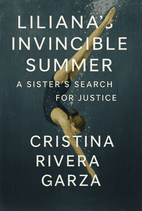
Liliana's Invincible Summer by Cristina Rivera Garza Book Cover

by Cristina Rivera Garza

Cristina Rivera Garza's Liliana's Invincible Summer reconstructs her sister's life and 1990 femicide through memoir and investigation, critiquing systemic impunity in Mexico. It serves as a poignant tribute and urgent call to action for readers confronting gender-based violence.

On Insta.page you also get an Apply This Book tool that lets you combine insights from up to 3 books to solve your specific situation.

Chapter mindmaps

Free preview: chapters 1–4 are fully interactive. Click any node to expand or collapse. Subscribe to unlock the rest.

Chapter 1: Part I: Azcapotzalco

Key concepts: Part I: Azcapotzalco

1. Part I: Azcapotzalco

Contradictions of Mexico City

  • Contrast between affluent La Condesa and chaotic Doctores mirrors societal tensions
  • Feminist protests and graffiti highlight systemic violence against women
  • The city's physical and social landscape reflects unresolved grief and injustice

Mythology and Metaphor

  • Azcapotzalco ('place of anthills') symbolizes grief's relentless persistence
  • Ants as guides to the underworld mirror the narrator's psychological state
  • Bureaucratic systems enact violence through erasure and indifference

Language as Resistance

  • Legal recognition of femicide challenges 'crimes of passion' narratives
  • Protests and chants weaponize collective memory against impunity
  • Personal rituals transform private grief into acts of solidarity

Institutional Indifference

  • Attorney General's Office embodies bureaucratic labyrinths and apathy
  • Lost files and dismissive officials illustrate systemic neglect
  • Feminist protests leave visible marks on institutional spaces

Feminist Footprints and Defiance

  • Memorials for victims like Lesvy Berlin Rivera Osorio haunt bureaucratic spaces
  • Glitter protests symbolize creative resistance against state violence
  • The narrator's search for Liliana's file becomes an act of rebellion

Bureaucratic Violence in Azcapotzalco

  • Agency 22 and 40 represent physical and digital decay of justice systems
  • Case files erased due to 'reforms' expose institutionalized forgetting
  • Misidentification (narrator as Liliana) underscores systemic dehumanization

Resilience in the Face of Erasure

  • Survivors build alternative archives to counter state neglect
  • Daily acts of solidarity challenge normalized femicide
  • The narrator's persistence embodies resistance against oblivion

Mythology and the Anthills of Time

  • Azcapotzalco’s name ('place of anthills') ties grief to myth, with ants symbolizing memory’s persistence and the underworld.
  • The Tepanec empire’s historical decline contrasts with the dystopian present, emphasizing institutional decay.
  • Ants’ 130-million-year lineage highlights the tension between human ephemerality and ancient cycles of life/death.

Cold Cases and Cigarette Breaks

  • Bureaucratic erasure is laid bare as Liliana’s case may be lost or destroyed in Agency 40’s archives.
  • Sorais’ defiant smoking and a stranger’s eerie warning about earwigs amplify the surreal, oppressive atmosphere.
  • The wait symbolizes the Sisyphean struggle against a state that systematically erases femicides.

Language as a Weapon

  • Mexico’s 2012 recognition of femicide exposes how linguistic gaps once enabled victim-blaming ('crimes of passion').
  • The narrator channels Las Tesis’ anthem to confront systemic gaslighting and reclaim agency.
  • A dismissive attorney’s call crystallizes her resolve: speaking 'I seek justice' becomes a revolutionary act.

Traffic Jams and Umbilical Cords

  • Gridlocked traffic mirrors the narrator’s turmoil, while an Uber driver’s breakdown reflects collective exhaustion.
  • Clarity emerges: if the state’s archives fail, she must build her own—writing as resistance against erasure.
  • The drive home becomes a vow to weaponize memory and reconstruct what bureaucracy destroyed.

Confronting the Unseen

  • A restaurant encounter with an accused professor reveals systemic impunity for gender violence.
  • Sorais’ dark laughter and their toast ('We are going to topple it') underscore resolve against patriarchal structures.
  • The scene highlights how perpetrators move freely while victims and allies bear the weight of unaddressed harm.

A Ritual of Grief and Memory

  • Liliana’s grave visit on her birthday exposes familial grief, guilt, and the father’s futile labor against regret.
  • The mother’s fragmented words ('Destiny. Happiness.') reveal grief too vast for language.
  • Tending the grave becomes a metaphor for resisting societal erasure and institutional failure.

Echoes of Resistance and Collective Struggle

  • Liliana’s death mirrors Mexico’s femicide epidemic, exacerbated by state negligence and the 'War on Drugs.'
  • The shift from isolation to collective action reflects cultural progress in demanding justice openly.
  • Family rituals and movements alike persist, honoring lost lives and fighting systemic oppression.

Chapter 2: Part II: This Sky, Annoyingly Blue

Key concepts: Part II: This Sky, Annoyingly Blue

2. Part II: This Sky, Annoyingly Blue

Fragments of a Life

  • Liliana's life is documented through ink-stained letters, diaries, and drafts of unsent letters
  • Her artifacts serve as a rebellion against forgetting and societal silencing
  • Cardboard boxes symbolize unresolved family grief and unconfronted loss

The Language of Violence

  • Love twisted into control and possession foreshadows tragedy
  • Danger Assessment tool could have identified escalating threats in Liliana's relationship
  • Critique of romanticized toxicity in Mexican culture and medical neglect

Handwriting as Rebellion

  • Liliana's evolving handwriting reflects growing autonomy
  • Tactile elements (colored inks, doodles, paper choices) as manifesto
  • Final note becomes haunting testament to her voice

Roots and Displacement

  • Family's migration tied to father's work with potatoes as metaphor
  • July 16 dates connect father's employment to Liliana's death 16 years later
  • Potatoes symbolize buried histories and personal rupture

Sisterhood and Survival

  • Shared scientific explorations as refuge from Toluca's hierarchies
  • Contrast between Liliana's vulnerability and Cristina's cynicism
  • Liliana's writings spiral into existential fatigue and warnings about 'men's love'

The Weight of Archives

  • Cardboard boxes as silent witnesses to trauma
  • Family's avoidance versus necessity of confronting the past
  • Writing as both rebellion and preservation of identity

Secret Mimicry and Shared Worlds

  • The sisters bond through imitation of scientists, creating a private language of exaggerated gestures and mock accents.
  • Their lives revolve around their father's potato research, blending work, play, and survival.
  • The family's immersion in science forms a unique, almost sacred, shared world.

Firelight and Fugitive Words

  • A barbecue with an ex-guerrilla laborer creates a fleeting but profound moment of connection.
  • Adult conversations dissolve into the landscape, leaving only a sense of belonging for the sisters.
  • The memory of the meal lingers as a rare, unspoken acknowledgment of community.

A Family of Exiles

  • The mother reinforces their identity as resilient outsiders shaped by ancestral struggles.
  • Toluca’s rigid social hierarchies sharpen their sense of transience and detachment.
  • Liliana begins to root herself in the city, while the narrator resists assimilation.

Letters as Lifelines

  • Liliana’s teenage years unfold through decorated letters, serving as emotional lifelines.
  • The correspondence navigates love, insecurity, and societal pressures with humor and vulnerability.
  • Darker themes emerge, like inherited violence and warnings about toxic relationships.

Angel and the Art of Pursuit

  • Liliana meets Angel at 14, initially dismissive but gradually warming to his persistent courtship.
  • Their relationship evolves through letters, gym encounters, and playful yet vulnerable exchanges.
  • Angel’s determination contrasts with Liliana’s guardedness, foreshadowing future dynamics.

High School on the Fringes

  • Liliana navigates a high school that mirrors Toluca’s clash of rural and urban identities.
  • She excels academically while cautiously exploring romance and social hierarchies.
  • Letters reveal her pride in achievements and growing, though hesitant, attachment to Angel.

Liliana’s Shifting Affections

  • By 1985, Liliana’s diary shows a stark reversal in feelings toward Angel, now marked by irritation.
  • She pivots to other romantic interests, reflecting restless emotional exploration.
  • Her entries capture the instability of adolescent desire and the thrill of being pursued.

The Weight of Unspoken Words

  • Liliana’s writings oscillate between confession and evasion, leaving key emotions unnamed.
  • Her diary acts as both a 'window and curtain,' revealing turbulence while obscuring its roots.
  • The ambiguity mirrors her struggle to reconcile personal feelings with societal expectations of love.

Sisterhood and Contradictions

  • Liliana and Cristina’s relationship is marked by friction over love, taste, and ideology.
  • A car argument culminates in Liliana accusing Cristina of not knowing how to love.
  • Cristina privately acknowledges Liliana’s capacity for unconditional love—a trait she distrusts in herself.

Colorful Fantasies and Silent Truths

  • Liliana assigns symbolic colors to friends and crushes, turning relationships into abstract representations.
  • She defends secrecy and lying as tools to preserve mystery and protect inner truths.
  • The passage contrasts imaginative expression with the necessity of silence as a personal boundary.

Existential Fatigue and Unanswered Questions

  • Liliana's exhaustion manifests through physical discomfort, school stress, and deep existential doubts.
  • She questions justice, authenticity, and the futility of love, expressing disillusionment.
  • The diary ends with fragmented imagery and an unresolved question about her future, leaving her legacy open-ended.

Key Takeaways

  • Liliana's emotional volatility reflects the instability of young love and the tension between desire and self-preservation.
  • Silence serves as both a shield and a form of power, emphasizing the duality of language.
  • Sibling dynamics with Cristina reveal contrasts between intellectual cynicism and emotional vulnerability.
  • Her existential musings highlight a search for meaning beyond romance, touching on justice and mortality.
  • The unresolved closing question invites reflection on the gaps between lived experience and historical memory.

Chapter 3: Part III: We Go Like She-Devils, We Go Like Bitches

Key concepts: Part III: We Go Like She-Devils, We Go Like Bitches

3. Part III: We Go Like She-Devils, We Go Like Bitches

Liliana’s Academic Turmoil and Urban Survival

  • Balances thesis on urban movements with financial instability and couch-surfing
  • Engages in political activism, anarchist circles, and feminist debates
  • Mirrors Mexico City's chaotic energy during 1987 student strikes
  • Finds intellectual freedom but remains rootless in crumbling apartments

The Rise and Fall of Liliana and Angel’s Relationship

  • Angel’s aggressive pursuit contrasts with Liliana’s elegance and independence
  • Red flags emerge: controlling behavior, secrecy, unresolved ties to ex-girlfriend
  • Liliana’s raw letter exposes betrayal, oscillating between defiance and despair
  • Angel’s manipulative apologies deepen her disillusionment with patriarchal hypocrisy

Letters as Windows to Inner Chaos

  • Liliana critiques Angel’s dishonesty while asserting her right to transparency
  • Writing shifts from playful musings to frantic self-interrogation
  • Valentine’s card symbolizes performative love and hollow possession
  • Vulnerability clashes with sharp critiques of societal sexism

Mexico City as a Character

  • City’s anarchic energy mirrors Liliana’s internal chaos and transient existence
  • Protests, ghost stories, and black-market deals seep into daily life
  • UAM architecture program offers escape from Toluca’s suffocating norms
  • Typewriter and manifestos become tools of rebellion and autonomy

Clashing Visions of Freedom

  • Liliana equates freedom with intellectual and bodily autonomy
  • Angel weaponizes freedom as control, using gaslighting tactics
  • Defiant PS (“I KNOW I DON’T DESERVE THIS!!!”) underscores her resilience
  • Questions whether love and possession can coexist in a patriarchal world

Antonio's Academic Pressures and Family Longing

  • Torn between PhD ambitions in Sweden and guilt over familial absence
  • Urges daughters’ independence while mourning missed moments
  • Pride in their academic achievements clashes with raw vulnerability
  • Rationalizes separation as necessary but admits its 'high price'

Themes of Sacrifice and Survival

  • Liliana’s absence at book launch hints at unresolved familial fractures
  • Art as a lifeline and rebellion against societal collapse
  • Love letters that wound vs. stories that outlast their authors
  • Freedom as the stubborn act of claiming space, one sentence at a time

The Manuscript's Journey

  • The narrator channels Mexico's turmoil into writing 'The War Doesn’t Matter,' blending gritty realism with existential dread.
  • Rejected by workshops for contradicting Octavio Paz’s ideals, the manuscript wins the San Luis Potosí award, funding the narrator’s escape to the U.S.
  • The fragmented stories mirror Mexico City’s chaos, contrasting with Antonio’s academic exile in Sweden.

Xian and Terri's Urban Odyssey

  • Xian and Terri embody disillusionment, wandering through decaying neighborhoods and volatile relationships.
  • A surreal kidnapping subplot highlights their paradoxical search for agency within powerlessness.
  • The 'black dog' motif symbolizes their ferocity and loneliness, encapsulating their fractured resilience.

Liliana's Ghost in the Narrative

  • Liliana’s absence at the book launch underscores her spectral presence in the text as both muse and mystery.
  • The narrator questions whether their shared experiences in Mexico City ever led to meaningful dialogue.
  • Her blurred presence in the stories merges autobiography and fiction, framing art as a vessel for unresolved grief.

Themes of Exile and Survival

  • Antonio’s academic ambitions strain family ties, paralleling the narrator’s literary exile.
  • Writing becomes an act of defiance and survival, mirroring Xian’s chaotic resilience.
  • Urban decay and the 'black dog' serve as metaphors for entrapment and fractured identity.

Art as Immortalization

  • The manuscript immortalizes unresolved relationships, particularly with Liliana.
  • Fiction blurs with autobiography, suggesting art’s power to preserve what life leaves unfinished.
  • The narrator’s work captures Mexico City’s crisis while transcending it through narrative.

Chapter 4: Part IV: Winter

Key concepts: Part IV: Winter

4. Part IV: Winter

Family Rituals and Collective Grief

  • Christmas walks along the Harrisburg Trail become a space for shared memories and emotional resolve
  • New Year’s Eve rituals (photo, tacos al pastor, 12 grapes) anchor the family in Liliana’s presence
  • A mysterious $25 gift from a stranger is interpreted as a sign from Liliana
  • Private sorrow transforms into collective action for justice

Legal and Bureaucratic Challenges

  • Outdated charges (homicide vs. femicide) and lost files hinder progress
  • Handwritten requests and dusty archives reveal systemic neglect
  • Lawyer Héctor Pérez Rivera outlines institutional inertia but maintains cautious optimism

Haunted Spaces: Mimosas 658 and UAM Azcapotzalco

  • Liliana’s former apartment (Mimosas 658) holds traces of her life—lavender crates, unused kitchen
  • UAM Azcapotzalco’s architecture and murals link her story to Mexico’s history of state violence
  • University visit evokes her presence in sunlight, drawing boards, and academic records

Grief as Geography and Memory

  • Physical spaces become archives of personal and political history
  • Proposed memorial at UAM transforms grief into a demand for accountability
  • Rituals and locations blur past/present, turning solitary anguish into collective action

Unexpected Allies and Institutional Tensions

  • Bureaucrat Rocio Padilla shifts from inertia to solidarity
  • Universities and legal systems reflect societal struggles—both liberation and failure
  • Persistence (father’s resolve, mother’s plea, sister’s steps) fuels the fight for justice

Rocio Padilla: A Strategic Partner

  • Rocio Padilla, head of the Office of Gender Equality, becomes a pivotal ally in the fight against gender violence.
  • Her immediate collaboration contrasts with bureaucratic inertia, signaling a shift toward actionable support.
  • The proposal for a memorial space at UAM Azcapotzalco is met with solidarity, framing it as a shared mission.
  • Padilla’s response blends personal grief with institutional accountability, emphasizing collective action.

A Vision for Collective Memory

  • The memorial aims to honor all women affected by gender violence, both survivors and victims.
  • It seeks to transform university spaces (classrooms, corridors, gardens) into active witnesses of history.
  • The project challenges the institution to confront its role in systemic violence and complicity.
  • By anchoring grief in physical spaces, it turns abstract loss into a catalyst for tangible change.

Key Takeaways

  • Bureaucratic systems, though often barriers, can be navigated to find unexpected allies and resources.
  • Collaboration with institutional figures like Padilla demonstrates the power of shared advocacy over confrontation.
  • Memorials in everyday spaces serve as activism, forcing acknowledgment of systemic violence and complicity.
  • Transforming passive environments into sites of memory institutionalizes accountability and commitment to change.

Continue exploring Liliana's Invincible Summer