Into the Wild Key Takeaways
by Jon Krakauer
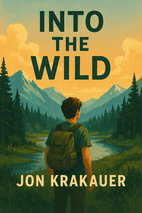
5 Main Takeaways from Into the Wild
Romantic idealism often clashes with the unforgiving realities of nature.
Chris McCandless's journey into the Alaskan wilderness was driven by a romanticized view inspired by writers like Jack London, but his lack of preparation led to tragedy. This is epitomized by Jim Gallien's warnings and McCandless's final days in Bus 142, showing how dreams can be shattered by harsh environmental truths.
True freedom requires severing ties with societal expectations and material wealth.
McCandless deliberately abandoned his affluent upbringing by donating his savings, changing his name, and cutting off contact with his family. These acts, detailed in Carthage and Detrital Wash, reflect his radical pursuit of an authentic existence beyond conventional success and materialism.
Personal transformation through extreme adversity can lead to profound self-discovery.
McCandless viewed his odyssey as a purification from societal corruption, with experiences from Bullhead City to the Slabs shaping his identity. His journal entries and interactions reveal a conscious choice to embrace hardship as a path to enlightenment, even as it culminated in his fatal Alaskan adventure.
Human connections are vital, but absolute independence can isolate us from crucial support.
While McCandless formed deep bonds with people like Wayne Westerberg and Ron Franz, he ultimately chose solitude in Alaska. His refusal to accept help or compromise his ideals, such as rejecting gifts and hitchhiking alone, highlights the tension between community and individualism that contributed to his isolation.
Unpreparedness and overconfidence in wilderness survival can have deadly consequences.
Despite warnings from experienced outdoorsmen, McCandless entered the Alaskan interior with inadequate gear and knowledge. His death from starvation in Bus 142 serves as a stark reminder of the importance of respect for nature, proper planning, and balancing idealism with practical skills.
Executive Analysis
The five key takeaways collectively form Krakauer's central argument: that McCandless's journey was a multifaceted quest for meaning, driven by romantic idealism that ultimately collided with brutal realities. His rejection of societal norms, pursuit of absolute freedom, and belief in personal transformation through adversity are portrayed as both admirable and fatal, highlighting the fine line between enlightenment and tragedy.
'Into the Wild' matters because it transcends adventure to offer a profound meditation on individualism and authenticity. Practically, it serves as a cautionary tale about unpreparedness and balancing dreams with realism. In literary nonfiction, it stands as a masterful blend of journalism and reflection, inspiring readers to question their life choices and the price of nonconformity.
Chapter-by-Chapter Key Takeaways
The Alaska Interior (Chapter 1)
The chapter establishes the core conflict between romantic idealism and harsh reality through the contrasting perspectives of Alex and Jim Gallien.
Alex is introduced as deliberately anonymous, unprepared yet supremely confident, and fully committed to severing his ties with society and its rules.
Gallien serves as a voice of reason and local expertise, whose warnings and concerns foreshadow the dangers Alex is underestimating.
The postcard and the final photograph frame the entire encounter with a sense of looming tragedy, making the reader a witness to the first irreversible steps of a journey already announced as potentially fatal.
Try this: Heed experienced warnings and realistically evaluate risks when pursuing ambitious goals.
The Stampede Trail (Chapter 2)
The story of Chris McCandless is presented from the outset as a personal and philosophical inquiry for the author, not a detached report.
The Stampede Trail and Bus 142 are depicted as profoundly isolated and challenging to reach, establishing the extreme remoteness of McCandless’s final adventure.
The discovery scene, relayed through the hunters’ perspectives, emphasizes the stark horror and pity of his death.
Critical evidence—the SOS note, the diary, and the camera—is recovered, promising a trail of clues to piece together his final days.
The immediate and pivotal question of his identity and motivations is posed, driving the narrative forward.
Try this: Approach remote challenges with thorough preparation and respect for their inherent dangers.
Carthage (Chapter 3)
The section contrasts Chris’s yearning for danger and freedom with the stability of both Carthage and his affluent upbringing, highlighting the tension that defines his choices.
Wayne Westerberg and Carthage provide Chris with hard work, community, and a surrogate family, becoming the closest thing he has to a home after he leaves Virginia.
Chris’s work ethic, intellectual intensity, and moral absolutism impress Westerberg but also hint at traits that may contribute to his later fate.
His decision to donate his remaining college fund, reject gifts, and change his name to Alexander Supertramp are deliberate acts of severance from his parents’ world and from conventional success.
The careful way he disappears, including redirecting mail and leaving no forwarding address, shows that his break with his family is not impulsive but planned, part of a larger personal “odyssey” he believes will transform his life.
Try this: Deliberately sever toxic ties to forge a new identity, but value the genuine connections that support your growth.
Detrital Wash (Chapter 4)
McCandless's survival tactics, like burying his money, reveal a sharp, adaptive intelligence and a deep-seated distrust of both people and the systems of urban life.
His attempted foray into Los Angeles to get an ID and job represents a last, failed test of conventional society, which he finds unbearably alienating.
The journal entry marks a decisive turning point, cementing his conscious and permanent choice to live outside societal boundaries, embracing the hardship of the road as a preferable alternative.
Try this: Test societal boundaries with adaptive strategies, but be decisive in committing to a path that aligns with your core values.
Next chapter: “Bullhead City” is locked
Keep learning from Into the Wild — and unlock all 600+ book summaries with audio, mindmaps and AI Q&A.
$0.00 due today · 7 days free, then $89.99/year ($7.49/mo) · Cancel anytime before day 7
plus sales tax where applicable