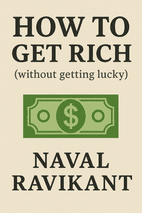
How to Get Rich Key Takeaways
by Felix Dennis

5 Main Takeaways from How to Get Rich
Execution, Not Ideas, Is the True Engine of Wealth Creation
Dennis argues that a brilliant idea is worthless without relentless execution. He warns against the 'not invented here' syndrome and emphasizes that smart emulation with superior implementation is key, as only execution can be protected, not the idea itself.
Turn Fear of Failure into Fuel for Persistent Action
The book identifies fear of public embarrassment as the biggest barrier to starting. Successful entrepreneurs don't eliminate fear; they discipline it to drive action, using it as a powerful force to persevere through humiliation and setbacks.
Guard Your Ownership Stake Like Your Business Depends on It
From obtaining capital to going public, Dennis stresses that retaining control is paramount. He advises avoiding predatory investors and building capital through networks to preserve autonomy, as venture capital often trades control for capital.
Delegate Authority to Multiply Your Efforts and Secure Freedom
Delegation is not a luxury but a necessity for scaling wealth. By delegating to talented people who complement your weaknesses, you can focus on strategic decisions, using systems like veto power to give autonomy while protecting interests.
Shift from Prey to Predator: Act Immediately, Eliminate Excuses
Wealth creation requires a fundamental mindset shift from making excuses to taking immediate action. Dennis urges readers to confront mortality, discard alibis like family responsibilities, and embrace a ruthless focus on starting and persisting.
Executive Analysis
Felix Dennis's 'How to Get Rich' builds a cohesive thesis that wealth is accessible not to the smartest or most creative, but to the most determined and execution-focused. The five takeaways interlock: a predator's mindset initiates the journey, harnessed fear fuels persistence, execution transforms ideas into value, protected ownership ensures rewards aren't diluted, and effective delegation scales the enterprise. This framework dismisses romantic notions of entrepreneurial genius, presenting wealth creation as a disciplined, often grueling, series of strategic actions.
The book's value lies in its brutally practical and psychologically astute guidance. It stands apart in the business genre by emphasizing the emotional costs and personal sacrifices required, offering not just strategies but a reality check. For readers, it provides a clear, actionable path to building wealth while preparing them for the challenges of success, from managing relationships to staying rich. It is an essential read for anyone serious about entrepreneurship beyond the hype.
Chapter-by-Chapter Key Takeaways
How Rich? (Introduction)
This book targets achievable, "common or garden" wealth that grants freedom and time, not billionaire status.
Wealth is relative; its purchasing power erodes over time, so modern benchmarks are essential.
There's a critical distinction between liquid, spendable assets and total net worth, with the latter being difficult to calculate accurately.
True "richness" in terms of total assets begins around $30-$80 million, according to the author's framework.
Acquiring significant wealth does not automatically lead to happiness and introduces new complexities like tax planning and managed envy.
All measurements of wealth are somewhat arbitrary, but setting a clear goal is the first step toward attaining it.
Try this: Define your personal wealth target in terms of liquid, spendable assets to create a clear and motivating financial goal.
Pole Positions (Chapter 1)
The perceived obstacles to starting are almost always excuses, not valid limitations.
Each stage of life and career offers specific, exploitable advantages for wealth creation.
Youth's advantage is having nothing to lose, boundless stamina, tech-savviness, and a blissful ignorance of so-called "conventional wisdom."
Mid-career's challenge is overcoming the fear of losing comfort and security; action must be taken before comfort becomes permanent.
Senior professionals' hurdle is cutting through the camouflage of responsibility to acknowledge their own risk-aversion; partnership can be a solution.
Money is neutral; only your own beliefs and actions can limit your potential to acquire it.
Try this: Audit your current life stage for unique advantages—like time or networks—and immediately exploit them to overcome inertia.
A Million to One (Chapter 2)
The initial statistical odds of becoming rich are misleading because they don't account for the vast number of people who are not actively competing.
Factors like health, age, profession, and, most importantly, personal desire dramatically narrow the field of serious contenders.
Cultural environment matters, with the U.S. typically being more conducive to wealth creation than Europe.
The pursuit of wealth can be addictive and carry personal risks, but these are not inevitable consequences and can be mitigated with self-awareness.
Letting perceived long odds discourage you is a guarantee of failure; action and determination are the true differentiators.
Try this: Ignore broad statistics on wealth; instead, assess and amplify your personal drivers like health and ambition to narrow the competitive field.
Harnessing the Fear of Failure (Chapter 3)
The Primary Obstacle: Fear of failure, particularly the fear of public embarrassment and judgment, is the most significant barrier to beginning the journey to wealth.
Beware the Committee: Endless debate and committee formation are often just fear-driven tactics to avoid responsibility and blame, not genuine risk assessment.
The Social Cost: Achieving wealth often requires developing a thick skin to withstand mockery for trying and envy for succeeding. Caring excessively about others’ opinions is a wealth deterrent.
The Personal Cost: The pursuit requires significant personal sacrifice and may impose worry and strain on close relationships—a cost that must be accepted.
Reframe the Fear: Successful individuals do not eliminate the fear of failure; they learn to harness its energy. View it not as a paralyzing monster but as a powerful force that can be disciplined and used to your advantage.
The Brutal Truth: If you cannot meet the basic mental and emotional demands of this pursuit—outlined in the author’s checklist—you are unlikely to succeed, and there is no shame in choosing a different path.
Try this: Confront your fear of embarrassment head-on, and schedule a small, public action today to begin harnessing that fear as motivation.
The Search (Chapter 4)
Inclinations are guideposts, not destiny: Pay attention to what you love or hate, but don’t let passions blind you to practical aptitude.
Aptitude requires honest self-assessment: Use trial and error, seek impartial advice when young, and embrace small successes as clues to your true talents.
Accept harsh feedback: Mentors like John Lennon can provide crucial reality checks; listening can save years of misguided effort.
Luck is made, not given: Preparation, boldness, and persistence transform chance into opportunity, as echoed in wisdom from historical figures.
Seize opportunities boldly: When weighed odds convince you, ignore conventional caution and act—this is often the decisive factor in finding wealth.
Try this: Experiment with small projects in areas you love or hate to identify real talent, and prepare to seize unexpected opportunities boldly.
The Fallacy of the Great Idea (Chapter 5)
An idea alone is worthless. It cannot be patented or owned; only its implementation can.
Execution is everything. The relentless focus on how to make an idea work in the real world is what separates success from failure.
Do not fear emulation. Prideful refusal to copy a competitor's winning strategy is a major cause of business failure. Smart emulation, with improvements, is a powerful path to wealth.
Beware the "not invented here" syndrome. A company or individual's arrogance about their own ideas can blind them to better approaches and lead to strategic isolation.
The goal is superior implementation, not ideological purity. A brilliantly executed good idea will almost always defeat a perfectly conceived great idea that is poorly executed or unwilling to adapt.
Try this: Stop searching for a unique idea; instead, choose a proven concept and dedicate all energy to executing it better than anyone else.
Obtaining Capital (Chapter 6)
Capital sources are hierarchical: Avoid predatory "sharks," be strategically cautious with controlling "dolphins," and actively cultivate supportive "fishes."
Retaining control is paramount: The method by which you obtain capital directly impacts your ownership and autonomy. Venture capital trades capital for control; building capital through your network preserves it.
Relationships are a form of currency: Trust, reputation, and reciprocal goodwill within your professional and personal network can be leveraged to create seed capital and operational credit.
The process is a rite of passage: Actively seeking capital is described as "humiliating" and "debilitating," but it is an unavoidable and defining struggle that separates those who merely want wealth from those who are determined to build it. Persistence is non-negotiable.
Try this: Map your personal and professional network for potential 'fish' investors who offer support without control, and start making asks to build capital.
Never Give In (Chapter 7)
Perseverance is Non-Negotiable: Success, especially from nothing, is less about a single brilliant idea and more about the stubborn, repeated refusal to quit, regardless of circumstances.
Embrace the Grind: The early journey is intentionally described as "desperate" and "humiliating"; it is a gauntlet meant to test resolve, and expecting it can fortify you.
Beware the "Siren Voices": Well-meaning advice from loved ones to choose security often masks a fear of your potential success and is the primary external force you must overcome.
Proof Builds Confidence: Even small, prior experiences of competence (like the ECAL turnaround) can serve as crucial internal anchors during times of doubt.
The Stakes Are Ultimate: The Van Gogh example elevates the struggle beyond business, connecting it to any great personal pursuit where the cost of giving up is the loss of your potential legacy.
Try this: List your past small victories to reinforce self-belief, and mentally commit to persisting through the inevitable humiliation of the start-up phase.
The Five Most Common Start-Up Errors (Chapter 8)
Balance Ambition with Humility: "Think big, act small" is a crucial mantra. Grand ambition must be paired with daily humility, relentless effort, and a rejection of complacency to avoid self-destruction.
Talent is Non-Negotiable: The core competency for a founder is recognizing and securing talent. A company cannot prosper if managed by mediocrity.
Motivate with Opportunity, Not Just Money: Retaining top talent often requires offering creative opportunities, increased responsibility, and the challenge of building something new, which can be more powerful than financial incentives alone.
Manage Talent Proactively: Have a clear lifecycle strategy for talent: identify it early, hire it, nurture it with rewarding work, protect it from poachers, and replace it when it ceases to deliver value commensurate with its cost.
Success is Fragile: Personal behavior directly impacts business health. Founder recklessness and a loss of discipline can rapidly unravel years of hard-won success.
Try this: Today, write down one ambitious long-term goal and one humble, immediate task, and initiate a search for someone more talented than you in a key area.
Cardinal Virtues (Chapter 9)
Diversify Early: As soon as your first business is profitable, start building new, related revenue streams. This protects you from market shifts and provides stability.
Embrace Creative Destruction: Be willing to cannibalize your own successful products to seize new opportunities before competitors do ("Barbarians at the Gate").
Detach to Decide: Having multiple "baskets" allows you to make unemotional, logical decisions about underperiving projects.
Listen Systematically: Actively seek out and schedule meetings with people outside your inner circle. This is a key source of new ideas and market intelligence.
Manage Ideas Practically: Understand that only the execution of an idea can be protected, not the idea itself. Be courteous but decisive in meetings.
Ownership is Paramount: Always clarify who owns what, especially with outside inventors. With employees who generate valuable ideas, reward them generously—it's both fair and smart business.
Try this: As soon as your core business is profitable, brainstorm three related side ventures, and schedule a monthly meeting with an outsider for fresh insights.
A Few Words About Luck (Chapter 10)
Luck is attracted to preparation, not desperation. Focus on building a solid foundation and let opportunities find you.
Your mindset is critical: rejecting an "unlucky" identity and cowardice is essential to opening yourself to fortune.
Action creates luck. Be bold, embrace a bias for action ("just do it"), and leverage teamwork through delegation.
Maintain a healthy perspective by viewing wealth-building as a serious game, not a life-or-death struggle.
The final goal of financial success is presented as the freedom and capacity for profound generosity.
Try this: Adopt a bias for action by delegating one task today, and reframe setbacks as part of the 'game' to maintain perspective.
The Art of Negotiating (Chapter 11)
Establish the Balance of Need: Success often hinges on correctly judging whether the other party's need exceeds your greed.
Embrace Detachment: Cultivate a mindset of indifference to outcomes to strengthen your bargaining position.
Set Non-Negotiable Terms: If you're a poor negotiator, fix your price and conditions firmly and refuse to waver.
Use Strategic Exits: Walking away can create urgency and demonstrate resolve.
Introduce Surprise Elements: Adding unexpected conditions late in negotiations can tilt the balance in your favor.
Maintain Internal Unity: Ensure your team speaks with one voice to avoid exploitation by the other side.
Listen More, Talk Less: Silence and attentive listening can reveal weaknesses and strengthen your stance.
Honor Agreements: Integrity in fulfilling deals ensures long-term credibility and future opportunities.
Try this: Prior to your next negotiation, write down your minimum acceptable terms and the point at which you will walk away, and enter the discussion listening more than talking.
Ownership! Ownership! Ownership! (Chapter 12)
Going public necessitates a complete mindset shift, prioritizing share price growth and regulatory compliance over entrepreneurial flexibility.
Insider trading rules are unforgiving; directors must vigilantly guard non-public information to avoid legal disaster.
Public markets often value short-term growth and trendy sectors over profitability, driven by analyst perceptions.
The transition involves immense personal sacrifice, including exhausting workloads and strained relationships, even when it leads to substantial wealth.
Ultimately, the public company experience is depicted as a high-stakes, stressful environment that may require exiting back to private ownership for peace of mind.
Try this: Evaluate the true cost of an IPO by speaking to a public company CFO, and honestly assess if you're willing to sacrifice flexibility for scale.
The Joys of Delegation (Chapter 13)
Delegation is a wealth-building imperative, not a luxury. It allows you to leverage other people's talents and time to scale your efforts and income.
Poor delegation stems from insecurity. Managers who hoard power often fear being outshone; owners who delegate effectively are motivated by results.
Delegate to complement your weaknesses, not clone your strengths. Build a team that fills the gaps in your own skill set to create a balanced and robust organization.
Create clear systems of autonomy with guardrails. The author's "veto power" model provides a framework for giving real authority while protecting vital interests.
Trust must be genuine. Obsessive oversight via technology or constant check-ins undermines delegation, demoralizes talent, and reveals a lack of trust.
Recognition is crucial. When you delegate authority, complement it with personal recognition to foster loyalty and motivation.
The ultimate goal is freedom. Effective delegation is what allows you to build wealth while having a life outside of your business.
Try this: Identify one area where you are weak, hire or assign someone strong in that area, and grant them authority with a clear boundary where you retain veto power.
A Piece of the Pie (Chapter 14)
Choose Your Battles: A glorious victory that consumes years of profit is ultimately a loss. Weigh the financial cost of defeating a competitor against the strategic benefit of joining or selling to them.
Manage for Profit & Growth: Use financial tools like ring-fenced investments and performance-linked bonuses to simultaneously drive profit and fund sensible growth. Ruthlessly control costs and overhead.
Cultivate Talent & Loyalty: True talent is often hidden. Finding, testing, and rewarding it is a primary engine for wealth creation. Build loyalty through transparency, support, and leading by personal example.
Maintain Strategic Perspective: Never forget the entrepreneurial goal is wealth creation, not perpetual management. Be prepared to sell assets at their peak and move on. The business should be a source of enjoyment, not self-imposed misery.
Try this: Analyze your biggest competitive threat this week to determine if a partnership or acquisition would be more profitable than a fight, and review overhead costs for immediate cuts.
The Power of Focus (Chapter 15)
Treat supplier relationships with pragmatic rigor, demanding compensation for their failures based on impact, not cost.
Use generous, merit-based bonuses to laser-focus employee efforts on value creation and delivery.
Hire strategically: look for “crossover” candidates, only bring in winners, and fire negativity quickly to protect your company’s energy.
Eliminate personal bias from people decisions; base everything on performance, professionalism, and profit-generating potential.
Strongly favor internal promotions and actively rotate senior roles to prevent complacency and sustain high performance.
The foundational rule for wealth is pairing ownership with an obsessive commitment to excellence. Being the best attracts talent, reduces errors, boosts your company’s value, and makes the journey more rewarding.
Try this: Design a bonus scheme for your team that rewards specific, measurable value delivery, and in your next hire, prioritize a 'crossover' candidate with diverse skills over a narrow specialist.
Whoops! (Chapter 16)
Pay your lawful taxes. It is both a right and a duty to pay the minimum you legally owe, but evasion is a dangerous game.
Integrity provides peace of mind. Operating honestly means you have nothing to fear during an investigation, even if defending yourself is costly.
Prison is a powerful deterrent. The author's personal experience makes him scrupulously careful, a caution others should adopt without having to learn the hard way.
Keep personal and company finances strictly separate. The metaphor of "milking the cow" without reporting it encapsulates the core ethical breach.
Seek professional advice early. Hiring competent tax advisors is a critical investment for anyone seeking to build and preserve wealth legally.
Tax exile is rarely worth the personal cost. The financial benefit often comes at a high price to one's well-being and sense of home.
Try this: Today, review your business and personal accounts to ensure no commingling, and schedule a consultation with a tax advisor to plan legally.
A Recap for Idlers (Chapter 17)
The acceptance of mortality is meant to be a tool for liberation, stripping away petty fears to enable ruthless, focused action.
Fear is the primary internal enemy; success requires actively confronting and weaponizing it against inaction.
Time is the primary external enemy. Procrastination is the death of opportunity, and action must be immediate.
Common excuses, particularly those related to family responsibilities, are often alibis for fear and must be ruthlessly examined and discarded.
The journey requires total commitment, a complete mindset shift from prey to predator, and an urgent, unwavering focus on starting and persisting.
Try this: Write down your life's remaining likely years, and use that number to eliminate one excuse and commit to starting a neglected project this week.
How to Stay Rich (Chapter 18)
Wealth changes how the world sees you: You become a target, requiring deliberate strategies for privacy and security.
Give to be free: Continuous, strategic philanthropy protects your focus and well-being more than hoarding does.
Guard relationships fiercely: Never mix loans with friendship. Nurture old connections, as they are your only source of honest feedback.
You are not your money: Cultivate interests and passions beyond finance to maintain sanity and perspective. Remember you are richer, not smarter, than those around you.
Professionalize your life: Immediately hire expert advisors, install fraud checks, and treat your wealth management as a critical, separate business.
Lead, don't manage: Trust your entrepreneurial instincts to drive opportunities, but have the humility to listen to experts and the discipline to walk away from bad deals.
Try this: If you have new wealth, hire a financial advisor and a security consultant this month, and reach out to an old friend for a candid opinion on your decisions.
The Eight Secrets to Getting Rich (Chapter 19)
Wealth starts with a "must," not a "want." A deep, compulsive need provides the necessary fuel for the journey.
Execution beats conception every time. Brilliant ideas are common; the discipline to implement them flawlessly is rare.
Protect your focus and your equity. Diligently guard your attention and your ownership stake—they are your primary assets.
Build with people smarter than you and know when to let go. Use talent and delegation as force multipliers, and develop the wisdom to exit strategically.
The entire endeavor is framed by courage and ultimate generosity. Operate without fear, and view accumulated wealth as a means to contribute, not merely an end in itself.
Try this: Clarify why you 'must' get rich in one sentence, and audit your calendar and cap table to eliminate distractions and dilute ownership.
Remember to Duck! (Chapter 20)
Advice Comes with an Expiration Date: Any system, including the one in this book, can become obsolete as circumstances change; the principles of human nature, however, do not.
The Central Paradox: Acknowledging that the pursuit of wealth isn't for everyone and that a rich man's advice can seem hypocritical is part of the book's brutally honest ethos.
The Core Action is Timeless: Despite changing tools, the essential requirements remain: the decision to act ("Just do it"), the confidence to begin even when unprepared ("bluff your way through"), and the resilience to endure setbacks ("Remember to duck!").
A Defiant Mindset: The ultimate creed for the entrepreneur is to move forward obstinately: "Never retreat. Never explain. Get it done and let them howl."
Try this: Review a piece of old business advice you follow, challenge its current validity, and then take one bold action this week without over-preparation.
Continue Exploring
- Read the full chapter-by-chapter summary →
- Best quotes from How to Get Rich → (coming soon)
- Explore more book summaries →