Hidden Potential Key Takeaways
by Adam Grant
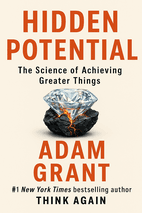
5 Main Takeaways from Hidden Potential
Embrace Discomfort and Imperfection to Accelerate Growth
Growth requires stepping into discomfort—like pilots stalling planes on purpose—and treating mistakes as milestones, not failures. Prioritizing progress over perfection, as seen in architecture's 'durability over flawlessness' and Ando's 'green apple' philosophy, fuels faster learning and true mastery.
Learn Actively and Teach Others to Solidify Mastery
Proactive learning—absorbing what nourishes and filtering advice carefully—transforms you into a 'human sponge.' The 'tutor effect' shows that teaching peers not only reinforces your own knowledge but also builds confidence and resilience, as demonstrated by the Golden Thirteen's collective bootstrapping.
Rest, Play, and Small Wins Sustain Long-Term Motivation
Breaks aren't laziness—they fuel creativity and prevent burnout, as Evelyn's story proves. Tracking minor victories (like spin-free pitches) and embracing detours (hobbies or side quests) recharges purpose and helps you navigate the non-linear path of growth.
Collective Intelligence Trumps Individual Genius
Team cohesion, psychological safety, and systems like brainwriting or innovation tournaments elevate performance over lone heroics. Listen-first leadership and flexible hierarchies (lattice over ladder) ensure diverse ideas are heard and acted upon, leading to breakthroughs in crises and classrooms alike.
Redefine Potential by Growth Trajectories, Not Static Credentials
Grade improvement over time, second chances (redos), and real-world work samples reveal hidden talent better than past accolades or GPAs. Systems designed for equity—like Finland's play-based pedagogy and looping—prove that nurturing every student's intrinsic drive yields high performance without sacrificing well-being.
Executive Analysis
These five takeaways form the book's core argument that hidden potential is unlocked not by innate talent or relentless hustle, but by a deliberate combination of embracing discomfort, learning through teaching, integrating rest and play, leveraging collective systems, and redefining success as growth over static achievements. Adam Grant dismantles the myth of solo grit, showing that true mastery emerges from interdependence: mentorship, team cohesion, and equitable structures that allow individuals to iterate, fail safely, and improve over time.
This book matters because it provides a practical, research-backed reframing of how we assess and cultivate potential—in ourselves, our teams, and our institutions. In a genre often dominated by hustle culture and perfectionism, Grant offers a counterintuitive yet evidence-based path: prioritize progress, build supportive systems, and measure what matters. For leaders, educators, and anyone feeling stuck, Hidden Potential provides actionable tools to transform languishing into growth and to uncover diamonds in the rough.
Chapter-by-Chapter Key Takeaways
Creatures of Discomfort (Chapter 1)
Courage over comfort: Growth requires abandoning methods that feel natural in favor of those that challenge you.
Practice precedes mastery: Start using skills before you feel ready; fluency follows action, not the other way around.
Mistakes as milestones: Each error is proof of progress, not failure. The more you make, the faster you learn.
Exposure trumps avoidance: Flooding yourself with discomfort (e.g., pilots stalling planes) builds resilience faster than gradual desensitization.
Mistakes as milestones: Prioritize error quantity over avoidance; early missteps accelerate mastery.
Practice precedes comfort: Skills grow through action, not preparation—start before feeling “ready.”
Diversity drives innovation: Discomfort in diverse groups fuels creativity and critical thinking.
Depth over safety: Meaningful conversations with strangers are more rewarding—and less awkward—than small talk.
Try this: Flood yourself with discomfort today by tackling a task you're not ready for—start before you feel prepared and treat every mistake as a data point for faster learning.
Human Sponges (Chapter 2)
Proactive learning beats passive hustle: Seek knowledge actively, as Mellody and Julius did.
Literacy amplifies effort: Foundational skills (like reading) accelerate growth.
Filter advice wisely: Trust sources that care, know their domain, and understand you.
Adaptability is survival: Like sponges, thrive by absorbing what nourishes and ejecting what harms.
Embrace tough love: Constructive criticism, when met with adaptability, fuels growth—both for the recipient and the mentor.
Absorb and contribute: Like sponges, the most impactful learners channel their knowledge to uplift others, whether through innovation or mentorship.
Tailor feedback to experience: Novices need affirmation to persist; experts benefit from guidance to close skill gaps.
Seek advice strategically: Asking for input signals competence, not weakness, and fosters collaborative growth.
Try this: Seek strategic advice from someone who genuinely cares and knows their domain, then immediately teach what you've learned to a peer to solidify your understanding.
The Imperfectionists (Chapter 3)
Imperfectionism fuels mastery: Prioritize what matters (e.g., durability in architecture, specific dive scores) and accept “good enough” elsewhere.
Perfectionism backfires: It narrows focus, stifles risk-taking, and hampers learning.
Wabi sabi in practice: Flaws can enhance beauty and function when strategically embraced.
Progress > perfection: Set precise, challenging goals and measure growth against past performance, not unattainable ideals.
Convergence filters: Identify actionable feedback by prioritizing repeated critiques.
Minimum lovable products: Aim for excellence, not flawlessness, by iterating on core strengths.
Judging panels: Use rotating experts to score work objectively while maintaining intrinsic motivation.
Scaffolding: Leverage temporary, targeted support to overcome specific barriers without long-term reliance.
Growth over approval: Define success by personal standards—like Ando’s “green apple”—to sustain creativity and well-being.
Try this: Identify one area where you're chasing perfection and deliberately set a 'good enough' standard, accepting flaws as part of progress rather than failures.
Transforming the Daily Grind (Chapter 4)
Breaks are fuel: Regular pauses sustain energy and passion, preventing burnout.
Creativity thrives in idle moments: Incubation periods unlock fresh ideas.
Quality > quantity: Short, focused practice beats endless grinding.
Play unlocks potential: Joyful experimentation—not rigid discipline—drives mastery.
Evelyn’s legacy isn’t just her music—it’s proving that rest isn’t laziness. It’s the secret to staying in tune with your craft and yourself.
Try this: Schedule a 10-minute break every 90 minutes of focused work, using that time for playful, unrelated activities to unlock creative incubation and sustain energy.
Next chapter: “Getting Unstuck” is locked
Keep learning from Hidden Potential — and unlock all 500+ book summaries with audio, mindmaps and AI Q&A.
$0.00 due today · 7 days free, then $89.99/year ($7.49/mo) · Cancel anytime before day 7
Continue Exploring
- Read the full chapter-by-chapter summary →
- View the interactive mindmap of Hidden Potential →
- Best quotes from Hidden Potential → (coming soon)
- Explore more book summaries →