Freedom of Money Key Takeaways
by Zhao, Changpeng
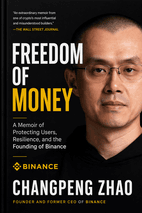
5 Main Takeaways from Freedom of Money
True innovation requires steadfast conviction against mainstream doubt.
CZ's journey shows that believing in a vision when others dismiss it, as during crypto winters, is essential for breakthrough success. This conviction drove Binance's creation and growth despite regulatory hostility and market volatility.
Unshakeable user trust is built through transparency and ethical action.
By consistently prioritizing user protection, like reimbursing losses during crises and communicating openly during outages, Binance cultivated loyalty that fueled its rise. This trust became a competitive moat in an industry plagued by scams and failures.
Agile pivots and relentless efficiency turn crises into opportunities.
When China banned crypto, Binance rapidly relocated and adapted its model, demonstrating that survival hinges on swift, decisive action. Eliminating distractions and optimizing processes compounded into significant advantages over slower competitors.
A mission-driven team, forged in adversity, outperforms any business plan.
CZ built Binance by attracting believers like Yi He, who joined during low points, and fostering a culture of empowerment and loyalty. This core team's resilience allowed the company to withstand existential threats and scale globally.
Navigating regulatory ambiguity requires persistence, diplomacy, and personal sacrifice.
CZ's global advocacy and eventual legal battle highlight how crypto pioneers must engage with regulators while protecting their vision. His personal journey from CEO to inmate underscores the high stakes and political volatility of innovating in finance.
Executive Analysis
The five takeaways collectively argue that revolutionizing an industry like finance demands more than technology—it requires a founder's unwavering ethos. CZ's story demonstrates that conviction fuels innovation, user trust sustains growth, and agile resilience turns threats into advantages. However, these are hollow without a dedicated team and a nuanced, persistent approach to regulatory engagement, often at great personal cost.
"Freedom of Money" matters as a raw, first-hand account from a defining figure in cryptocurrency's evolution. It offers practical lessons for entrepreneurs on building under pressure, for investors on assessing leader integrity, and for policymakers on the real-world impacts of regulatory approaches. Situated between memoir and industry critique, it provides unique insights into the mindset required to navigate the volatile intersection of technology, finance, and law.
Chapter-by-Chapter Key Takeaways
Testimonials (Chapter 1)
Respected figures from finance, national leadership, and entrepreneurship lend their support to CZ's work.
The memoir is presented as essential reading for understanding crypto's early years from a key insider.
Common themes in the testimonials are extraordinary resilience, foresight, and a belief that technology can democratize finance and increase freedom.
The book is framed as both a biography and a look at a changing global money system, and the mindset needed to build something new within it.
Try this: Frame your personal journey as a lens to understand transformative industry shifts, attracting endorsement from leaders.
Yi He (Foreword)
Conviction Over Consensus: True innovation often requires believing in a vision when the majority declares it dead, as demonstrated by CZ's steadfast faith during crypto's darkest winters.
Character Forged in Adversity: A consistent core of kindness, hard work, and belief in technology's power can guide a person from humble beginnings through unimaginable success and severe trials.
The Fickleness of Public Narrative: Public perception is volatile and often projects its own desires or fears onto figures like CZ, who are alternately worshipped and vilified based on external circumstances like market prices.
Principle in Action: Core values manifest in actions both large and small—from drafting a charity whitepaper before fame to sacrificing personal freedom for the survival of a community and its technology.
Humility as an Anchor: Extraordinary success and fame do not necessitate a change in fundamental personal habits or self-perception; staying grounded is a conscious choice.
Legacy of Empowerment: Even amidst personal turmoil, a drive to empower others—through education or transparent systems—can remain a primary motivation, defining a legacy beyond business achievements.
Try this: Cultivate unwavering conviction in your vision during downturns, as public perception is fickle but core character endures.
Prologue (Prologue)
CZ's life transformed from mundane to globally consequential in an exceptionally short period following Binance's launch.
His legal issue stemmed from a regulatory compliance failure in Binance's early operations, which he characterizes as a technical violation without malicious intent or direct harm to users.
His prison sentence was historically severe for the single charge, culminating in a presidential pardon.
The book is an intentionally authentic, first-person account written from memory during his incarceration, and may contain minor factual inconsistencies as a result.
The style will be direct, non-linear, and reflective of CZ's personal perspective and experience.
Try this: Embrace authenticity in your storytelling, even if it means admitting flaws, to build a genuine connection with your audience.
Go Live, July 14th, 2017 (Chapter 2)
Market Psychology vs. Fundamentals: A product's technical success and user growth do not guarantee immediate positive market sentiment; prices can be driven by collective psychology unrelated to underlying progress.
The Weight of Community Trust: Leading a project with public investors introduces a unique form of pressure centered on the direct impact of decisions (and market movements) on people's lives.
Transparency as a Tool: In the social media age, persistent, authentic communication during a crisis—even when facing hostility—can build deeper credibility and loyalty than polished, distant PR statements.
Resilience is Forged in Adversity: The most challenging periods, where effort seems disconnected from reward, often define a team's character and commitment to long-term vision.
Try this: Maintain transparent communication during market crises to build trust, as community psychology often overrides fundamentals.
Early Days (Chapter 3)
Show Up: Most opportunities start just by being there and trying.
Never Break Momentum: When you're close to winning, trust what got you there. Don't switch to something safer.
Acknowledge Your Hand: See your limits clearly, then focus on what you can do best.
Kindness is Transformational: Free help changed the author's life, showing how important it is to give back.
Exposure Breeds Passion: Trying new things, even at a discount, can start interests that last a lifetime and shape who you become.
Try this: Show up consistently and embrace new exposures, as simple actions and kindness can unlock lifelong passions and opportunities.
McGill, 1995-1999 (Chapter 4)
Passion is Practical: Choosing a field of genuine interest is critical for perseverance and success; the applied problem-solving of computer science proved far more engaging and valuable than theoretical or rote-memorization disciplines.
The Power of Applied Projects: Hands-on, team-based work (like the RoboCup project) can provide deeper learning and career clarity than traditional coursework, fostering a lifelong preference for collaborative, small-team environments.
Self-Sufficiency Forges Resilience: Achieving financial independence through continuous work builds resilience and pragmatism, while seizing strategic opportunities (like the Tokyo internship) can open unexpected doors.
Ultimatums are Failures: A painful personal mistake crystallized a vital professional and personal ethic: never use threats or ultimatums in negotiation or conflict. If someone else does, be prepared to accept their threatened outcome, as it often reveals the best path forward.
Try this: Choose a field of genuine passion for perseverance, and never use ultimatums in negotiations, as they reveal the true path forward.
Tokyo, New York and Shanghai (Chapter 5)
Credentials vs. Competence: A degree can be a tool for visas, but demonstrated skill and results are what truly open doors and build careers.
Business Fundamentals Are Non-Negotiable: Revenue, cash flow, and prudent spending are the immutable laws that determine a company's survival, regardless of past success.
Assess Markets Objectively: Entering a new market requires understanding its actual rules and culture, not relying on assumptions or models from elsewhere.
Management is Human: Leadership involves tough, principled decisions ("fire fast") but also compassion and a commitment to team development.
Personal Investment Compounds: Whether in a business, a skill, or real estate, committing your own resources (time, money, effort) creates powerful alignment and can yield significant professional and financial returns.
Try this: Prioritize demonstrated competence over credentials, and make personal investments in skills and assets to compound returns.
Getting into Bitcoin, 2013 (Chapter 6)
Seizing Market Gaps: The collapse of Mt. Gox created a clear need for trustworthy exchange infrastructure in Japan, presenting a timely opportunity.
The Power of Team: Bringing on a trusted, capable, and intrinsically motivated early employee like James provided a critical foundation for long-term technical execution.
Agility in the Face of Feedback: Direct market feedback—in this case, from experienced local VCs—can reveal insurmountable obstacles (like a language barrier) and point toward a more viable business model.
The Strategic Pivot: A failed plan A (launching an exchange) can quickly evolve into a successful plan B (becoming a B2B technology provider) when you listen to the market and leverage your core competency.
Try this: Listen to direct market feedback to pivot quickly, leveraging your core team and competencies to seize adjacent opportunities.
BijieTech (Chapter 7)
Team is Foundational: Decisive action in a crisis (the mutiny) identified loyal, hardworking talent. Strategic hires for product (Allan), operations (Heina), and technology (Roger) created a complete, high-performance core team.
Eliminate Major Distractions: Radical, not incremental, change is often necessary to remove productivity drains. The complete cessation of poker freed up mental space and time, directly fueling business growth and a new philosophy of extreme efficiency.
Efficiency as a Principle: Optimizing communication, meetings, and business development by ruthlessly cutting waste compounds over time, creating a significant competitive advantage.
Resilience in Crisis: Entrepreneurs must often "put their neck on the line" during failures, personally guaranteeing fixes to maintain client trust and team morale.
Adaptability is Survival: A sudden, external shock (the government ban) completely destroyed the existing business model. The ability to pivot existing assets—a proven team and technology—into a new, adjacent opportunity (crypto exchange) was the critical factor that led to the creation of Binance.
Try this: Build a foundational team with diverse skills, and eliminate major distractions ruthlessly to fuel growth and adaptability in crises.
Binance (Chapter 8)
Commitment Over Convenience: Yi He's decision to join Binance after BNB's price crash, not before a potential surge, demonstrated extraordinary faith and risk tolerance, marking her as a believer in the mission rather than just the immediate financial upside.
Unconventional Recruitment: The process highlighted a powerful hiring strategy for senior talent: involving them deeply in core creative work before formal terms are set, building attachment and buy-in that transcends traditional negotiation.
Foundational Loyalty: This moment established a core story of loyalty and shared struggle within Binance's founding lore, emphasizing that the early team was built on personal conviction during a period of visible failure, not just early success.
Try this: Recruit senior talent by involving them in core work before formal terms, building attachment based on shared mission and conviction.
Go Live (Chapter 9)
Community is a Foundational Asset: The Binance Angels program demonstrated that a trusted, empowered community of volunteers can be more powerful than a paid workforce, but it requires authentic, user-first values to sustain.
Protect Users, Always: Decisions like returning GAS tokens and recovering lost funds, even at a loss, built unparalleled trust and loyalty, proving that ethical treatment is a powerful long-term growth strategy.
Act on Informed Hunches: In a fast-moving and ambiguous regulatory environment, leadership requires the courage to act on intuition and "read the tea leaves," as seen in the critical server migration.
Transparency Calms Chaos: Simple, open communication—like a CEO sharing his phone number during a crisis—can build more trust than perfect execution in secret.
Growth Hides Fragility: Rapid success can mask operational vulnerabilities, from inadequate backup procedures to the unintended consequences of well-intentioned features like community voting.
Try this: Empower a community of volunteers to scale operations, and always prioritize user protection to build unbreakable trust during chaos.
China Ban and Tokyo (Chapter 10)
User Protection as a Foundation: Taking bold, costly actions to protect users—like the $6 million reimbursement—can transform a crisis into a catalyst for trust and explosive growth.
Principles Over Convenience: Building a company on the principle of "doing the right thing, not the easiest thing" fosters loyalty and long-term success.
Agility in Adversity: Rapid, decisive responses to regulatory shifts, including physical relocation, are crucial in the volatile crypto industry.
Value Over Vanity: Prioritizing practical value delivery—whether through token burns or customer-centric policies—yields greater wealth than short-term profit maximization.
The Perils of Myopia: Resistance to progressive regulation, as seen with Japanese exchanges, can stifle entire ecosystems and eliminate competitive advantage.
Try this: Take bold, costly actions to protect users in regulatory shifts, turning crises into growth catalysts through principled agility.
Number One (Chapter 11)
Mission Over Metrics: Achieving the number-one rank was less impactful than realizing the platform's role in providing global financial freedom, which became its core mission.
Resilience Under Pressure: The company faced and survived existential threats, including a major lawsuit from a powerful VC and critical technical failures, by prioritizing long-term principles over short-term convenience.
Transparency as Trust: Direct, honest, and frequent communication during crises (like the 32-hour outage) became a hallmark of Binance’s culture and a key tool for building user trust.
The Global Regulatory Maze: Rapid growth thrust Binance into a complex international landscape, requiring constant engagement with governments and a nomadic search for regulatory clarity.
Scaling is Multifaceted: Explosive user growth exposed challenges far beyond server capacity, including KYC verification, customer service automation, and the human element of company culture.
Try this: Define success by mission impact rather than metrics, and use transparent communication to navigate existential threats and global scaling.
Malta (Chapter 12)
Strategic, founder-friendly acquisitions (like Trust Wallet) focused on product and talent can yield exceptional long-term returns.
Short-term, unsustainable business models (like Fcoin's transaction mining) must be resisted in favor of fundamental, value-building practices.
Security is a constant, evolving battle requiring rapid response and systemic improvements to protect users.
Corporate social responsibility, especially using blockchain for transparent charity, is a core value that builds global goodwill and brand integrity.
A company's strength is deeply connected to its internal culture; supporting employees in times of personal crisis fosters immense loyalty and dedication.
Try this: Acquire for talent and product synergy, resist unsustainable business models, and integrate social responsibility into core operations to build brand integrity.
First Anniversary (Chapter 13)
Empowerment Over Micromanagement: Successes like BNB Chain and the Futures platform emerged from CZ saying "yes" to capable, autonomous teams, using internal competition to drive innovation.
Regulatory Relationships Are Fluid: A relationship with a regulator can shift from collaborative to adversarial based on changing political roles.
The Perils of Partnership: The investment in FTX revealed how a partner can quickly become a competitor, using tactics like talent poaching and reputational attacks.
Media Narratives Carry Weight: False stories can cause massive market damage, and media independence can be compromised by hidden financial ties.
Grassroots Adoption Drives Growth: Products like P2P trading were crucial for global expansion, especially where traditional finance failed.
Try this: Empower autonomous teams to drive innovation, but remain vigilant as partners can become competitors and media narratives can cause market damage.
2020 (Chapter 14)
In business negotiations, a "quick no" can be more valuable than a prolonged maybe, saving significant time and resources.
Operational resilience and a pre-existing remote-friendly culture allowed Binance to thrive during the global disruption of the COVID-19 pandemic.
The line between complying with authorities and protecting users is often complex, requiring principled judgment, robust legal procedures, and occasionally, the courage to escalate reports of corruption.
Proactive education and collaboration with global law enforcement, through initiatives like training programs, are critical for the legitimate growth of the crypto industry.
Try this: Value a 'quick no' in negotiations to save resources, and build operational resilience that thrives in disruption while balancing compliance with user protection.
2021 (Chapter 15)
Regulatory landscapes are shaped by individual people and politics; personal fortunes and judicial processes can influence attitudes toward innovation, as seen with Eva Kaili.
Persistence and relationship-building pay off, shown by Binance's return to Japan after years, fueled by changed leadership and a strategic acquisition.
Local industry protectionism can be a barrier, but progressive regulators can choose industry growth over shielding incumbents from competition.
Try this: Understand that regulatory landscapes are shaped by individuals and politics, so persist in relationship-building to overcome protectionism.
2022, Wandering The Earth (Chapter 16)
Leadership in Crisis: The response to the Ukraine war demonstrated a commitment to employee safety and user support that transcended financial cost, establishing a clear "people-over-profits" ethos during a humanitarian disaster.
The Global Regulatory Mosaic: The tour exposed the dramatic variance in global crypto readiness—from the entrepreneurial enthusiasm of Rio de Janeiro and El Salvador to the cautious formalism of Uruguay and the operational challenges in countries like Colombia.
The Personal Toll of Advocacy: CZ's exhausting itinerary, coupled with illness and logistical snafus, highlighted the immense personal commitment required to champion a nascent industry on the world stage.
Media as a Persistent Frontier: Relations with traditional media remained fraught, as seen in the Forbes investment saga and the repetitive framing of the Russia-Ukraine narrative, emphasizing the ongoing challenge of shaping public perception.
Diplomatic Persistence Pays: Despite setbacks, continuous engagement with regulators and leaders—from French officials to Latin American presidents—slowly built the foundations for legitimacy and operational expansion in key markets.
Try this: Commit personally to global advocacy despite the toll, as engaging directly with diverse regulators builds legitimacy and reveals market readiness.
Binance Blockchain Week Dubai (Chapter 17)
Global competition in crypto isn't just about markets; it can involve former colleagues using political lobbying to create barriers, which the author views as harmful to consumers.
Small nations like Palau can be pioneering partners in blockchain adoption, often unburdened by large, entrenched financial systems and led by forward-thinking leaders.
Building relationships in this industry is a multifaceted endeavor, equally involving boardroom negotiations, shared cultural experiences, and, sometimes, unexpected adventures like diving with a president or eating bat.
Try this: Build multifaceted relationships with global partners, from boardrooms to cultural experiences, to navigate competition and pioneer in new markets.
Europe Again (Chapter 18)
Global regulatory attitudes toward cryptocurrency remain fragmented, ranging from proactive adoption and serious inquiry to cautious observation and passive acceptance.
Leadership mindset within a nation is portrayed as a decisive factor in its pace of technological and economic development.
The collapse of FTX underscored critical failures in risk management and transparency within the industry, while simultaneously testing the infrastructure and trust of surviving entities.
Binance’s ability to smoothly process a $14 billion “bank run” solidified its operational resilience and restored user confidence during a period of extreme industry crisis.
Personal resilience is also a theme, as the author finds moments for reflection, family, and a return to simple pleasures amidst a relentless professional schedule.
Try this: Continuously assess global regulatory fragmentation, and leverage operational resilience to restore confidence during industry crises while maintaining personal balance.
2023 DOJ Negotiations (Chapter 19)
Regulatory actions can be strategic and politically motivated, with investigations sometimes preceding evidence and fines reflecting a target's capacity to pay rather than the severity of violations.
Community symbols can emerge organically from personal statements, taking on profound and unexpected meanings in hindsight.
Rapid scaling can create vulnerabilities, leading to costly operational missteps and a dilution of effective management and oversight.
Crisis response can innovate by leveraging existing user data and crypto's strengths to provide rapid, direct aid.
Even baseless regulatory lawsuits carry immense destructive power, capable of crippling a business through frozen assets, lost partnerships, and reputational damage long before any legal vindication.
The principle of protecting users remained a central, costly guiding force, whether in renegotiating a bad deal or accepting personal financial restrictions to prevent user funds from being frozen.
Try this: Anticipate that regulatory actions may be politically motivated, and protect users even at personal cost, as baseless lawsuits can cripple a business rapidly.
DOJ Negotiations (Chapter 20)
The DOJ pursued an exceptionally aggressive strategy against Binance and CZ, seeking a criminal conviction and massive fines for what the defense viewed as regulatory failings.
CZ’s large, expensive legal team often provided contradictory and ultimately incorrect advice, which clouded his judgment and strategy during negotiations.
Acquiring UAE citizenship was a major strategic event, providing a safe haven from extradition, though its implications were debated by his counsel.
The final deal involved CZ pleading guilty to a single BSA charge, with sentencing left to a judge, and Binance agreeing to a historic $4.3 billion penalty.
Critical misrepresentations from his lawyers about jail time, sentencing delays, and prison conditions persisted until the very end, leaving him unprepared for the actual outcomes.
Try this: Seek independent verification of legal advice during high-stakes negotiations, as counsel may have conflicting interests or provide incorrect guidance.
Flying to the U.S. (Chapter 21)
A politician's public declaration of a "war on crypto" just before his hearing showed how politics can pressure the courts.
He saw his case as an example of the justice system being used for a political goal—in this case, to target the cryptocurrency industry.
By sarcastically comparing his case to others, he points out what he sees as unfair and inconsistent treatment by the government.
Try this: Recognize how political declarations can influence judicial processes, and prepare for inconsistent treatment when operating in contentious industries.
Sentencing Hearing (Chapter 22)
The sentencing hearing revealed a stark disconnect between the DOJ's portrayal of deliberate malfeasance and the judge's finding that there was no evidence of personal knowledge of illicit activity.
Despite judicial rejection of the DOJ's most severe allegations and acknowledgment of the author's positive characteristics, the "magnitude" of Binance was cited to justify a prison sentence that broke from historical precedent for similar regulatory violations.
The post-sentencing process unveiled a complex and often arbitrary prison bureaucracy, where factors like citizenship status can override judicial recommendations and significantly alter the conditions and length of confinement.
The chapter highlights the very human costs of this process—the strategic gamesmanship, the anxiety over bureaucratic minutiae, and the prolonged separation from family.
Try this: Understand that judicial findings may reject severe allegations, but systemic factors like 'magnitude' can still lead to unprecedented penalties.
Self-Surrendering to Prison (Chapter 23)
Bureaucratic Malice: The prison system is rife with arbitrary bureaucracy, where individual officers can wield small powers to create significant setbacks.
The Lawsuit Scourge: A guilty plea in federal court makes one a target for frivolous civil lawsuits, an exploited vulnerability the system does nothing to shield inmates from.
Essential Visits: Human connection through visits is a critical lifeline, but the system erects immense, often insurmountable, barriers to maintaining these relationships.
Health is Your Responsibility: Inadequate medical and dental care forces inmates to become solely responsible for their own preventative health.
Small Mercies: Moments of relative normalcy, like time in the yard or a sunset, become disproportionately valuable for maintaining sanity in a dehumanizing environment.
Try this: Develop resilience against bureaucratic malice by focusing on small mercies and maintaining human connections, as the system is dehumanizing.
Out of Prison (Chapter 24)
The Bureaucratic Maze: Freedom after incarceration is not a clean break but a staggered process through controlled environments like halfway houses, vulnerable to arbitrary bureaucratic actions, as shown by the last-minute ICE detention.
Resilience Through Support: His ability to endure the ordeal relied heavily on his supportive family, financial stability, and the meaningful volunteer work he could do.
Clarity of Values: The prison experience stripped away non-essentials, leading to a clear realization that relationships with family and close friends are the true priority.
Political Volatility: The U.S. government's stance on crypto can change rapidly with administration changes, moving from "regulation by enforcement" to a more supportive posture, impacting both individuals and the entire industry.
Closure and Vindication: The presidential pardon, while not restoring lost time or funds, provided significant personal and professional vindication, formally closing a long and stressful chapter.
Try this: Prepare for a staggered return to freedom with bureaucratic hurdles, and value relationships above all, as political volatility can change industry fortunes.
Continue Exploring
- Read the full chapter-by-chapter summary →
- Best quotes from Freedom of Money → (coming soon)
- Explore more book summaries →