Four Thousand Weeks Mindmap: Visual Summary of All Chapters | Insta.Page

Four Thousand Weeks — Interactive Mindmaps

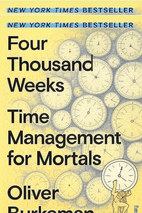
Four Thousand Weeks by Oliver Burkeman  Book Cover

by Oliver Burkeman

Oliver Burkeman's Four Thousand Weeks reframes time management through the lens of human mortality, challenging productivity culture to advocate for embracing limits and prioritizing meaning. It is for anyone feeling overwhelmed by the modern pressure to optimize every moment.

On Insta.page you also get an Apply This Book tool that lets you combine insights from up to 3 books to solve your specific situation.

Chapter mindmaps

Free preview: chapters 1–4 are fully interactive. Click any node to expand or collapse. Subscribe to unlock the rest.

Chapter 1: Introduction: In the Long Run, We’re All Dead

Key concepts: Introduction: In the Long Run, We’re All Dead

1. Introduction: In the Long Run, We’re All Dead

The Stark Arithmetic of Human Life

  • Average human life spans ~4,000 weeks, far shorter than perceived
  • Historical figures like Seneca warned about wasting limited time
  • Modern calculations reveal collective denial of mortality
  • Jeanne Calment's 122 years (6,400 weeks) is an extreme outlier

Modern Time Pressures and Exploitation

  • Busyness glorified as 'hustle culture' under capitalism
  • Technology accelerates impatience (e.g., microwaves, inbox zero)
  • Gig economy and social media hijack attention for profit
  • Pandemic trapped people in an anxious 'everlasting present'

The Failure of Productivity Systems

  • Tools like 'Getting Things Done' ignore existential meaning
  • Efficiency creates a conveyor belt of endless tasks
  • Burnout reflects unsustainable optimization pressures
  • Keynes' leisure society prediction failed; work became a status symbol

The Backfire of Control Illusions

  • Modern conveniences increase impatience, not freedom
  • Productivity systems often generate more work, not less
  • Capitalism rewards 'doing more' over 'doing what matters'
  • 'Joyless urgency' leaves people feeling like mechanistic cogs

The Longing for Authentic Time

  • Widespread sense of misallocated time in modern life
  • Charles Eisenstein's childhood insight mirrors universal yearning
  • Traditional time management prioritizes output over purpose
  • Embracing limits is the first step to reclaiming meaning

Core Realizations

  • Life's brevity demands focus on quality over quantity
  • Productivity tools often deepen dissatisfaction
  • Capitalist systems exploit time at the cost of meaning
  • Surrendering control paradoxically liberates purpose
  • Pandemic exposed fragility of time perception

Chapter 2: 1. The Limit-Embracing Life

Key concepts: 1. The Limit-Embracing Life

2. 1. The Limit-Embracing Life

Medieval Time Perception

  • Time as organic rhythm tied to natural cycles (task orientation)
  • No concept of 'wasted time' or productivity guilt
  • Deep time: timeless immersion in the present (e.g., ancestral connection)

Commodification of Time

  • Mechanical clocks abstracted time into measurable units
  • Industrial Revolution tied time to wages and factory schedules
  • Time became a resource to optimize (e.g., Ambrose Crowley's exploitation)

Toxic Productivity Culture

  • Modern obsession with efficiency hacks and rigid schedules
  • Productivity geek paradox: systems create anxiety, not fulfillment
  • Neurotic overwork as avoidance of life's limits

Embracing Limits

  • Irreversible decisions: purpose emerges from commitment, not FOMO
  • Accepting finite time liberates energy for meaningful action
  • Constraints as clarifying and freeing (e.g., cold shower analogy)

Task Orientation vs. Control

  • Rejecting commodified hours for natural rhythms (Eigenzeit)
  • Creative processes demand their own pace, not rushed timelines
  • Ancient philosophy: wholehearted humanity over limitless striving

Systemic Pressures and Liberation

  • Economic inequality and sexism exacerbate time scarcity
  • No hack fixes systemic issues, but acceptance redirects focus
  • Building meaning within constraints, not fighting them

Resisting the Temptation of Open Options

  • True fulfillment comes from committing to irreversible decisions, not clinging to control.
  • FOMO diminishes when you accept that missing out is inevitable and necessary.
  • Sacrificing alternatives is a declaration of priorities, not a failure.
  • Meaning emerges from the tension of choosing one path over countless others.

Finding Freedom in Constraints

  • Limitations can liberate by relieving the burden of constant self-direction.
  • Communal rhythms (e.g., shared schedules) offer respite from individualism's exhaustion.
  • Productivity thrives by honoring Eigenzeit—the inherent time a task demands.
  • Align actions with environmental or historical needs, not just efficiency.

Societal Pressures and the Myth of Self-Help Solutions

  • Systemic issues (inequality, eroded safety nets) fuel time pressure—not personal failings.
  • Productivity apps can't solve structural problems; acceptance empowers resistance.
  • Reject internalizing impossible demands to reclaim energy for meaningful action.
  • Build purpose within constraints, not by chasing the illusion of 'doing it all.'

Historical and Philosophical Roots

  • Ancient philosophers valued 'wholehearted humanity' over godlike limitlessness.
  • Embracing limits was seen as invigorating (e.g., cold shower analogy).
  • Charles Garfield Lott Du Cann framed limitations as clarifying and freeing.

Key Takeaways

  • Deliberate prioritization is non-negotiable; hard choices define life.
  • Commitment—despite risks—creates deeper fulfillment than control.
  • Constraints (communal rhythms, Eigenzeit) paradoxically liberate.
  • Reject toxic productivity; systemic pressures require acceptance, not optimization.
  • Ancient wisdom: Being fully human means embracing limits, not resisting them.

Chapter 3: 2. The Efficiency Trap

Key concepts: 2. The Efficiency Trap

3. 2. The Efficiency Trap

The Efficiency Trap

  • Cultural myth that doing more brings peace is debunked
  • Efficiency thrives on denying human limits and trade-offs
  • Productivity hacks create new demands rather than freeing time
  • Modernity amplifies existential FOMO and choice paralysis
  • Convenience often strips away meaningful human interactions

The Illusion of Control

  • Busyness stems from cultural obsession with defying human limits
  • Universal anxiety: believing we must do more than we can
  • Society ignores trade-offs, doubling down on productivity hacks
  • Cycle of overwhelm perpetuated by refusal to accept limits

Arnold Bennett’s Futile Prescription

  • Early 20th-century time-management advice mirrors modern productivity dogma
  • Assumes efficiency will eventually yield peace
  • Flaw: demands expand to fill saved capacity
  • Efficiency invites more obligations rather than creating space

Parkinson’s Law Revisited

  • Work expands to fill available time and importance
  • Email exemplifies Sisyphean loop of efficiency
  • Societal standards inflate with technological advances
  • Efficiency trap raises stakes rather than alleviating overwhelm

Existential Overwhelm

  • Secularism pressures to 'maximize' finite life experiences
  • FOMO amplified by social media and infinite options
  • Technology creates ever-receding horizon of fulfillment
  • Convenience tools drown users in obligations

The Cost of Constant Optimization

  • Efficiency crowds out meaningful priorities
  • Ultra-organization focuses on trivial tasks over depth
  • Becoming 'reservoirs for others’ expectations'
  • Sacrificing resilience and deep engagement for convenience

The Alternative: Embracing Limits

  • Liberation lies in letting go, not doing more
  • Sacrifice as necessity for purposeful living
  • Rejecting 'have it all' mentality to choose intentionally
  • Slow, labor-intensive routines can nurture deeper connections

The Seductive Danger of Convenience

  • Modern conveniences eliminate friction but erode vital human connections.
  • Micro-moments of community (e.g., chatting with a cashier) are lost in the pursuit of efficiency.
  • Convenience culture trades fleeting annoyances for existential emptiness.
  • Streamlining life often sacrifices meaningful interactions for superficial ease.

The Hidden Costs of Convenience

  • Effortless gestures (e.g., automated cards) lose emotional weight without friction.
  • Frictionless transactions (e.g., Apple Pay) remove mental pauses, encouraging impulsivity.
  • Convenience reshapes expectations, making unoptimized activities feel intolerable.
  • Tim Wu’s insight: we often choose convenience over preference, undermining intentionality.

Sylvia Keesmaat’s Radical Choice

  • Rejecting urban efficiency for rural farming prioritizes connection over speed.
  • Embracing inconvenience (e.g., manual chores) fosters deeper ties to family and environment.
  • Challenges the myth that saved time automatically creates meaning.
  • Asks: 'How else are we to know a place apart from tending to it?'

The Necessity of Sacrifice

  • Convenience culture’s 'have it all' promise is a lie; meaningful living requires trade-offs.
  • Choosing priorities (e.g., handwritten letters) means accepting loss elsewhere.
  • Sacrifice—whether in time or comfort—anchors life to purpose.
  • Opting for inconvenience is a rebellious act against hollow optimization.

Key Takeaways

  • Efficiency is self-defeating: optimizing productivity often perpetuates overwhelm.
  • Existential FOMO is unavoidable; embracing it frees us to savor chosen experiences.
  • Convenience’s hidden cost: it isolates us from shared human rhythms.
  • Depth over speed: resisting 'clearing the decks' preserves what truly matters.
  • Effort breeds meaning; convenience often divides life into empty ease vs. meaningful friction.

Chapter 4: 3. Facing Finitude

Key concepts: 3. Facing Finitude

4. 3. Facing Finitude

Thrown into Temporality

  • Human existence is fundamentally temporal—we are time, not just in time.
  • Finitude shapes authenticity: accepting limits leads to clear-eyed living.
  • Every decision involves sacrifice (from decidere, 'to cut off'), defining our finite existence.
  • Avoiding mortality leads to distraction; confronting it fosters meaningful choices.

The Illusion of Eternity

  • Eternal life would render choices meaningless—urgency and transience create value.
  • Martin Hagglund uses personal examples (e.g., summer vacations) to show how impermanence enriches experiences.
  • Terminal diagnoses (e.g., The Iceberg) force a raw engagement with time, revealing 'bright sadness.'
  • Permanence undermines meaning; finitude is necessary for significance.

The Gift of Borrowed Time

  • Finitude transforms mundane frustrations into reminders of life's miraculous fragility.
  • Life as 'borrowed time' (e.g., near-death experiences) fosters gratitude over entitlement.
  • Grief reframes delays (e.g., traffic jams) as opportunities lost to others.
  • The 'joy of missing out' arises from embracing the weight of committed choices.

Key Insights on Finitude

  • Authenticity requires confronting mortality; avoidance leads to distraction.
  • Finite time creates meaning—eternity would strip value from existence.
  • Impermanence cultivates gratitude, turning annoyance into wonder.
  • Decisions affirm life’s possibilities rather than merely sacrificing alternatives.

Chapter 5: 4. Becoming a Better Procrastinator

Mindmap locked. Subscribe to unlock all chapters of Four Thousand Weeks.

Subscribe to unlock

Chapter 6: 5. The Watermelon Problem

Mindmap locked. Subscribe to unlock all chapters of Four Thousand Weeks.

Subscribe to unlock

Chapter 7: 6. The Intimate Interrupter

Mindmap locked. Subscribe to unlock all chapters of Four Thousand Weeks.

Subscribe to unlock

Chapter 8: 7. We Never Really Have Time

Mindmap locked. Subscribe to unlock all chapters of Four Thousand Weeks.

Subscribe to unlock

Chapter 9: 8. You Are Here

Mindmap locked. Subscribe to unlock all chapters of Four Thousand Weeks.

Subscribe to unlock

Chapter 10: 9. Rediscovering Rest

Mindmap locked. Subscribe to unlock all chapters of Four Thousand Weeks.

Subscribe to unlock

Chapter 11: 10. The Impatience Spiral

Mindmap locked. Subscribe to unlock all chapters of Four Thousand Weeks.

Subscribe to unlock

Chapter 12: 11. Staying on the Bus

Mindmap locked. Subscribe to unlock all chapters of Four Thousand Weeks.

Subscribe to unlock

Chapter 13: 12. The Loneliness of the Digital Nomad

Mindmap locked. Subscribe to unlock all chapters of Four Thousand Weeks.

Subscribe to unlock

Chapter 14: 13. Cosmic Insignificance Therapy

Mindmap locked. Subscribe to unlock all chapters of Four Thousand Weeks.

Subscribe to unlock

Chapter 15: 14. The Human Disease

Mindmap locked. Subscribe to unlock all chapters of Four Thousand Weeks.

Subscribe to unlock

Chapter 16: Afterword: Beyond Hope

Mindmap locked. Subscribe to unlock all chapters of Four Thousand Weeks.

Subscribe to unlock

Chapter 17: Appendix: Ten Tools for Embracing Your Finitude

Mindmap locked. Subscribe to unlock all chapters of Four Thousand Weeks.

Subscribe to unlock

Continue exploring Four Thousand Weeks