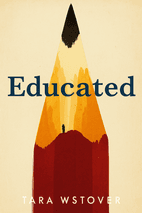
Tara Westover's Educated chronicles her journey from an isolated survivalist childhood in Idaho to earning a PhD, exploring the wrenching conflict between family loyalty and self-invention. This powerful memoir resonates with anyone grappling with identity, truth, and the transformative power of knowledge.
On Insta.page you also get an Apply This Book tool that lets you combine insights from up to 3 books to solve your specific situation.
Chapter mindmaps
Free preview: chapters 1–4 are fully interactive. Click any node to expand or collapse. Subscribe to unlock the rest.
Chapter 1: Chapter 1: Choose the Good
Key concepts: Chapter 1: Choose the Good
1. Chapter 1: Choose the Good
Foundational Memory and Family Narrative
Tara's 'strongest memory' is a vividly imagined scene of federal agents shooting her mother, born from her father's story
The story is based on the real-life Ruby Ridge standoff involving the Weaver family
Demonstrates the tension between constructed family narratives and verifiable reality
Shows how family lore shapes personal identity and perception more forcefully than documented history
Father's Absolute Authority and Revelations
Gene interprets obscure biblical passages as divine instruction for daily life
His reading of Isaiah 7:15 leads to decree that dairy products are evil
Demonstrates arbitrary and unpredictable nature of his authority over family
His ideology dictates physical reality and psychological state of the family
Grandmother's Resistance and Alternative Path
Grandma-down-the-hill defies Gene by keeping milk in her refrigerator
Believes Tara should be in school rather than 'roaming the mountain like savages'
Plots to take Tara to Arizona to enroll her in school secretly
Represents the 'normal' world of formal education and societal rules
Tara's Internal Conflict and Decision
Spends sleepless night wrestling with decision to leave with grandmother
Paralyzed by complex web of loyalty, fear, and imagined consequences for family
Ultimately chooses her family and the mountain over escape
Her fantasy of escape fails to take hold as she returns to chores
Survivalist Reality and Siege Mentality
Family packs 'head for the hills' bags and buries rifles in preparation
Stockpiles home-canned food based on Weaver story fears
Pervasive anxiety transforms ordinary sounds (crickets) into potential danger signals
Father's paranoia becomes child's foundational understanding of safety and danger
Buck's Peak as Symbolic Presence
The mountain is described as the 'Princess', a constant watchful presence
Functions as more than setting - an active character in the narrative
Represents rooted, isolated life Tara cannot yet leave
Serves as ally, protector, and prison that defines family's existence
Chapter 2: Chapter 2: The Midwife
Key concepts: Chapter 2: The Midwife
2. Chapter 2: The Midwife
The Reluctant Apprentice
Faye's initial contrast with the authoritative midwife Judy highlights her submissive demeanor
Pressure from husband Gene frames midwifery as survival skill for End of Days
First traumatic birth experience leaves her trembling but continuing from religious duty
Her participation begins as reluctant submission rather than personal choice
Forced Independence and Growing Command
Judy's departure makes Faye the only midwife for a hundred miles overnight
Desperate pleas from women who cannot afford hospitals pressure her to continue
First solo delivery success builds her confidence and practice
Transformation visible through shedding makeup and adopting authoritative mannerisms
Uses midwifery as classroom to teach daughters with newfound authority
Financial Independence and Practical Rebellion
Earns her own money in household where women weren't supposed to work
Uses earnings for daughters' restaurants, medical equipment, and crucially a telephone
Frames telephone as necessity for her 'calling' to subvert husband's anti-government stance
Initiates process to obtain delayed birth certificates for her children
Battles bureaucracy over unknown birth dates and lack of documentation
Duality and Survival Strategies
Witnessed transformation from fragile fear to commanding authority at births
Constant danger of prison if anything goes wrong during deliveries
Performs 'scatterbrained-woman routine' to deflect suspicion from authorities
Develops cunning to navigate the world she supposedly rejects
Role-playing becomes essential tool for survival within family and legal constraints
Paradoxes of Isolation and Identity
Family ideology of radical independence undermined by practical necessities
Engagement with government systems contradicts professed self-reliance
Birth certificates introduce concept that existence requires governmental proof
Midwifery creates respected identity separate from wife/mother roles
Transformation shows how imposed duty can become vehicle for personal autonomy
Chapter 3: Chapter 3: Cream Shoes
Key concepts: Chapter 3: Cream Shoes
3. Chapter 3: Cream Shoes
Faye's Uphringing and LaRue's Project
LaRue's childhood stigma as daughter of an alcoholic drove her obsession with respectable normality
Manifested in perfect home and wardrobe, where details like 'cream shoes' held critical social importance
Created an environment of intense scrutiny and performance that Faye experienced as a cage
The Rebellion: Choosing Gene and the Mountain
Faye rebelled against smothering respectability, not her faith, finding escape in Gene