Crisis and Renewal Key Takeaways
by S. Steven Pan
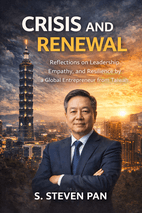
5 Main Takeaways from Crisis and Renewal
Crises Are Catalysts for Innovation, Growth, and Strategic Clarity
The book shows how the pandemic forced Regent Taipei to rapidly implement digital transformation and launch new revenue streams like gourmet meal kits, turning a threat into an opportunity for reinvention. By reframing adversity as a necessary season for growth, organizations can uncover hidden potential and emerge with renewed focus.
Empathy is a Strategic Pillar for Loyalty, Innovation, and Service
Treating employees and customers as you wish to be treated—such as avoiding layoffs during crises—builds unwavering loyalty and drives practical innovations like safety tech partnerships. This empathetic approach, codified as a core value, empowers teams to deliver exceptional service and identify commercial opportunities from deep customer needs.
Continuous Transformation Builds Resilience and Adaptability in Changing Times
Sustainable success requires shedding outdated models, as seen with independent profit centers that foster agility, and embracing a learning culture that evolves through challenges. Like a butterfly molting, organizations must repeatedly reimagine their business, using crises to accelerate change and ensure long-term relevance.
Purpose Beyond Profit Drives Decisions, Value, and Lasting Legacy
A clear, values-based purpose—such as creating happiness or acting as an urban resort—guides principled decisions and focuses on creating value for all stakeholders. This foundation supports sustainability initiatives, authentic design, and a brand legacy rooted in human experiences rather than mere financial gains.
Decentralize Leadership and Cultivate Talent to Foster Entrepreneurial Ownership
Transforming departments into independent profit centers empowers frontline leaders to think like entrepreneurs, spurring innovation and reducing waste. By investing in internal talent development and servant leadership, organizations build a resilient culture where accountability and collaboration thrive.
Executive Analysis
The five takeaways interconnect to form the book's central thesis: that profound crises are not mere threats but essential catalysts for organizational renewal when met with empathetic leadership, a purpose-driven culture, and continuous adaptation. Through the lens of Regent Taipei's journey, the argument demonstrates how embedding these principles—from seeing opportunity in adversity to decentralizing authority—enables businesses to transform challenges into strategic clarity, innovation, and lasting legacy.
This book matters because it provides a practical, philosophical blueprint for leaders in hospitality and beyond to build antifragile, human-centric organizations. By blending real-world case studies with insights from Taoism and design thinking, it elevates crisis management into a holistic discipline of renewal, offering actionable strategies for fostering resilience, loyalty, and sustainable growth in an unpredictable world.
Chapter-by-Chapter Key Takeaways
Prologue | Crisis as Catalyst (Prologue)
Crisis as Opportunity: Effective organizations and leaders learn to perceive crises not as pure threats, but as pivotal moments that reveal opportunities for growth, innovation, and strengthening team cohesion.
Empathy as a Strategic Pillar: The principle of treating others as you wish to be treated is not just a moral stance but a practical leadership tool that empowers employees, builds unwavering loyalty, and drives exceptional service, especially under pressure.
Continuous Transformation is Essential: Like a butterfly molting, sustainable success requires a willingness to shed outdated models and adapt continuously. Resilience is built through repeatedly reimagining the business in the face of challenges.
Purpose Drives Resilience: A clear, values-based purpose beyond profit provides the "why" that allows organizations to endure hardship, make principled decisions (like avoiding layoffs), and focus on creating lasting value for all stakeholders.
Leadership in Adversity: True leadership is exemplified by presence, trust in teams, and a commitment to employee welfare, which in turn fuels innovation and operational strength during and after a crisis.
Try this: Reframe every crisis as a hidden opportunity for growth and team cohesion by leading with empathy and a clear, values-based purpose.
Chapter 1 | Foundations (Chapter 1)
Innovative business models, like independent profit centers, can establish a lasting competitive advantage by fostering agility and unique brand identities.
Organizational resilience is cultivated by reframing crises as opportunities for strategic reinvention and growth.
Leadership grounded in empathy and courage strengthens team morale and long-term stability, especially during adversity.
Personal development and corporate evolution are deeply interconnected, necessitating continuous learning and cross-disciplinary engagement.
Crises provide invaluable moments for philosophical reaffirmation and self-awareness, driving meaningful personal and organizational change.
Try this: Integrate personal development with business model innovation, using adversity to reaffirm core values and foster cross-disciplinary engagement.
Chapter 2 | First Transformation (1998–2003) (Chapter 2)
Strategic Diversification: Post-crisis growth came from proactively extending services beyond the hotel’s physical walls through new F&B concepts and strategic acquisitions like Domino’s.
Culture as Strategy: Empathy was codified as the organization’s core value, shifting from a crisis-response tactic to the guiding principle for all operations and leadership decisions.
Crisis Forges Character: The period proved that enduring challenges like corporate governance battles and a pandemic do more than test operations—they reveal and solidify an organization’s fundamental character, creating a resilient foundation for the future.
Try this: Codify empathy as your central organizational value to guide strategic diversification and build character through enduring challenges.
Chapter 3 | Global Expansion (2008–2018) (Chapter 3)
The Taoist principle of wu-wei is reinterpreted as proactive, selfless action, a guide for leadership and personal conduct.
Blessing and adversity are an inseparable, cyclical duality; the potential for one always resides within the other, making immediate judgment unwise.
Resilience is forged by perceiving challenges as necessary seasons for growth and by finding the creative potential that exists at the boundary between opposites.
Self-awareness and peace of mind are prerequisites for transforming crises into opportunities for meaningful change.
A fulfilling life, like a successful business, requires continuous learning, spiritual enrichment, and the harmonious blending of diverse elements, much like a curated playlist.
Try this: Practice proactive, selfless action (wu-wei) and embrace the cyclical nature of blessing and adversity to foster resilience and self-awareness.
Chapter 4 | The Ultimate Test (2020–2021) (Chapter 4)
Liquidity as a Strategic Shield: The pre-emptive sale of a non-core asset (Domino's) provided the essential financial buffer to survive a prolonged crisis without sacrificing the core asset: people.
Crisis as a Catalyst for Digital Change: The lockdown forced the rapid implementation of a long-envisioned digital transformation, opening new revenue streams and democratizing the brand for a broader local audience.
The Power of Ecosystem Advocacy: Surviving alone was insufficient; advocating for industry-wide government support and assisting partners ensured the entire business ecosystem could recover.
Humility and Cocreation as Fuel for Innovation: A willingness to learn from sister companies and empower employees across departments to collaborate broke down silos, sparked innovation, and unlocked hidden potential.
Empathy as a Business Driver: Understanding customer fears (safety) and desires (restaurant-quality at home) and employee potential led to practical innovations, from safety tech partnerships to gourmet meal kits, that drove commercial success.
The pandemic's trials culminated in a period of profound gratitude and strategic clarity. Thanksgiving 2021 became a moment to acknowledge the collective effort that turned a crisis into a catalyst for positive transformation. This journey demonstrated that a pandemic need not be an economic death sentence but could instead be an invaluable opportunity to shed limitations and reimagine a path forward.
Crisis as Catalyst: A profound crisis can be transformed from a threat into an unparalleled opportunity for innovation, strategic clarity, and organizational rebirth.
Core Identity is Key: Survival and growth often require returning to and fully embracing your foundational DNA—for Regent Taipei, this meant reactivating its original purpose as an urban resort.
Empathy-Driven Renewal: Sustainable transformation requires a system with empathy at its center, fostering a learning culture, practical models, and execution power aimed at genuine well-being.
Innovation Through Immersion: Groundbreaking offerings, like the land cruise, succeed by creating fully immersive, experiential escapes that fulfill deep-seated consumer desires for novelty and depth.
Culinary Excellence as Legacy: A commitment to culinary heritage, ingredient quality, and constant innovation, supported by empowering leadership, becomes a central pillar of brand identity and customer loyalty.
Try this: Use crisis to accelerate digital transformation and cocreate with employees, leveraging empathy to identify new commercial opportunities from customer fears and desires.
Chapter 5 | Designing for Meaning (Chapter 5)
Deep Cultural Integration is a Brand Differentiator: Properties like Just Sleep Tainan and Wellspring Beitou show that authentic, design-driven storytelling rooted in a location’s history and environment creates powerful, marketable experiences.
Hospitality Extends Beyond Physical Walls: SHG treats its expertise as a platform, successfully launching cultural destinations (Silks Palace), consumer products (beef noodles), and mobile experiences (Moving Kitchen), thereby expanding revenue streams and brand reach.
Innovation Through Strategic "Reuse": A core creative mindset involves reimagining and reapplying existing strengths—whether culinary skills, brand equity, or operational models—to enter new markets or create novel offerings.
Design and Development are Intertwined: Leadership that blends aesthetic vision with shrewd real estate strategy, as exemplified by Ralf Ohletz, can create commercially successful new product lines like branded residences, elevating the entire group’s portfolio.
Authentic design goes beyond aesthetics to platform and promote local culture, as seen in artist residencies and architectural homage.
True mastery in design is demonstrated by continuous evolution and the ability to create timeless, modern classics that empathetically integrate art into human experience.
The most impactful hospitality spaces are often the result of deep collaboration between visionary clients and master designers, united by a shared cultural purpose.
Try this: Extend your brand by authentically integrating local culture into design, reusing core competencies to create immersive experiences beyond physical walls.
Chapter 6 | Leading from Within (Chapter 6)
Decentralization Drives Ownership: Transforming departments into independent profit centers empowers frontline leaders to think like entrepreneurs, fostering accountability, reducing waste, and spurring innovation.
Focus is a Strategic Discipline: Success requires filtering out noise to concentrate on what matters most, a principle that applies equally to personal leadership, complex negotiations, and long-term organizational strategy.
Talent is Cultivated, Not Just Hired: Building a resilient organization means investing in internal talent development, valuing diverse backgrounds, and providing pathways for passionate individuals to grow into leadership roles.
A Learning Culture is Built Through Osmosis: Formal education is supplemented by creating open forums for shared learning, where inclusive meetings and exposure to strategic discussions allow culture and best practices to be absorbed organically.
Legacy is Built on Servant Leadership: Sustainable success is rooted in honoring and emulating leaders who lead with humility, consistency, and a deep commitment to mentoring others, embedding those values into the organization's identity.
Try this: Decentralize authority into independent profit centers to cultivate entrepreneurial talent and build a learning culture through open collaboration and osmosis.
Chapter 7 | Legacy Through Sustainability (Chapter 7)
Sustainability as DNA: Meaningful, long-term sustainability is not a program to be launched but a culture to be nurtured. Formal certifications are most effective when they validate preexisting, deeply embedded practices.
Crisis Drives Evolution: External shocks like SARS and COVID-19, while challenging, can serve as powerful catalysts for innovation, forcing a reexamination of purpose and accelerating the integration of new concepts like tech-enabled wellness.
Well-Being is Holistic and Marketable: True well-being addresses physical, mental, and spiritual needs. When curated authentically—as with the Wellspring Spa—it becomes a powerful brand legacy and a viable, beloved product line that extends beyond the hotel's walls.
Empathy is the Core Algorithm: A simple, empathetic principle—treating others as you wish to be treated—can serve as an unwavering compass for decision-making across all stakeholder relationships, ensuring integrity and alignment.
Legacy is Human: A brand's legacy is forged not just in policies and awards, but in the quality of human experiences it facilitates, from restoring a guest's sleep to hosting a global celebrity with genuine humility and care.
Try this: Embed sustainability and well-being into your organizational DNA from the start, using crises to innovate and ensure every decision aligns with empathetic principles.
Epilogue | A Philosophy of Hospitality (Epilogue)
The Purpose of Enterprise: True success and personal fulfillment are found not in wealth accumulation, but in creating happiness and well-being for others—employees, guests, and the community.
Adversity as Metamorphosis: Profound challenges, like the pandemic, are not merely obstacles to survive but catalysts for rebirth, innovation, and gaining a renewed perspective on life and business.
Legacy is Built by People: An organization's story is ultimately a collection of human stories. Its longevity and character are forged by the dedication of key leaders, the loyalty of veteran staff, the guidance of mentors, and even the lessons learned from conflicts.
The Hospitality of "Home": The highest aspiration of hospitality is to create a feeling of being "home" for guests, a principle embodied by the decades-long loyalty of elders like Mr. Yung.
Lifelong Learning as a Lifestyle: Continuous learning, curiosity, and a return to foundational virtues are essential attitudes for navigating crisis and leading meaningful renewal.
Try this: Measure success by the happiness you create for others, viewing adversity as a chance for rebirth and committing to lifelong learning and foundational virtues.
Continue Exploring
- Read the full chapter-by-chapter summary →
- Best quotes from Crisis and Renewal → (coming soon)
- Explore more book summaries →