Co-Created Quotes
by Brieane Olson
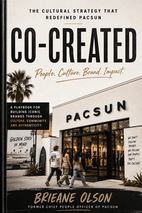
These quotes come straight from a book that tracks a brand's real turnaround story. You'll find lines that cut to the chase about listening to people, letting go of old habits, and building something that actually matters. They feel like hard won lessons rather than corporate speak.
What makes this book so quotable is how grounded everything sounds. The author doesn't dress up the struggles or pretend the answers were easy. Instead, every line offers a clear, honest take on what happens when a company decides to stop guessing and start co creating with the community that wears its clothes.
Top Quotes from Co-Created
“Listen first, build together, and let your community lead the way.”
The author describes the blueprint uncovered during a weekend event that showcased a scalable methodology.
This succinctly captures a collaborative, community-driven approach that is both strategic and inspiring, serving as a guiding principle for brands.
“This transformation wasn't just about what we left behind; it was about what we stepped confidently toward—a vision to inspire, innovate, co-create, and take action alongside the communities we serve.”
The author explains the shift from struggling legacy brand to cultural force.
It emphasizes proactive, forward-looking change and the core values of co-creation and community, making it a powerful statement of purpose.
“It's less about the platforms we use and more about the community we've built, because that community is what will stand the test of time.”
The author summarizes the enduring value of community over specific technologies.
This is a memorable reminder that genuine community outlasts any single platform or trend, reinforcing a human-centered approach.
“We had realized that we could not tell them what was cool; they had to tell us what was cool.”
This insight emerged from the Style Leader program, where the team invited consumers to lead conversations about what they wanted.
It captures a fundamental shift from top-down brand dictation to genuine consumer listening, a lesson that resonates with any organization trying to build authentic relationships.
“This wasn't celebrity licensing; it was genuine collaboration.”
Describing the Jenners' involvement in their Pacsun collaboration.
It concisely distinguishes genuine partnership from superficial celebrity endorsements. This line encapsulates the core theme of the chapter—authentic co-creation.
“Instead of using data to predict what customers would want to buy, we were better off understanding how they actually wanted to express themselves.”
Describes a fundamental shift in Pacsun's approach to consumer insight.
It challenges the traditional data-driven mindset and emphasizes that true understanding comes from listening to how people want to express their identity.
“Younger audiences aren't looking only to professional models or celebrities for inspiration anymore; they want to get it from someone like them, from their community or close to it.”
The author describes a broader trend among Gen Z and Gen Alpha social media users that Pacsun observed.
This line captures the democratization of influence and the shift towards authentic, relatable voices over polished perfection, which is a core insight for modern marketing.
Themes Behind the Quotes
One major theme is the shift from broadcasting to listening. Again and again these quotes show that real growth comes when a brand stops telling people what to want and instead pays attention to how they actually express themselves. This means handing over control, letting customers lead, and treating collaboration as genuine partnership rather than a marketing stunt.
Another theme is the constant need to evolve without losing your core. The quotes wrestle with the tension between honoring a legacy and staying relevant. They argue that purpose and community matter more than quick growth or polished messaging. Ultimately the book keeps returning to the idea that a brand's real value lies in the experiences it creates and the people it empowers, not just the products it sells.
Quotes by Chapter
Prologue | Eleven Thousand Astrids
“Because relevancy is a constantly evolving process. The consumer is always moving, which means the brand is always refining its strategy. And the work of achieving relevancy is never complete, as it requires staying in lockstep with the consumer.”
The author reflects on the ongoing need for brand relevance in a dynamic market.
This passage highlights the dynamic nature of consumer relationships and the perpetual effort required to maintain connection, a timeless insight for any business.
Chapter 1 | Still Selling California
“Pacsun has a very powerful brand legacy. While that can be a good thing, it can prove damaging if that legacy keeps the brand from moving with the currents of change.”
The author reflects on the dual nature of Pacsun's strong heritage.
This captures the paradox of brand legacy: it can be a strength or an anchor, a tension any long-standing brand will recognize.
“Internally, there was a quiet knowing that we were headed down a precarious path.”
The author describes the internal awareness of trouble at Pacsun before any coordinated action was taken.
The phrase 'quiet knowing' evokes a powerful sense of collective intuition and the paralysis that often precedes strategic failure.
“In short: We lacked clarity. Clarity about what our consumers wanted, clarity about how to move forward, and most significantly, clarity about what we stood for as a brand.”
The author summarizes the root cause of Pacsun's struggles after losing its surf-and-skate identity.
This blunt diagnosis lays bare the fundamental crisis of brand identity—a universal lesson for any organization losing its way.
“A brand is much more than a label on a pair of jeans. It also represents a culture, a community, a way of viewing and engaging with the world.”
The author defines what a brand truly means beyond products.
This is a timeless, quotable definition of brand purpose that resonates deeply in an era of purpose-driven consumers.
Chapter 2 | Not Quite Maverick
“There was collaboration but not yet the authentic co-creation that would define our later success.”
The author reflects on the limitations of Project Mavericks, acknowledging progress but noting the absence of true co-creation.
This line succinctly distinguishes between superficial collaboration and deeper co-creation, making it a memorable benchmark for anyone striving for genuine partnership with their audience.
“Here's how we can keep the spirit of Mavericks alive. Keep exploring. Keep collaborating. Keep leading. Keep going.”
This is the call to action from the final pages of the Mavericks book, summarizing the project's intended ongoing spirit.
Its rhythmic, imperative cadence makes it an inspiring and quotable mantra for sustaining momentum in any change initiative.
“Incoming executives often have their own playbook, as they want to do things their way rather than executing someone else's vision.”
The author explains why leadership turnover undermined buy-in for Project Mavericks at Pacsun.
This sharp observation about organizational dynamics is universally relatable, highlighting a common barrier to long-term transformation.
Chapter 3 | Reality Hits Hard
“Many of these locations simply weren't strategically thought out; they were opened just to generate growth instead of as part of a thoughtful market penetration plan.”
This describes the overexpansion of Pacsun's store fleet, driven by growth for its own sake.
It captures the common business pitfall of prioritizing expansion over strategy, making it a cautionary line that resonates with anyone facing growth decisions.
“The optimism that had been the go-to of previous leadership gave way to an authentic assessment.”
This comes after the bankruptcy, reflecting a shift in the company’s internal mindset.
The contrast between blind optimism and honest evaluation makes this a memorable and relatable insight about the maturity required for true transformation.
“Previous efforts had often emphasized one at the expense of the other, either pursuing creative initiatives without financial rigor or focusing so heavily on cost cutting that innovation suffered.”
This appears in the 'LESSON LEARNED' section, summarizing past mistakes.
It articulates a timeless tension between creativity and discipline, offering a balanced take that resonates with leaders in any industry.
Chapter 4 | The Jenner Effect
“When creators have genuine ownership and decision-making authority, the resulting products naturally resonate with their communities, creating sustained engagement that goes further than temporary promotional moments.”
From the 'Lesson Learned' section after discussing the Jenners and Lorenzo partnerships.
It articulates the fundamental principle of successful collaborations. The sentence powerfully connects creator ownership to community resonance and long-term engagement.
“The success demonstrated that when partnerships are built on shared purpose rather than opportunistic reach, both sides experience sustained growth and enhanced brand equity.”
Reflecting on the Jerry Lorenzo partnership with Pacsun.
It provides a clear, memorable summary of the win-win philosophy. This line highlights the strategic shift from transactional deals to purpose-driven partnerships.
“We were becoming known not just as a retailer but as a collaborative partner that could amplify authentic voices while maintaining creative integrity.”
Describing Pacsun's brand evolution after partnerships.
It captures the aspirational identity the company built. The phrase 'amplify authentic voices while maintaining creative integrity' resonates as a mission statement for collaborative brands.
Chapter 5 | Listening Louder Than Ever
“Pacsun saw its role as bringing unique pieces to market while welcoming customers to style them in their own unique ways.”
Contrasts Pacsun's philosophy with brands that try to dictate fashion.
This line encapsulates a brand ethos of empowering individual expression and co-creation rather than imposing a prescribed look.
“Social media transformed our feedback loop from one-directional store reports to real-time, two-way conversations with engaged consumers across Facebook, Instagram, TikTok, Discord, and Reddit.”
Explains how Pacsun leveraged social listening to gather immediate consumer feedback.
It vividly shows the evolution from passive data collection to active, authentic dialogue with a brand's community.
“Authentic co-creation emerges when brands empower voices that already demonstrate genuine connection rather than pursuing partnerships based solely on reach or influence metrics.”
A key lesson from the chapter on how to build meaningful brand relationships.
This principle cuts through superficial influencer marketing and advocates for partnerships rooted in genuine community alignment.
Chapter 7 | Building Digital Muscle
“We are intentionally prioritizing community voices over polished brand messaging because we've learned that genuine peer-to-peer recommendations drive deeper engagement than traditional advertising.”
The author explains Pacsun's strategic pivot toward user-generated content.
It succinctly articulates a counterintuitive but effective strategy—trusting the community more than the brand itself—that resonates in an era of ad fatigue.
“For me, nostalgia is something that hits hard—anything that has memories like Pacsun does, hits hard.”
Emma Chamberlain explains her genuine connection to Pacsun in an interview with Teen Vogue.
This line vividly expresses how emotional attachment to a brand can be rooted in personal history, making the partnership feel authentic rather than transactional.
“Retail space is only as valuable as the experiences and memories it creates.”
A lesson learned from Pacsun's brick-and-mortar revitalization.
It reframes retail from transaction to connection, a powerful reminder for any business investing in physical locations in the digital age.
Chapter 8 | Purpose Can’t Be an Afterthought
“What good was it doing? How were we serving the LA community? Where could we make a change? How were we inspiring our youth?”
The author reflects on the lack of purpose in the celebrity suite experience.
These rhetorical questions challenge the reader to consider the deeper impact of actions beyond buzz, urging a shift to meaningful community service.
“The number one reason kids weren't making it to school was that they didn’t have clean clothing.”
The superintendent of Inglewood schools reveals the primary barrier to student attendance.
This stark, unexpected insight humanizes the business decision, showing how purpose can directly address a real societal need.
“We no longer wanted to be known for curating the best brands and products; we wanted to be known for leading with purpose and inspiring the next generation of youth.”
The executive team presents their new purpose-led vision to the board.
It encapsulates a bold transformation from product-centric to purpose-centric, inspiring other companies to prioritize impact over image.