By the River's Edge Quotes
by Gregg Olsen
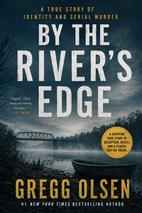
If you're flipping through a collection of quotes from Gregg Olsen's By the River's Edge, you'll find lines that hit hard and stay with you. Some capture the raw reality of life on the margins, while others cut through the noise with sharp truth about violence, survival, and the weight of being forgotten. These are the kind of sentences you underline, screenshot, or whisper to a friend because they say something real.
What makes this book so quotable is its refusal to look away. Olsen writes about victims and survivors with unflinching honesty, never softening the edges or offering easy comfort. The quotes here aren't just memorable; they stick because they name things we often avoid. They remind you that a good line can hold both pain and dignity, and that sometimes the most powerful words come from the hardest places.
Top Quotes from By the River's Edge
“Sticks and stones will break my bones, But names won't ever hurt me. All of that was a lie.”
The narrator reflects on childhood epithets from family and strangers.
It subverts a common saying to reveal the deep, lasting pain of verbal abuse and rejection.
“No one doing the work hunched over in a stranger's car, on the bed in a shithole motel, or crouched down low in some alleyway ever dreamed of being a street hooker.”
Opening lines of the chapter, setting the tone about the women's lives.
This starkly reframes the reader's assumptions about sex work, emphasizing that no one aspires to this life. The visceral imagery of degradation makes the line unforgettable.
“Pretty is never in the cards when days and nights are made up of transactions that are both very personal and not very personal at the same time.”
Reflection on the paradoxical intimacy and detachment of prostitution.
This line distills the emotional and psychological toll of the work into a single, haunting contradiction. Readers feel the dehumanizing nature of the trade.
“Being dumped like trash along the river said nothing about her worth as a person but, in fact, spoke volumes about the perpetrator who'd left her there.”
The narrator reflects on how Yolanda Sapp's body was found on the riverbank.
This line powerfully reframes the victim's dignity and shifts blame to the killer, offering a compassionate yet damning observation about the crime.
“The shadow of a killer loomed, one who was quickly making Spokane's grittiest streets his hunting ground.”
Narrative summary after detectives realize the similarities between Nickie's murder and Yolanda Sapp's.
This ominous line sets the tone for a serial predator, evoking a sense of pervasive danger and the urgency of the investigation.
“Nickie was with the same man for eleven years. She cleaned her home and cooked meals and went to the store just like anyone else. I don't think people realize that.”
Diane Matney, Nickie's mother, speaking to The Spokesman-Review about her daughter's life.
It powerfully humanizes a victim often reduced to a statistic, reminding readers that behind the headlines was a person with everyday routines and relationships.
“The curse on the women of the streets in Spokane continued to be relentless and merciless.”
Narrator describing the ongoing pattern of murders of prostitutes in Spokane after the discovery of two more bodies in 1997.
This line captures the tragic inevitability and systemic violence faced by marginalized women, evoking a sense of hopelessness and anger.
Themes Behind the Quotes
A central theme running through these quotes is the dehumanization of women caught in the cycle of street prostitution and the urgent need to see them as full people. The book pushes back against victim blaming, insisting that a woman's worth is not defined by her circumstances or how she died. Another thread is the relentless violence and trauma that shapes entire lives, where the past becomes quicksand and escape feels impossible. The shadow of a predator hunting the most vulnerable underscores a justice system that often fails to protect or even care.
Alongside this darkness is a current of resilience and the small, fierce acts of defiance. Women dream of normalcy, of protecting their children, of breaking free even as fear and failure stalk them. The river itself becomes a symbol of both beauty and cruelty, a place of death that speaks volumes about the perpetrators, not the victims. Ultimately, these quotes echo a demand for accountability, for the truth to be told, and for the lost to be remembered not as statistics but as someone's daughter, someone's friend.
Quotes by Chapter
Prologue
“His entire life had been an exercise in unchecked violence, paralyzing fear, and severe trauma.”
Describing the protagonist's upbringing.
This sentence powerfully summarizes a lifetime of suffering in one concise, devastating line.
“She'd slayed the monster. Put an end to a nightmare—hers and the other women who had passed through her former life.”
After the surgery, Donna leaves behind her former identity.
Captures the violent, cathartic rebirth and the dismissal of a painful past, framing the transformation as a slaying of an inner monster.
Chapter One
“They were mired in a cycle that they all accepted likely had no happy ending. And when the ending came, most knew it wasn’t going to be pretty.”
Describes the resigned fatalism of the women in the Circle.
The blunt acceptance of a violent or tragic fate captures the hopelessness and systemic cruelty these women faced. The repetition of 'ending' drives home the inevitability of their suffering.
“News like that is water. It seeps everywhere—and quickly—starting as a trickle, then a deluge.”
Describes how word of Yolanda's murder spread among the women on the streets before the media reported it.
The simile is both poetic and chilling, showing how the threat of violence permeates the community. It evokes an unstoppable, inevitable spread of fear and grief.
Chapter Two
“There was no victim blaming or shaming going on from those investigating her death, especially by Detective Lundgren, who adamantly insisted that what Yolanda did for a living, while illegal, wasn’t an excuse to dismiss what happened to her as a cost of doing business.”
The narrative describes the detectives' approach to Yolanda's murder investigation.
It highlights a rare and admirable stance among law enforcement, resisting the temptation to dehumanize a victim based on her profession.
“It was a job. It wasn’t all that the women were—or how they saw themselves.”
The author explains how those outside East Sprague Avenue misunderstood the sex workers.
This succinct, humanizing statement challenges stereotypes and reminds readers that no one is defined by their worst circumstances.
“Yolanda was doing her best—and that was that.”
Yolanda's mother describes her daughter's efforts to care for her children and straighten out her life.
This simple, empathetic sentence captures the tragic reality of someone caught in a cycle of struggle, evoking profound sympathy.
Chapter Three
“It looks like Nickie,” Diane said, shaking her head, “but I don’t think it's her.”
Nickie's mother says this while viewing a Polaroid of the victim, desperately hoping for a mistake.
This line poignantly captures the painful denial and fragile hope of a mother confronting unthinkable loss.
Chapter Four
“There are no leads and no suspects.”
Lieutenant Jim Hill, head of the Major Crimes Unit, speaking to the press about the murder investigation.
This blunt statement conveys the frustrating dead end in the case, highlighting the lack of progress despite the obvious similarities.
“The gaze was a barbed hook on both ends.”
The narrator describing how prostitutes on East Sprague use eye contact to attract customers.
The phrase captures the dual nature of the gaze—both an invitation and a trap—reflecting the dangerous vulnerability of the women.
“He said he had been a cop for two months in 1973 but was fired for backing his car into a telephone pole.”
A suspect named Patrick explaining his brief, inglorious police career to detectives.
The absurdly minor reason for being fired undercuts his credibility and adds a darkly comic note to the otherwise grim investigation.
“It's frustrating just thinking that they are.”
Diane Matney, Nickie Lowe's mother, expressing her frustration to a reporter about the likely connection between the murders.
The simple, exasperated statement resonates as a parent's anguish and the common-sense conclusion that the murders are linked.
Chapter Five
“I want to do this right! I don’t want to make any trouble. I want what is good for the girls. I am afraid, as well as excited about my new life. Fear of failure as well as fear of success!”
From Kathy's unsent letter to her daughter Kaishea.
Shows her determination and vulnerability as she tries to rebuild her life, acknowledging her fears and hopes.
“The truth was, Kathy’s world had always been like quicksand, pulling her back even as she tried to claw her way out.”
Narrative reflection after Kathy disappears from her brother's truck.
A powerful metaphor for the inescapable pull of her troubled life, resonating with anyone trapped in a cycle.
“She wasn't after pity. She only wanted to feel normal for a little while.”
Describing Kathy's visit to her sister.
Highlights her deep need for normalcy and human connection, not pity.
“Kathy had slipped out quietly, vanishing into the night like a ghost.”
After a traffic stop, Kathy disappears.
Evokes a haunting image of her slipping away, foreshadowing her fate.
Chapter Six
“Mattias,” she called, her voice tight. “I think I see... a leg.”
Amy Kirby calls out to Mattias after freezing at the sight of a leg.
This line captures the moment of horrific discovery, the abrupt shift from routine to terror, and the chilling understatement of 'a leg' that hints at the full horror.
“Obviously, there are similarities,” the sheriff said. “It's a young female, she’s nude, and she’s by the river. We've asked the city detectives to come down here, but I can’t tell you that it is connected.”
Sheriff Erickson speaks to reporters at the scene, acknowledging similarities but stopping short of declaring a serial killer.
This quote embodies the cautious official response to a potential serial killer, highlighting the tension between obvious patterns and the need for evidence, and it resonates with the public's anxiety.
“The police had no suspects in either murder.”
The concluding line of the chapter after Lieutenant Hill's assessment.
This stark, simple sentence delivers a devastating and ominous conclusion, leaving readers with the unsettling reality of an unsolved case and the implication of a serial killer at large.
Chapter Seven
“Her mom loved the Spokane River, maybe more than any other place in the world. Having been dumped there by some creep seemed especially cruel.”
Kaishea reflecting on the irony of where her mother Kathy Brisbois's body was found.
The juxtaposition of a beloved place with a violent death creates a poignant, gut-wrenching image that underscores the tragedy.
“This isn’t how I’m going to live. When I grow up, I’m going to make sure my kids don't go through this shit.”
Kaishea, as a young girl, resolving to escape the cycle of addiction and neglect she witnessed.
It shows resilience and determination born from trauma, and the raw, unfiltered language makes the vow feel authentic and deeply moving.
Chapter Eight
“The only way to stop a serial killer is to arrest him.”
Lieutenant Hill admitting the harsh lesson learned by detectives who have chased serial killers, as reported in the text.
It's a stark, almost obvious truth that cuts through the procedural noise, emphasizing the grim finality required to end such crimes.
“The young women deserved better. Their families deserved answers too.”
Narration reflecting Jim Hansen's feelings after retiring with the murders still unsolved.
These simple, direct sentences humanize the victims and their families, giving emotional weight to the long, unsolved case and underscoring why the hunt mattered.