Burn Key Takeaways
by Herman Pontzer
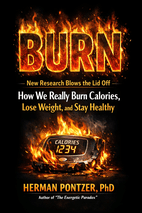
5 Main Takeaways from Burn
Human metabolism is adaptive, not a simple calorie-burning engine.
Our bodies actively adjust energy use in response to diet and activity, which is why strict 'calories in, calories out' strategies often fail. This is evident in how the body compensates during exercise or starvation, as shown by studies of hunter-gatherers like the Hadza.
Modern sedentary life conflicts with our evolved high-energy physiology.
We evolved for active, cooperative hunter-gatherer lifestyles, but today's inactivity and processed foods create a mismatch that drives obesity, diabetes, and heart disease. The Hadza's constant movement contrasts sharply with our convenience-driven environments.
Exercise is vital for health but ineffective for significant weight loss.
Physical activity regulates metabolism, reduces inflammation, and prevents disease, but the body compensates by lowering energy use elsewhere, limiting weight loss. However, it remains crucial for longevity, as seen in traditional cultures.
Whole foods beat processed calories for satiety and metabolic health.
Diets based on minimally processed items—like tubers, berries, and lean meats—support natural hunger signals and prevent overeating, unlike hyper-palatable processed foods that disrupt energy balance. This mirrors the diverse diets of traditional societies.
Solving health and sustainability crises demands personal and systemic change.
We must redesign food systems, promote physical activity, and transition to renewable energy, learning from cultures like the Hadza. This involves both individual actions and policy shifts to address metabolic mismatch and fossil fuel dependence.
Executive Analysis
Herman Pontzer's 'Burn' argues that human metabolism is an evolved, dynamic system optimized for the high-activity, socially collaborative lives of hunter-gatherers, not the sedentary, processed-food environments of today. This mismatch drives the epidemics of obesity, diabetes, and heart disease. The key takeaways—from the adaptive nature of metabolism to the limits of exercise for weight loss—reveal how our bodies actively manage energy through compensation and constraint, challenging simplistic 'calories in, calories out' models and emphasizing the need for an evolutionary perspective.
This book matters because it debunks pervasive health myths, grounding advice in rigorous science like doubly labeled water studies and cross-cultural research. It shifts focus from individual willpower to systemic factors, advocating for whole-food diets, integrated movement, and societal changes. In popular science, 'Burn' bridges anthropology, physiology, and public health, offering a holistic, actionable framework for personal and planetary well-being.
Chapter-by-Chapter Key Takeaways
The Invisible Hand (Chapter 1)
For hunter-gatherers like the Hadza, energy is a tangible, daily currency of survival, acquired through skill and risk, framing life within a simple equation of acquisition versus expenditure.
Modern understanding of metabolism is plagued by widespread misinformation and an outdated, simplistic model of the body as a passive fuel-burning engine.
Human metabolism is actually a dynamic, evolved system that adapts actively to diet and activity, which explains why straightforward “calories in, calories out” strategies often fail.
Studying populations living traditional lifestyles provides crucial insights into human metabolic health and the roots of modern “diseases of civilization.”
The long-standing consensus that all mammals have similar metabolisms was flawed, based on limited BMR data.
Direct measurements revealed orangutans have extraordinarily low daily energy expenditure, an adaptation to food-scarce rain forests that also explains their slow life history and extinction vulnerability.
This finding expanded into a major discovery: all primates burn calories at about half the rate of other placental mammals.
Humans break the primate pattern, having evolved a significantly faster daily metabolic rate than any other ape.
This accelerated human metabolism, coupled with increased fat storage, helped fuel our unique suite of traits (big brains, active lifestyles, unique life history) and sets the stage for investigating metabolism across human cultures.
Our sedentary, convenience-driven modern lifestyle creates a direct conflict with our bodies' evolved need for constant activity.
The major non-communicable diseases of our time (obesity, diabetes, heart disease, etc.) are direct consequences of this energy expenditure mismatch.
Effective solutions require moving beyond a simplistic "calories in, calories out" model to understand metabolism through an evolutionary lens.
True management of health demands a deep exploration of how our metabolic systems actually work, not how we wish they worked.
Try this: Embrace that your metabolism is a dynamic, evolved system and avoid simplistic 'calories in, calories out' thinking for better health management.
What Is Metabolism Anyway? (Chapter 2)
Carbohydrate Quality Matters: High-fiber, complex carbs lead to a slower, more stable release of blood sugar and nourish the critical gut microbiome, while simple sugars cause sharp spikes.
Storage is Hierarchical: The body first uses carbs for immediate energy, then tops off limited glycogen stores. Any persistent excess is efficiently converted and stored as body fat.
Fat Digestion is a Masterclass in Logistics: The body uses bile to emulsify fats and the lymphatic system to transport them, ultimately storing triglycerides in fat cells as a high-density energy reserve.
Proteins are for Building: Their primary role is constructing and repairing tissues; they are only a minor energy source, and excess intake is simply converted to urea and excreted.
All Paths Lead to ATP: Whether from carbs, fats, or proteins, the energy in food is ultimately harnessed to recharge ATP molecules through the coordinated processes of glycolysis, the Krebs cycle, and oxidative phosphorylation in the mitochondria.
Metabolic Pathways are Bidirectional: The body can convert excess sugar into fat for storage, and under low-carb conditions, it can burn fat and produce ketones for fuel, demonstrating the flexibility of our metabolic "transit system."
There are no metabolically "innocent" calories. All excess energy intake, regardless of source, is stored as fat.
Nature is not benevolent. Understanding metabolism and evolution requires abandoning romantic notions of nature. Life is a competitive struggle for energy, driven by amoral, evolutionary self-interest.
Our metabolic power is a gift from ancient bacteria. The mitochondria in every one of our cells are descended from symbiotic bacteria that learned to harness poisonous oxygen, an innovation that enabled the explosive evolution of complex animal life.
A universal framework. All animals share the same core metabolic machinery (glycolysis, the Krebs cycle, oxidative phosphorylation), which evolution has then tweaked and specialized over billions of years to create today's staggering biological diversity.
Try this: Prioritize whole, high-fiber carbohydrates and diverse macronutrients to fuel your body efficiently and support gut health.
What Is This Going to Cost Me? (Chapter 3)
The Doubly Labeled Water Revolution: Technological advances in the 1980s made Lifson's method affordable for human studies, unlocking the ability to accurately measure daily energy expenditure during normal, free-living life and overturning many previous assumptions.
Size and Composition are King: Your total daily energy expenditure is primarily determined by your overall body size and your proportion of lean versus fat tissue, not by activity alone. Larger bodies burn more total calories, but lean tissue is far more metabolically active than fat.
Substantial Individual Variation Exists: Even after accounting for body size and sex, there is significant natural variation in metabolic rate between individuals. The concept of inherently "fast" or "slow" metabolisms is supported by data, meaning standard calculators provide only a rough estimate.
Try this: Focus on building and maintaining lean muscle mass through strength training, as it is the primary driver of your daily calorie burn.
How Humans Evolved to Be the Nicest, Fittest, and Fattest Apes (Chapter 4)
The human commitment to sharing enabled the division of labor, our uniquely long and dependent childhood, and our high-productivity adult metabolism, allowing us to reproduce faster than other apes.
Evolution is not progressive; other hominin species thrived for millennia without developing our particular suite of traits. Our survival over species like Neanderthals may be due to hyper-cooperation ("self-domestication") rather than superior intelligence.
Our evolved in-group sociality has a dark side, fueling tribalism, dehumanization of outsiders, and history's great atrocities. Overcoming this instinct is a central moral challenge.
Our high-energy metabolism, adapted for an active hunter-gatherer lifestyle, is mismatched with modern sedentary environments, making us uniquely prone to obesity and metabolic diseases when physical activity is low.
Try this: Foster strong social bonds and community engagement, recognizing that cooperation is part of our evolutionary heritage for health and resilience.
The Metabolic Magician: Energy Compensation and Constraint (Chapter 5)
The hypothalamus acts as a "Darwinian manager," using hormonal and neural signals to run evolved algorithms that control metabolism, hunger, and energy allocation.
During energy deficits (starvation) or sustained high output (exercise), the body compensates by slowing metabolism, suppressing non-essential functions like reproduction and immunity, and adjusting hunger to defend a stable weight.
Obesity is fundamentally caused by consuming more energy than we expend, but it is best understood as a breakdown of our evolved metabolic management system in a novel, food-abundant environment, not simple gluttony.
While "a calorie is a calorie" in terms of physics, different foods interact with our metabolic algorithms in distinct ways, affecting hunger and fat storage.
Exercise, while limited in its ability to drive weight loss due to metabolic compensation, is critically important for overall health and disease prevention.
Try this: Understand that your body resists weight change, so for weight loss, concentrate on creating a consistent calorie deficit rather than relying solely on exercise.
The Real Hunger Games: Diet, Metabolism, and Human Evolution (Chapter 6)
There is no single, universal "Paleo diet." Humans have thrived on a wide range of diets, and using recent, specialized cultures as ancestral models is misleading.
Human genetics reveal our adaptability, with populations evolving traits like lactase persistence or increased starch digestion in response to local diets—sometimes in counterintuitive ways (e.g., the Inuit mutation preventing ketosis).
Most claims about metabolism-boosting "superfoods" or "detox" products are not supported by evidence.
The intense debate over fat versus sugar as the primary cause of obesity is not settled by the carbohydrate-insulin model. Rigorous studies show that when calories are equated, low-carb and low-fat diets result in similar weight loss and metabolic effects. The fundamental driver of obesity is excess calorie intake, not a specific macronutrient demon.
Embrace Dietary Simplicity: Healthy eating doesn't require exotic foods; it hinges on whole, minimally processed items like tubers, berries, and lean meats that are naturally high in fiber and protein.
Cultivate a Healthy Food Environment: Avoiding processed foods with added sugars and fats is crucial, as these products drive overeating and metabolic dysfunction, unlike the Hadza's naturally limiting food landscape.
Focus on Satiety and Sustainability: Choose foods that keep you full, and find a dietary pattern that allows for weight management without deprivation, using simple tools like a scale for feedback.
Integrate Movement for Health: While exercise may not aid weight loss, it is essential for metabolic well-being by optimizing how energy is used, highlighting the need to incorporate physical activity into daily routines.
Try this: Adopt a simple diet centered on whole, minimally processed foods that promote satiety, and avoid hyper-palatable processed items that drive overeating.
Run for Your Life! (Chapter 7)
Marketing exercise primarily for weight loss is a flawed strategy that can lead to public disillusionment when results are lacking.
A more sustainable and honest message is that exercise is essential for longevity and overall health, even if it is not a reliable tool for significant weight loss.
Exercise acts as a fundamental regulator for the entire body, with its benefits explained in part by the body's need to adapt within a constrained daily energy budget.
The phenomenon of extreme human endurance does not contradict the energy constraint model but will be explained by shared metabolic machinery used in other high-energy life processes.
Humanity's total energy use has grown beyond individual physiological limits, becoming a defining—and potentially threatening—feature of our modern world.
Try this: Incorporate regular physical activity into your daily routine for its systemic health benefits, regardless of its impact on weight.
Energetics at the Extreme: The Limits of Human Endurance (Chapter 8)
The ultimate limit on human endurance for events lasting days or longer is digestive: the body can only absorb about 2.5 times basal metabolic rate (∼4,000–5,000 kcal) per day.
Weight loss during prolonged exertion signals the brain to induce fatigue, making calorie absorption a key factor in performance.
These metabolic constraints influence pregnancy, likely helping trigger birth to prevent overly large babies, and explain why daily energy expenditures are similar across diverse populations worldwide.
Myths about elite athletes like Michael Phelps consuming vast amounts of food often exaggerate reality; even top performers operate near, but not beyond, human physiological limits.
Enhanced metabolic capacity in humans evolved through natural selection for multiple advantages, including endurance, reproduction, and daily activity, reflecting the interconnectedness of our biology.
Our species' future hinges on managing external energy sources, learning from cultures that live sustainably within metabolic boundaries.
Try this: For endurance activities, ensure you consume enough calories to fuel your effort, but recognize that absorption limits performance, so pace your intake.
The Past, Present, and Uncertain Future of Homo Energeticus (Chapter 9)
Human metabolism cannot be separated from our use of external energy; the calories in food and the energy in fuel are fundamentally the same unit.
Simple tools represent the first step, allowing humans to focus and concentrate their bodily energy more effectively.
The control of fire was a transformative leap, providing an external energy source for warmth, safety, and, crucially, cooking. Cooking increased calorie intake and led to evolutionary adaptations, making humans physiologically dependent on it.
The domestication of plants and animals allowed humans to harness and reshape the metabolisms of other species, creating more abundant and accessible food sources and new sources of mechanical work (draft animals).
Each expansion of our external energy economy—through fire, agriculture, and animal labor—has directly translated into increased reproductive success, demonstrating the deep evolutionary link between energy capture and fitness.
Industrial agriculture, powered by fossil fuels, is massively productive but energetically inefficient, burning 8 calories for every 1 food calorie produced.
Cheap energy has made processed, calorie-dense foods the most affordable, contributing directly to overconsumption and the obesity pandemic.
Our species' total energy consumption is unsustainable; fossil fuel depletion and climate change present existential threats that demand a rapid transition to renewable and nuclear energy.
Solving health and sustainability crises requires systemic changes—like smarter subsidies and food taxes—coupled with personal strategies to engineer less obesogenic environments.
Modern sedentary lifestyles are a health hazard that require systemic, environmental solutions, not just individual exercise.
Socioeconomic inequality is a major, independent driver of poor metabolic health that must be addressed holistically.
Modern life has eroded critical protective factors like strong community bonds and regular time spent outdoors.
Traditional cultures like the Hadza demonstrate resilience and offer valuable models for integrating physical activity, community, and connection to the environment.
There is cause for optimism; applying our creativity to learn from the past can help us design a healthier future.
The human body's energy use can be measured precisely, revealing the caloric cost of everything from organ function to arm-swinging.
Our evolutionary success is deeply tied to a high metabolic rate that supports cooperation, large brains, and rapid reproduction, funded in part by our unique propensity to store fat.
The Doubly Labeled Water method revolutionized the study of human energetics, providing objective data on real-world calorie expenditure.
A landmark finding is that total daily energy expenditure is constrained; the body adapts metabolically to increased physical activity, which helps explain the complex relationship between exercise and weight management.
The body tenaciously defends a set weight range through metabolic adaptations that resist weight loss more strongly than weight gain.
No singular "ancestral" human diet exists; our species is defined by dietary flexibility and rapid genetic adaptation to new food sources.
For weight loss, total calorie intake matters fundamentally, while the ratio of carbohydrates to fats in the diet has no significant metabolic effect when protein and calories are equal.
The primary driver of the global obesity epidemic is the hyper-palatable, calorie-dense, processed food environment, which overrides the brain's natural satiety and reward systems.
Simple measures of strength and mobility are powerful predictors of long-term health and survival.
Exercise confers health benefits not just by building fitness, but by acting as an energy constraint, forcing the body to reduce energy spent on harmful processes like chronic inflammation.
There is a U-shaped relationship between vigorous activity and mortality, with clear optimal doses; more is not always better.
Sitting is an independent health risk, even for those who exercise regularly.
Exercise is critical for maintaining a healthy weight but is generally ineffective for significant weight loss on its own due to compensatory metabolic and behavioral adaptations.
All humans, from sedentary office workers to elite endurance athletes, operate under a hard ceiling of sustained energy expenditure of about 2.5 times their basal metabolic rate, a limit shaped by evolutionary trade-offs.
Our fossil fuel-based economy is on an unsustainable timeline, with limited reserves and dire, long-term climatic consequences that threaten global sea levels and human settlements.
While a technical pathway to a zero-carbon future by 2050 exists, it requires transforming not just our energy sources but also our urban design and transportation habits to promote health and sustainability.
The industrialized food system creates a public health crisis by incentivizing the overconsumption of processed foods, exacerbating socioeconomic health disparities, and isolating people from the physical activity and social connections essential for well-being.
We Are Energetic Beings by Design: Human evolution selected for a high-energy, cooperative strategy with a large brain, an active body, and a capacity for endurance. Our metabolism is expectant of this lifestyle.
Modern Life Creates a Metabolic Mismatch: Industrialization has led to an environment of abundance and inactivity that conflicts with our evolved physiology, directly driving the epidemics of obesity, diabetes, and heart disease.
Exercise is Non-Negotiable for Health: Physical activity is not just for weight control; it is a crucial signal that regulates metabolism, reduces inflammation, manages stress, and maintains reproductive health. The hunter-gatherer model suggests frequent, varied, moderate-to-vigorous activity is the norm for which we are adapted.
Diet Quality Trumps Simple Calorie Counting: Highly processed, palatable foods disrupt the body's natural satiety and energy-balance systems. Diets based on whole foods, similar to the diverse diets of traditional societies, better support metabolic health.
The Future Requires Intentionality: Navigating a healthy future as Homo energeticus demands both systemic change—like sustainable energy and food systems—and personal commitment to moving our bodies and eating in a way that honors our evolutionary inheritance.
Try this: Advocate for policies that promote sustainable energy and food systems, while personally designing your environment to encourage movement and healthy eating.
Continue Exploring
- Read the full chapter-by-chapter summary →
- Best quotes from Burn → (coming soon)
- Explore more book summaries →