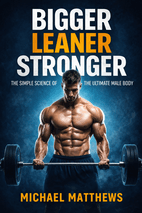
Bigger Leaner Stronger: The Simple Science of Building the Ultimate Male Body Key Takeaways
by Michael Matthews
5 Main Takeaways from Bigger Leaner Stronger: The Simple Science of Building the Ultimate Male Body
Transform Your Body by Building Sustainable Habits, Not Following Short-Term Diets
The book emphasizes that lasting fitness requires a lifestyle shift, not temporary fixes. By using techniques like habit stacking and identifying personal 'whys,' you can create routines that stick, leading to continuous progress without burnout.
Achieve Your Goals with Flexible Dieting and Prioritized Strength Training
Matthews argues that controlling calories and protein while lifting heavy weights is the core of body transformation. This approach allows for food flexibility and ensures muscle growth even during fat loss, debunking the myth that you can't gain strength while cutting.
Ignore Fitness Myths and Trust Proven, Simple Science
The book debunks common misconceptions like meal timing myths and the fear of eating at night. Instead, it focuses on fundamental principles such as calorie balance and progressive overload, which are universally effective regardless of age or starting point.
Meticulously Track Your Workouts and Body Metrics to Drive Progress
By logging weights, reps, and body measurements, you can objectively assess progress and make necessary adjustments. This data-driven approach prevents plateaus and ensures you're always moving toward your goals.
Cultivate Patience and Consistency for Lifelong Health and Confidence
Transformation is a marathon, not a sprint. The book stresses that small, consistent actions compound over time, yielding not just a better physique but also enhanced mental well-being and self-discipline.
Executive Analysis
Bigger Leaner Stronger argues that transforming your body is not about extreme diets or endless cardio, but about mastering a simple, science-based system. This system integrates sustainable habit formation, flexible nutrition centered on calorie and protein control, and prioritized strength training to build muscle and burn fat simultaneously. The book's central thesis is that by rejecting fitness myths and embracing proven principles, anyone can achieve lasting physical and mental improvements.
This book matters because it cuts through the noise of the fitness industry, offering a clear, actionable plan that emphasizes lifestyle over quick fixes. For readers, it provides not just a path to a better physique, but also tools for building confidence, discipline, and health, positioning it as a comprehensive guide for lifelong fitness success in a genre often filled with gimmicks.
Chapter-by-Chapter Key Takeaways
What’s In This For You? (Chapter 1)
The Bigger Leaner Stronger program delivers comprehensive results that extend far beyond aesthetics, encompassing major improvements in strength, body composition, and overall health.
A profound boost in mental and emotional well-being—including confidence, energy, and life satisfaction—is a central and celebrated outcome for participants.
The program provides a clear, understandable framework that empowers individuals to build sustainable, lifelong fitness habits, turning confusion into confidence.
Try this: Identify how fitness will improve your overall life, not just your appearance, to build lasting motivation.
It Works (Chapter 2)
Universal Applicability: The program works for people of all ages, fitness backgrounds, and starting points, proving that the right methodology can overcome past failures.
Strength and Fat Loss Are Compatible: Lifting heavy weights while in a calorie deficit is not only effective but can lead to significant strength gains, debunking common fitness myths.
The Mental Shift is Crucial: Lasting success requires overcoming mental barriers and excuses, transitioning from a short-term diet to a sustainable, lifelong lifestyle.
Trust in Evidence-Based Principles: The program's effectiveness is rooted in proven science and straightforward principles, not gimmicks, which builds trust and delivers reliable results.
Patience and Discipline Pay Off: Transformation is a gradual process that requires consistency, especially in nutrition, and the rewards extend far beyond the physical to include confidence and health.
Try this: Trust that the program works for anyone by committing to its principles and overcoming mental barriers with discipline.
The Promise (Chapter 3)
The body you want is achievable regardless of your starting point, but not through the quick fixes heavily marketed by the fitness industry.
Lasting transformation is built on three simple fundamentals: managing calories/protein, prioritizing whole foods, and consistent strength training.
The book's approach is unique because it prioritizes sustainable lifestyle design over restrictive, short-term tactics.
This program requires a mindset of effort and execution; it is for those ready to work for results, not just wish for them.
The author offers a direct promise of support, positioning himself as an accessible guide rather than a distant expert.
Try this: Reject quick fixes and focus on mastering the three fundamentals: calorie control, whole foods, and strength training.
Who Is Mike Matthews and Why Should I Care? (Chapter 4)
Credibility Through Experience: Mike Matthews' authority comes not from theoretical knowledge alone, but from his own long journey through fitness misinformation and his subsequent, proven success using science-based methods.
The Simplicity of Truth: Effective fitness principles are often straightforward and have been obscured by an industry that profits from complexity and confusion.
A Solution Forged in Failure: The Bigger Leaner Stronger program is presented as the direct solution to the very frustrations and failures Matthews himself endured, making it a practical and empathetic guide.
A Living System: The book is portrayed as a dynamic work, refined through real-world feedback and success stories, emphasizing its practical and results-oriented nature.
Try this: Learn from the author's journey to understand that effective fitness is based on simple, proven science, not industry complexity.
How to Use This Book (Chapter 5)
Action Over Theory: The book is designed as an actionable program, not a theoretical text. Success requires applying the principles, not just reading them.
Momentum is Critical: The recommended approach is to start implementing the program’s steps as you read, as immediate action builds momentum and counters doubt.
Structure Provides a Path: The six-part structure offers a logical progression from mindset to nutrition, training, and finally, supplementary enhancements.
Document Your Journey: Keeping a dedicated journal for meal plans, workouts, and progress is a powerful tool for accountability and motivation.
Flexible Entry Points: You can choose to understand all the theory first or use the quick-start method to begin the practical aspects of the program right away.
Try this: Start implementing the program's steps immediately as you read to build momentum and turn knowledge into action.
Have You Found Your Real Fitness Whys? (Chapter 6)
Sustainable fitness success depends on winning the "inner game" of motivation and mindset, not just knowing the "outer game" of workouts and nutrition.
Your motivation must be personal. Identify and write down your specific, heartfelt "whys"—the real-life experiences and feelings you want fitness to bring.
Create a clear visual goal by saving pictures of an attainable ideal physique to use as ongoing inspiration.
Develop affirmations in the physical, mental, emotional, and spiritual categories to define how you want to feel in a fit body, using positive, present-tense statements.
Regularly review your whys, goal images, and affirmations to maintain focus and resilience throughout your journey.
Try this: Write down your personal 'whys' and create visual goals to anchor your motivation during challenging times.
The Art and Science of Upgrading Your Willpower (Chapter 7)
A wide array of simple, deliberate relaxation techniques can fortify willpower by reducing stress. These include: changing your perception of stress, improving sleep, exercising, reducing media consumption, enjoying aromatherapy, giving/getting massages, listening to classical music, drinking green tea, walking in nature, and taking hot baths.
Fitness is a powerful training ground for willpower; the discipline built there translates directly to meeting work deadlines, financial goals, and other personal ambitions.
While strengthening willpower is crucial, lasting success requires more than just brute-force self-control. It necessitates building an efficient system, with habits as its central component, to sustainably channel and amplify that vital energy.
Try this: Strengthen your willpower by incorporating daily relaxation techniques and viewing fitness discipline as training for all life's challenges.
The Easy Way to Build Good Habits and Break Bad Ones (Chapter 8)
Habit stacking is the powerful technique of anchoring a new habit to an existing, ingrained one (e.g., "After I make my morning coffee, I will meditate for one minute").
The cue for stacking must be carefully chosen by matching location, frequency, and theme/purpose to the new habit for seamless integration.
To find these cues, map your current daily habits and predictable daily events to identify all potential insertion points.
Implementation intentions are most effective when highly specific, detailing the exact time, place, and action to eliminate ambiguity.
If-then planning can proactively address obstacles that might derail your new habits.
Immediate celebration—any small, positive emotional reward—is essential for cementing a new habit by satisfying the brain's craving for the completion of the habit loop.
Try this: Use habit stacking by attaching new fitness habits to existing routines, and celebrate small wins to reinforce them.
The 10 Absolute Worst Diet Myths and Mistakes (Chapter 9)
Vegan and vegetarian diets can be healthy but require careful planning to avoid protein and micronutrient deficiencies. Well-planned omnivorous diets are not less healthy and are often easier to follow for body composition goals.
To build muscle efficiently, a small calorie surplus of 5-10% is optimal. Larger surpluses only accelerate fat gain.
Meal frequency has no significant effect on metabolic rate. The best eating schedule is the one you can adhere to consistently.
Skipping breakfast is neither inherently good nor bad. It is a personal choice with no major metabolic consequences.
Eating at night does not cause weight gain outside of its impact on your total calorie balance. Meal timing strategies should be used to manage hunger, not because calories "count more" at certain times.
Try this: Dismiss diet myths like meal frequency rules and focus instead on your total calorie and protein intake for the day.
Welcome to the Wonderful World of Flexible Dieting (Chapter 10)
Your diet controls body fat and supports muscle; your training builds strength and muscle.
Flexible dieting has four steps: control calories, eat plenty of protein, prioritize nutritious foods, and find your ideal carb/fat balance.
To lose fat, eat fewer calories than you burn; to build muscle, eat more; to maintain, match intake to expenditure.
A high-protein diet is superior for improving body composition.
Eat at least 80% of calories from nutritious, unprocessed foods, using the remaining 20% for treats if desired.
Active individuals, especially those strength training, typically thrive on moderate- to high-carb diets.
Keep saturated fat intake under 10% of daily calories and prioritize getting enough omega-3s.
Support heart health by exercising, maintaining low body fat, getting enough sleep, and not smoking.
Try this: Apply flexible dieting by first controlling calories and protein, then filling the rest with nutritious foods and your preferred carbs/fats.
The Easiest Way to Calculate Your Calories and Macros (Chapter 11)
Verify your macro math by checking that (protein x 4) + (carbs x 4) + (fat x 9) is within ~5% of your calorie target.
Build your diet on a foundation of fruits, vegetables, whole grains, healthy fats, and quality protein sources, primarily from animal foods for muscle building.
Water is your best beverage; drink according to thirst.
You can flexibly include treats, using up to 20% of your daily calories for them.
Start with a cut if your body fat is high (15%+) or you feel overweight; start with a lean gain if you are thin and want size.
Use visual comparison or skinfold testing to estimate body fat percentage.
Cut down to 10-12% body fat; use diet breaks for cuts longer than 8 weeks.
Lean gain up to 15-17% body fat.
Use maintenance phases to preserve a physique you’re happy with.
Try this: Calculate your starting macros based on your goal (cut or gain) and use body fat estimates to guide your phase selection.
The Bigger Leaner Stronger Meal Plan (Chapter 12)
Dietary discipline is required during all phases—cutting, lean gaining, and maintenance—to ensure long-term progress and avoid yo-yo dieting.
You can successfully incorporate restaurant meals and alcohol by choosing simpler dishes, practicing moderation, and accurately accounting for them in your overall intake.
Build your meal plan using a layered method: add protein, then vegetables and other carbs, then healthy fats, and finally treats, tracking your macros at each step.
The objective is to closely approximate your calorie and protein targets, not to hit them perfectly, allowing for flexibility and personal preference in your daily meals.
Simple seasoning techniques using salt, acids, and spices can make a whole-foods diet consistently enjoyable.
Flavor is Your Friend: Use salt intelligently, employ acids to brighten dishes, and explore a wide world of spices to make nutritious food enjoyable.
Treat Meals Are a Tool: Plan for 1-2 treat meals per week to aid compliance. Practice "calorie borrowing" if needed, and aim to stay near your maintenance calories on treat days.
Alcohol in Moderation: Include alcoholic drinks in your treat calorie allowance and consume sensibly (1-2 servings max).
Workout Nutrition Simplified: Focus on total daily protein and calories. Pre-workout protein is mainly important if you're training after a long fast. Post-workout protein is highly recommended, but the timing is flexible based on your last meal. Carbs and fats around workouts are less critical than once believed.
Try this: Build your meals using a layered approach—protein, veggies, carbs, fats—and allow for treats to maintain dietary enjoyment and adherence.
The 10 Absolute Worst Exercise Myths and Mistakes (Chapter 13)
Cardio contributes to fat loss through calorie burn but not as much as often believed. Excessive cardio can interfere with muscle and strength gains by increasing fatigue and disrupting growth signals. A balanced approach that prioritizes strength training is more effective for building a lean, powerful physique.
Isolation exercises are not superfluous. Supplementing compound lifts with targeted isolation work leads to more balanced, symmetrical, and complete muscle growth over time. They also add necessary variety to prevent workout monotony and reduce repetitive stress injury risk.
Try this: Balance your cardio with strength training, and don't shy away from isolation exercises to ensure complete muscle development.
The Ultimate Strength Training Plan for Men (Chapter 14)
Train close to, but not to, muscular failure: stop primary exercises with 1-2 reps left, and accessory exercises with 0-1 reps left.
Rest 2-3 minutes between hard sets to maintain performance.
Deload every eight weeks by reducing intensity or volume to promote recovery and long-term progress.
Use the double progression method to systematically achieve progressive overload.
Always use a full range of motion and strict form for maximum effectiveness and injury prevention.
Employ a controlled, "1-0-1" rep tempo.
Heed pain warnings, progress weights gradually, and prioritize recovery to avoid repetitive stress injuries.
Try this: Train with intensity but stop just short of failure, use proper rest periods, and employ double progression for steady strength gains.
The Best Exercises for Building Your Best Body Ever (Chapter 15)
Primary exercises alone may not fully develop all muscle groups, especially shoulders, biceps, and lats. Accessory exercises enhance growth, boost performance, and prevent imbalances.
While the program includes compound moves that train the core, you can add 2 to 3 sets of ab exercises at the end of legs and pull days if desired.
For faster calf development, include 3 sets of calf exercises at the end of pull and lower body workouts, totaling 6 sets per week.
Try this: Supplement your compound lifts with targeted accessory exercises to address lagging muscle groups and prevent imbalances.
The Bigger Leaner Stronger Workout Program (Chapter 16)
Warm up efficiently with just two light sets on the first exercise for each major muscle group in a workout.
Find your starting weights through practical experimentation, using the 10-pound/2-rep rule as a guide.
Deload every ninth week by performing your normal workouts but doing only 2 sets per exercise with drastically reduced reps (2 for primary, 4 for accessory exercises).
Incorporate 1-3 hours of cardio weekly, focusing on low- to moderate-intensity, enjoyable, and preferably low-impact activities to support health without impeding muscle growth.
Try this: Warm up efficiently with light sets, find your starting weights through practice, and schedule deload weeks to prevent overtraining.
The Right and Wrong Ways to Track Your Progress (Chapter 17)
Effective progress tracking tells you if you're advancing or stalled, allowing you to adjust your diet and training accordingly.
Track body composition by weighing yourself 1-3 times weekly and calculating a bi-weekly average, taking consistent progress pictures every two weeks, and measuring your waist circumference (and other areas if desired) every two weeks.
Track strength training meticulously using a journal or app to record weights, reps, and notes for every workout. This enables progressive overload by providing a clear reference for what to beat in your next session.
Try this: Track your body weight averages, progress photos, and workout logs bi-weekly to objectively measure and adjust your progress.
The Bigger Leaner Stronger Quickstart Guide (Chapter 18)
Start Simple: The only true essentials are a way to measure progress and log workouts. Fancy gear is optional but can be helpful.
Choose Your Arena Wisely: Select a gym you enjoy and can access easily, or invest properly in a home setup if you prefer convenience and control. Consistency is born from an environment that works for your life.
Schedule with Intent: Treat workouts as non-negotiable appointments. Use proactive planning ("what-when-where" and "if-then" statements) to embed them into your life and navigate inevitable disruptions.
Ease Into Week One: The first week is for learning and adaptation, not maximum effort. Using lighter weights prevents excessive soreness and builds sustainable habit momentum.
Reframe Your Nerves: Pre-workout anxiety is normal energy. By telling yourself "I'm excited," you can transform it into a performance enhancer, embracing the challenge ahead.
Try this: Choose a gym you enjoy, schedule workouts as non-negotiable appointments, and start your first week with lighter weights to build habit momentum.
The Smart Supplement Buyer’s Guide (Chapter 19)
A superior multivitamin uses carotenoids for vitamin A, includes 1,500–2,000 IU of vitamin D, and features the active folate 5-MTHF. It will not have uniform 100% RDI levels for all nutrients.
Fish oil (specifically re-esterified triglyceride form) addresses a widespread omega-3 deficiency, supporting heart, brain, and metabolic health at a dose of 500 mg to 1.8 grams of EPA/DHA daily.
Creatine monohydrate is a safe, proven performance enhancer. A simple daily dose of 3–5 grams is effective without the need for a loading phase.
Supplements are optional accelerants, not requirements. A smart foundational plan includes protein powder (as needed), a high-quality multivitamin, fish oil, and creatine, all taken in the context of an already sound diet.
Try this: Consider adding a quality multivitamin, fish oil, and creatine to your diet, but only after establishing a solid foundation of whole foods.
Frequently Asked Questions (Chapter 20)
You can get in outstanding shape at any age. The core principles of diet and training remain the same, but older individuals must be meticulous with form, rest, and planned recovery periods.
Progress is resilient. Missed workouts, travel, and short breaks are minor obstacles, not program-enders. Use flexible strategies and trust that muscle memory will help you rebound quickly from longer layoffs.
Manage hunger with hydration, sleep, and mindful eating. These foundational habits are powerful tools for dietary adherence.
Change your workout routine strategically, not constantly. Provide your body with consistent stimuli for 6-8 weeks at a minimum to force adaptation, and always prioritize your hardest lifts first.
Listen to your body intelligently. Distinguish between mental reluctance and genuine symptoms of overtraining or illness. Soreness is not a prerequisite for growth, but a sustained drop in performance is a sign to rest.
Try this: Adapt the program to your life by listening to your body, planning for disruptions, and knowing that progress is resilient even after breaks.
From Here, Your Body Will Change (Chapter 21)
Lasting fitness success is built on consistency, not perfection. The goal is to be reasonably good most of the time.
The completion of the book is evidence that you have the necessary determination to succeed; the practical "way" has now been provided.
Your physical transformation is an active, ongoing process that will yield both external results and profound internal benefits like confidence and positivity.
You are not alone on this journey. The author offers direct communication and access to a supportive community to help you navigate the path ahead.
Try this: Embrace consistency over perfection, and use the completion of the book as proof of your commitment to change.
Would You Do Me a Favor? (Chapter 22)
The author considers reader reviews and testimonials to be the most meaningful compensation, providing vital feedback and validation.
Sharing personal progress on social media using the designated hashtag helps foster a public community of support.
The most impactful way to support the book's mission is through personal recommendation, by giving the book to someone who would benefit from it.
Try this: Share your progress and reviews to contribute to the community and hold yourself accountable through social support.
Free Bonus Material (Workouts, Meal Plans, and More!) (Chapter 23)
A substantial library of free, practical resources—including workout charts, meal plans, and video guides—is available to support your fitness journey.
All bonus material can be accessed instantly through one direct web address provided by the author.
The author makes a point of offering continued, personal support via email, emphasizing a commitment to helping readers achieve their goals.
Try this: Access the free bonus materials for practical tools like meal plans and workout charts to streamline your implementation.
Do You Want One-on-One Coaching? (Chapter 24)
Expert guidance can dramatically compress the time and effort required to achieve fitness goals, turning years of trial and error into a streamlined process.
Small, informed adjustments to your routine—like those a coach provides—can lead to disproportionately large results over time.
The primary value of a coach extends beyond planning to include accountability, objective feedback, and motivation, addressing both logistical and psychological hurdles.
Most people struggling with progress are likely missing only one or two key elements in their approach; identifying and fixing these can unlock rapid transformation.
Exploring coaching through a preliminary, no-obligation consultation is a practical first step with no downside, offering clarity and a potential path to guaranteed results.
Try this: Consider coaching if you're stuck, as expert guidance can identify small adjustments that lead to disproportionate results.
Going Beyond Bigger Leaner Stronger (Chapter 25)
Bigger Leaner Stronger is a complete solution for building a strong, muscular foundation, but maximizing your genetic potential may eventually require a program with greater complexity and volume.
A plateau in progress after 1-2 years often indicates you've outgrown the initial program and are ready for intermediate-level training strategies.
Strength benchmarks provide a clear, objective framework to decide when to transition, with built-in flexibility to account for individual variation in lift performance.
Your unique physiology and strengths play a significant role in your fitness journey, underscoring the value of tailored approaches as you advance.
Try this: Recognize when you've outgrown the beginner program by monitoring strength benchmarks, and be prepared to advance to more complex training.
The Hidden Barrier to Effective Eating & Exercising (Chapter 26)
Precise language enables precise practice. Truly understanding terms like RIR, tempo, and volume is what allows you to execute and adjust a training program effectively, moving beyond guesswork.
Knowledge is a shield against misinformation. Clarifying these fundamental concepts inoculates you against fads and false claims by providing a bedrock of factual understanding.
Theory must connect to tangible action. The provided meal plans translate nutritional principles into a concrete, scalable framework, showing exactly how to eat for cutting or lean gaining based on your body weight. They serve as an adaptable template, not a rigid prescription.
Structure accommodates flexibility. The inclusion of controlled portions of sauces, seasonings, and even occasional sweets within the plans illustrates that effective dieting is about consistent structure, not perfection or deprivation.
Try this: Master key fitness terms like RIR and tempo to execute your training precisely and avoid misinformation.
Continue Exploring
- Read the full chapter-by-chapter summary →
- Best quotes from Bigger Leaner Stronger: The Simple Science of Building the Ultimate Male Body → (coming soon)
- Explore more book summaries →